What the chapter explores
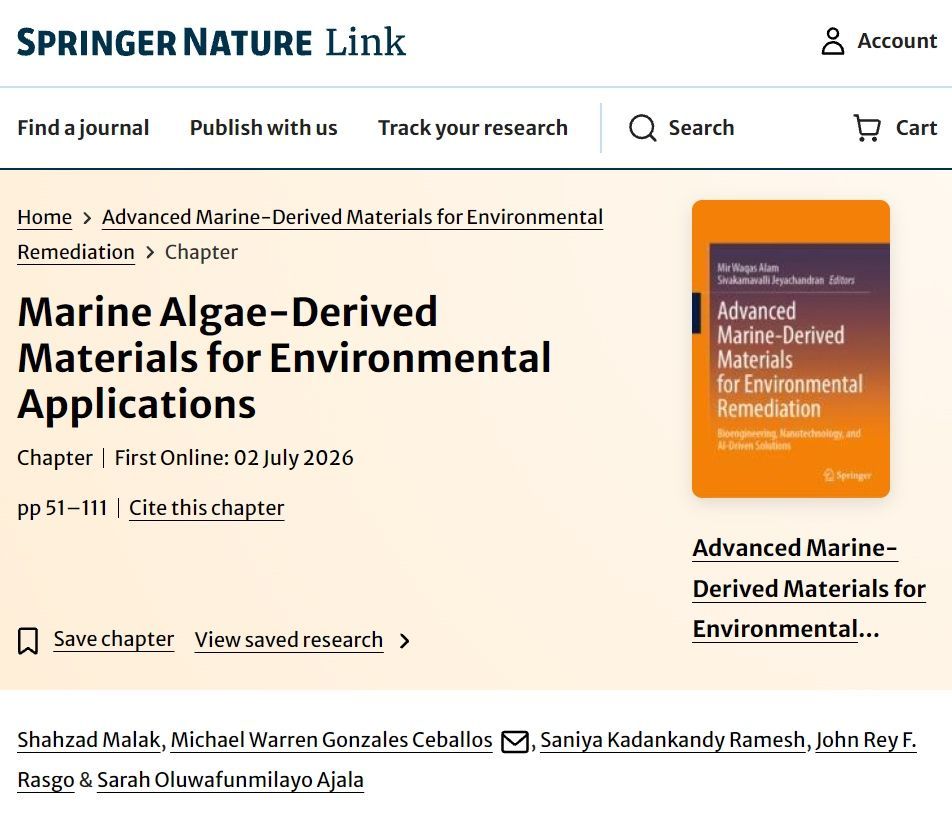
The chapter reviews the latest developments in the use of algae-derived materials for environmental remediation. Marine algae are abundant, photosynthetically efficient and biochemically diverse, making them a renewable resource for producing biopolymers, bioadsorbents, nanomaterials and bio-inspired composites.
The authors examine how advances in bioengineering allow algal biomass and its derivatives to be modified to improve adsorption capacity, catalytic activity and structural stability. They also explore how nanotechnology has expanded the range of applications, including water purification, pollutant sequestration, carbon capture and energy conversion.
The role of artificial intelligence
A distinctive feature of the chapter is its focus on artificial intelligence. According to the abstract, AI-driven approaches can support predictive modelling, process optimisation and smart monitoring of remediation systems. The chapter highlights progress at the intersection of biotechnology, nanoscience and AI as a way to accelerate innovation in this field.
Challenges and future directions
The authors also address the obstacles to translating laboratory research into wider applications, including scalability, cost-efficiency and regulatory acceptance. The chapter concludes by exploring future directions for developing next-generation, sustainable solutions to global environmental challenges.
Congratulations to our alumni
We congratulate Shahzad Malak, Michael Warren G. Ceballos, Saniya K Ramesh, John Rey Rasgo and Sarah Ajala on this publication, which highlights the contribution of the JMPMB community to research in marine biotechnology.
Read the abstract on Springer Nature
About the Joint Master Programme in Marine Biotechnology