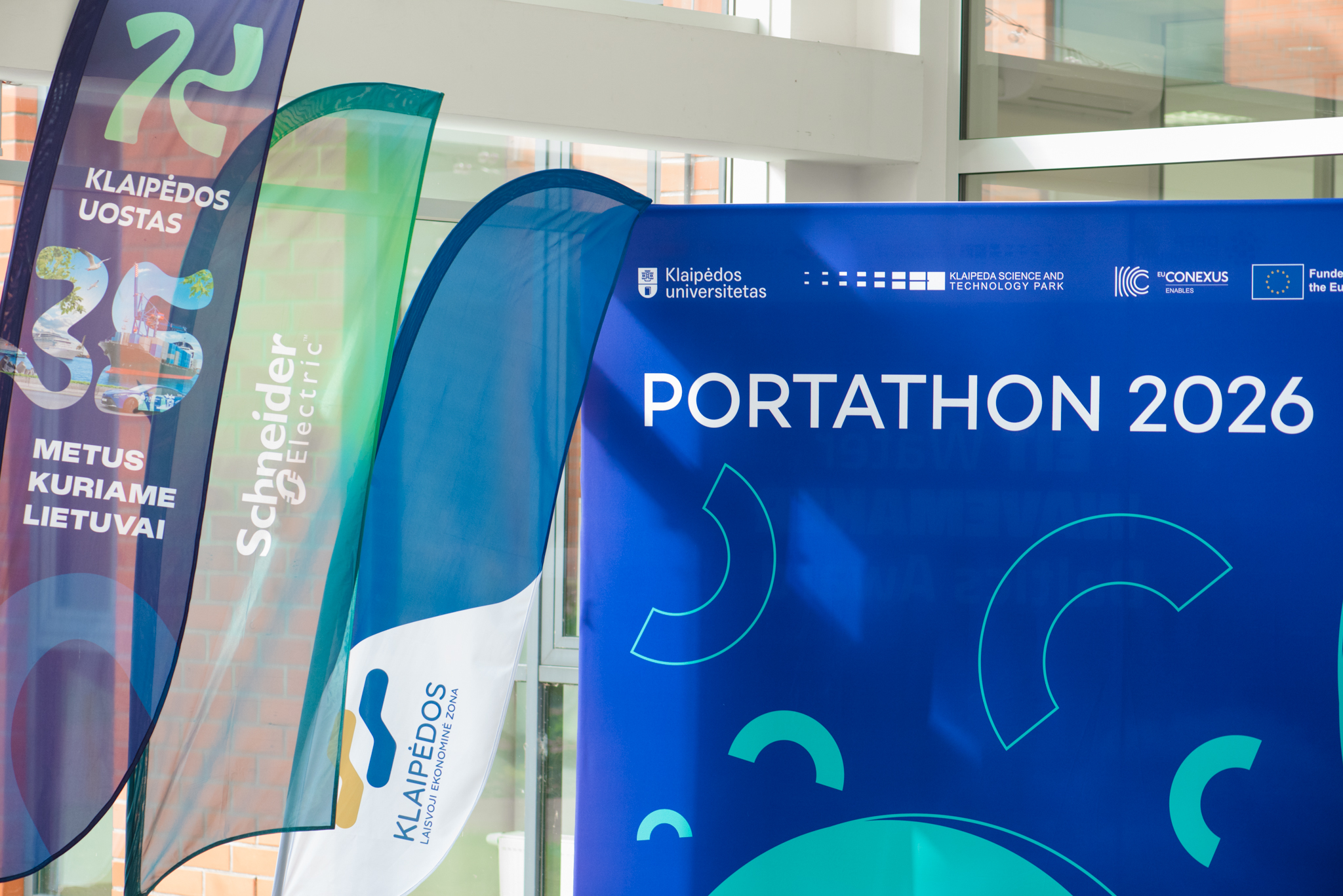
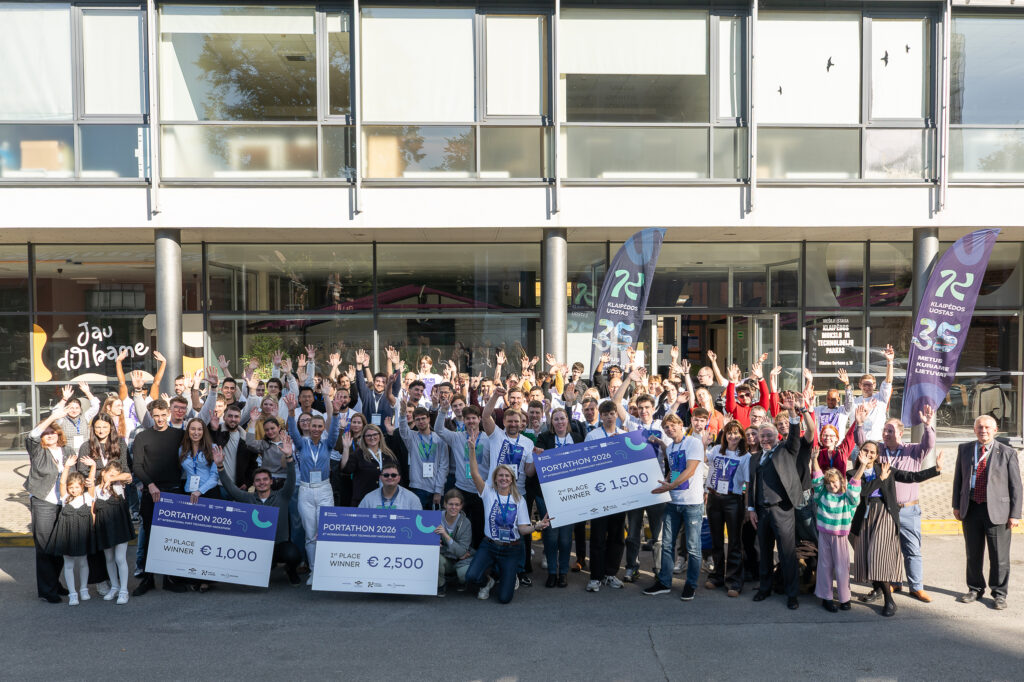
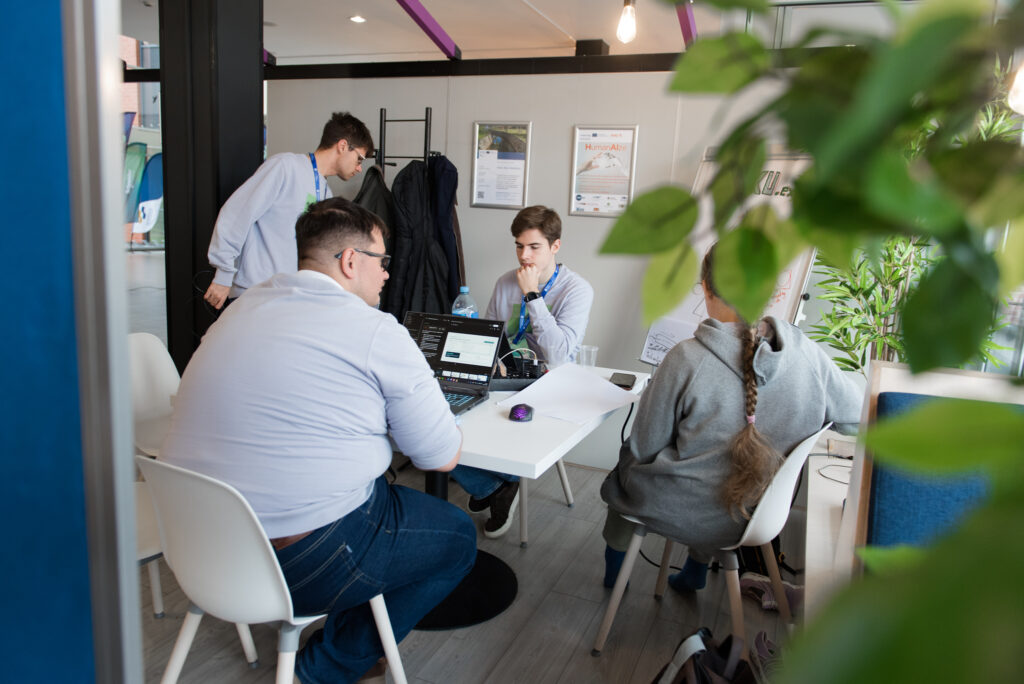
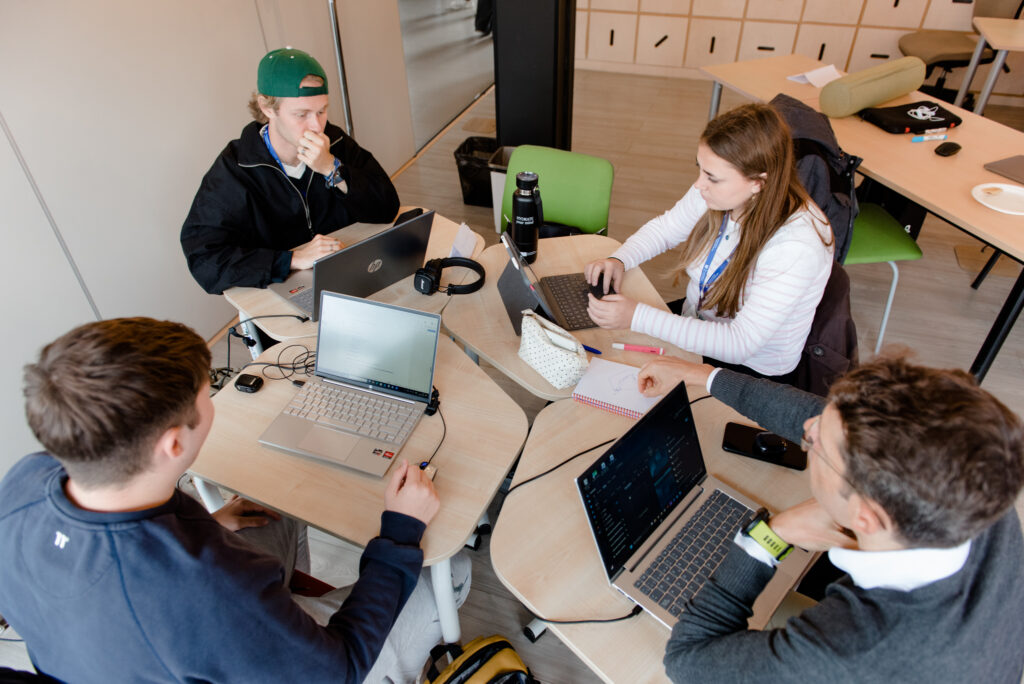
The international port technology hackathon PORTATHON 2026, held in Klaipėda on 25–27 September, was one of the activities implemented within the EU-CONEXUS Enables project, and was jointly organised by Klaipeda University and Klaipeda Science and Technology Park, bringing together students, researchers, representatives of businesses, ports and the innovation ecosystem with a common goal – to develop practical solutions to real-life challenges faced by ports and industry.
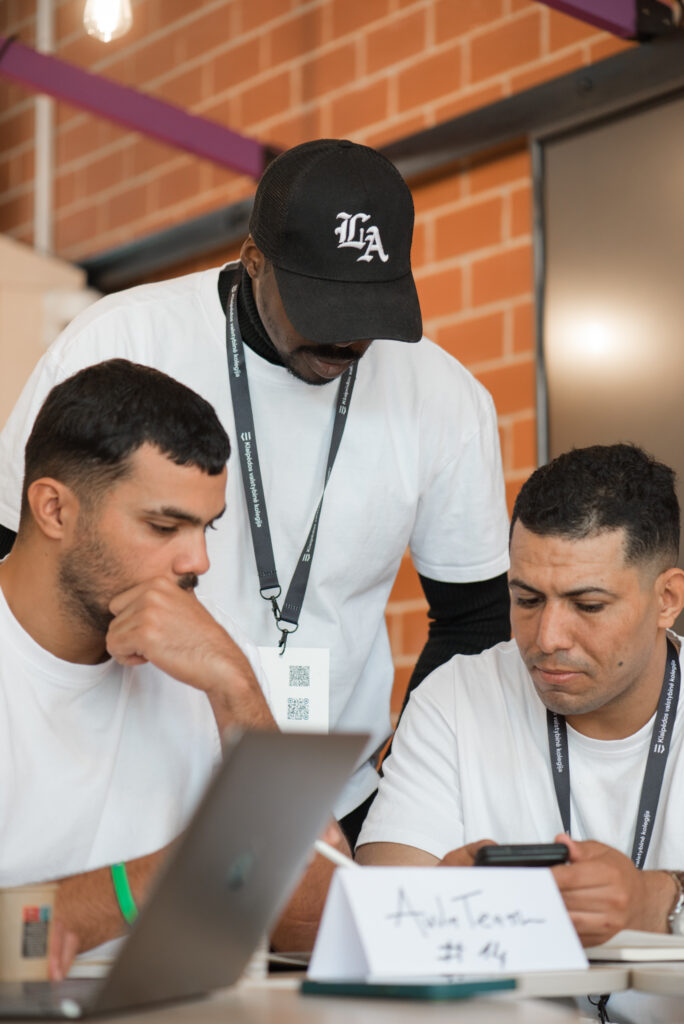
The 48-hour hackathon brought together 120 participants from more than 10 countries, forming 18 teams. The international dimension of the event was further strengthened by the involvement of EU-CONEXUS Enables project partner universities and their stakeholders, with real-life challenges reaching Klaipėda from across the international network, including the Port of La Rochelle in France.
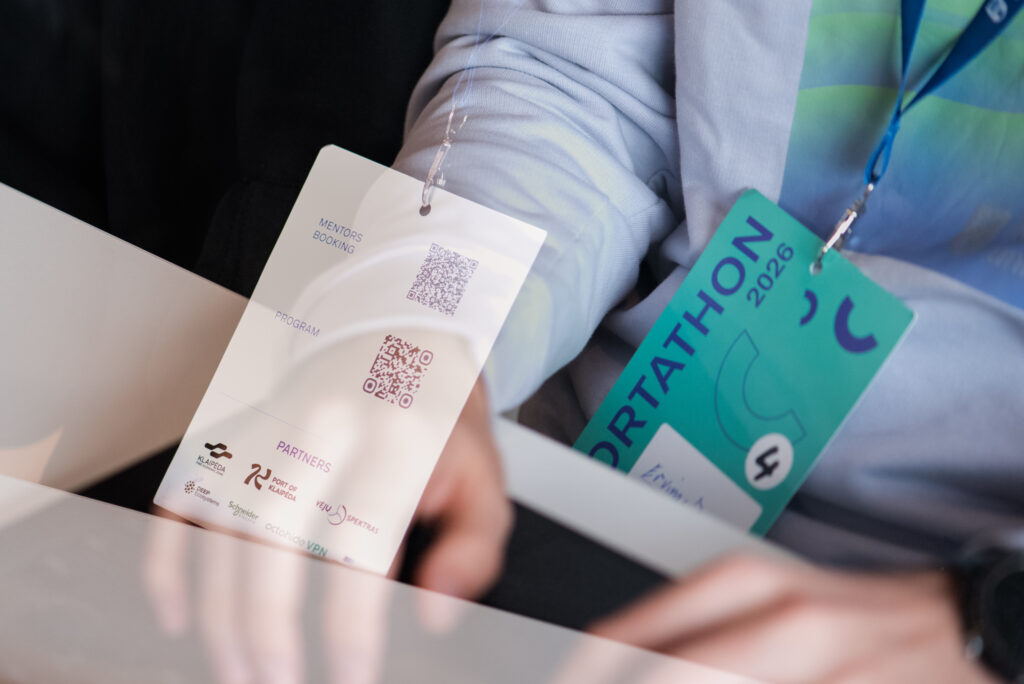
The implementation of PORTATHON 2026 and the development of participants’ ideas were also supported by the event partners – Klaipėda State Seaport Authority, Klaipėda Free Economic Zone, Lithuanian Maritime Cluster, DEEP Ecosystems, Schneider Electric and Octohide VPN. Their support, expertise and involvement in developing and addressing real-life challenges strengthened the hackathon’s connection with the business, port and wider innovation ecosystem.

From project partnership to real-life port challenges
EU-CONEXUS Enables aims to strengthen collaboration between universities, researchers and a wide range of societal and business stakeholders in developing long-term solutions for smart and sustainable urban and coastal development. One of the ways in which the project pursues this goal is through hackathons organised at six partner universities in 2026.
In Klaipėda, the project brought together not only international participants, but also the expertise of its partners and challenges originating from their respective regions. Participants were invited to address four challenges:
- the use of hydrogen in EU freight transport routes,
- the development of safer and smarter city–port interfaces,
- more sustainable sediment management and dredging,
- and an AI-assisted platform for industrial resilience and emergency coordination.
The challenges were contributed by the Klaipėda State Seaport Authority, Port in La Rochelle, France, and the Klaipėda Free Economic Zone.
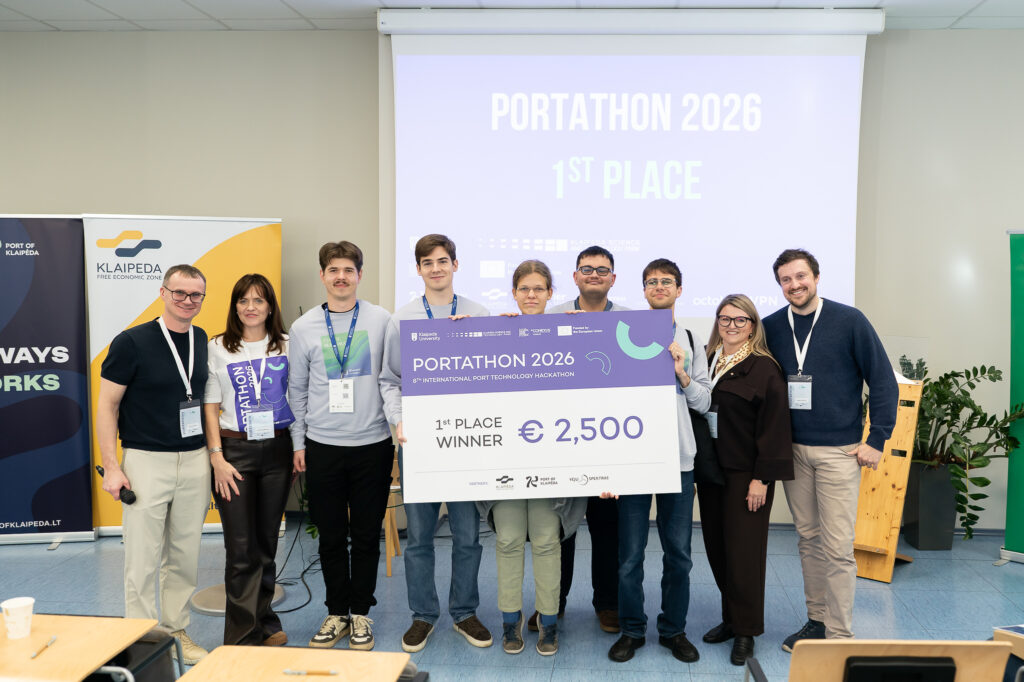
One of them, “BlueSediments”, focused on more sustainable sediment management and dredging and was proposed by port representatives from La Rochelle, France. This was the challenge selected by the Klaipeda University student team KU.exe, which went on to win PORTATHON 2026 after 48 hours of intensive work.
The team proposed a system designed to intercept sediment before it enters the port basin while simultaneously collecting data that could enable more accurate predictions of sediment accumulation.
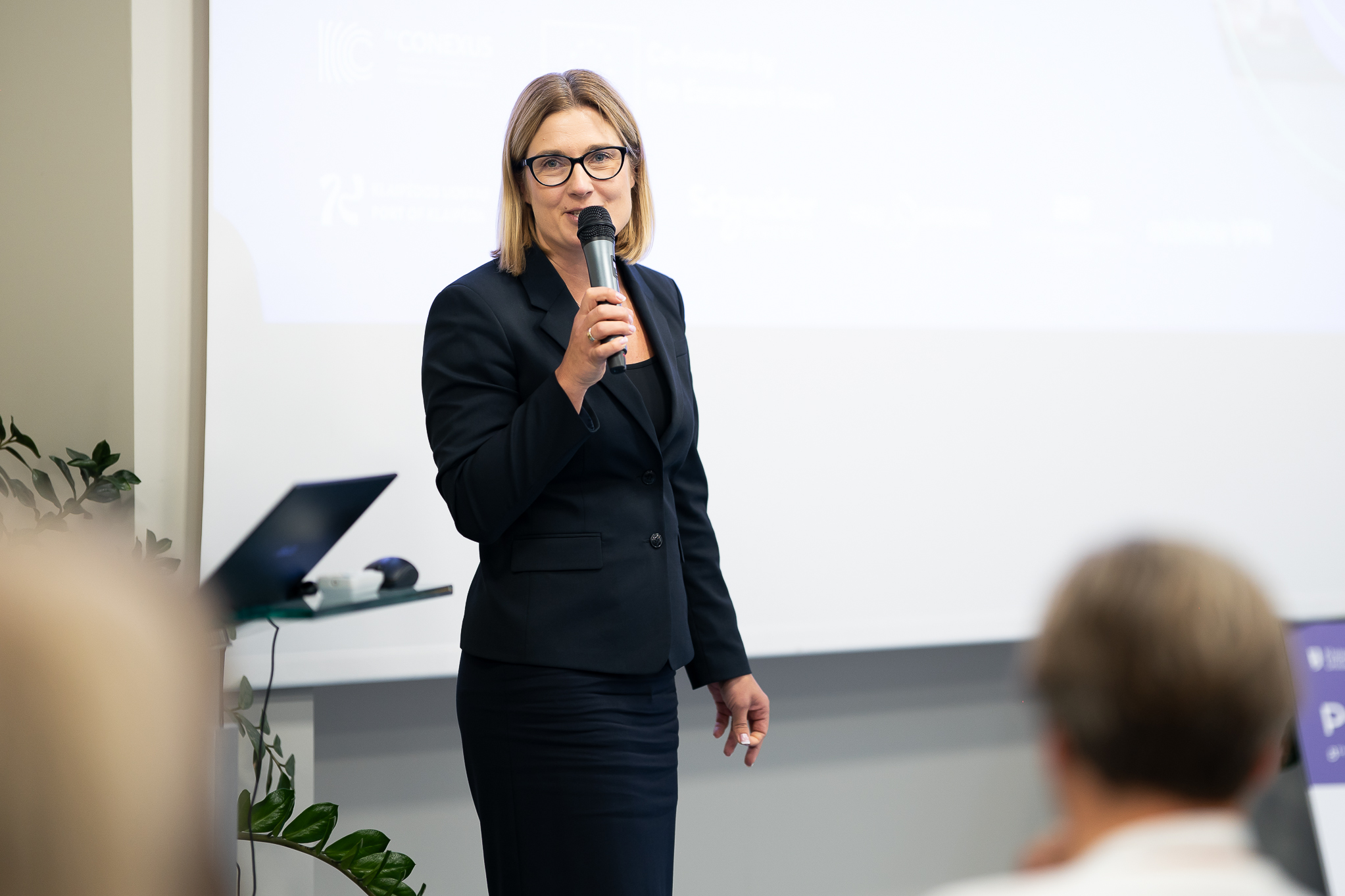
“The challenge presented by the Port of La Rochelle demonstrated that the knowledge and skills acquired by Klaipeda University students are relevant well beyond Lithuania. Over two intensive days, the team had to analyse a real-life port challenge, develop concrete solutions and defend their ideas before experts in the field. Experiences like this help students see that the ideas they develop can become an important starting point for further research and innovation,”
said Assoc. Prof. Dr Laura Šaltytė-Vaisiauskė, Vice-Rector for Research and Innovation at Klaipeda University.
An international community of experts – from challenge to solution
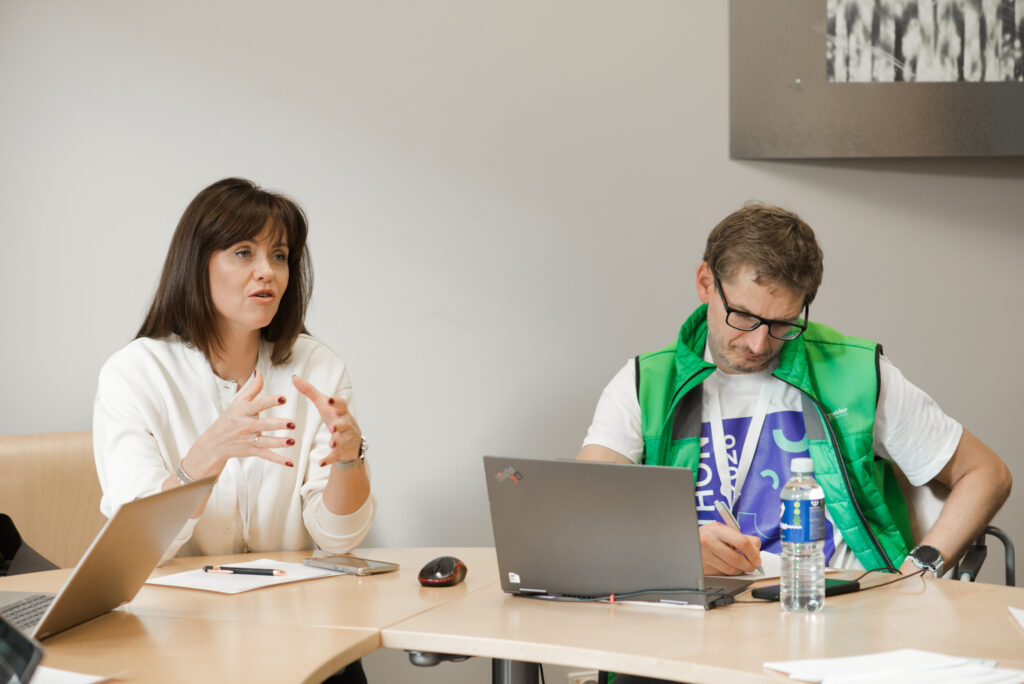
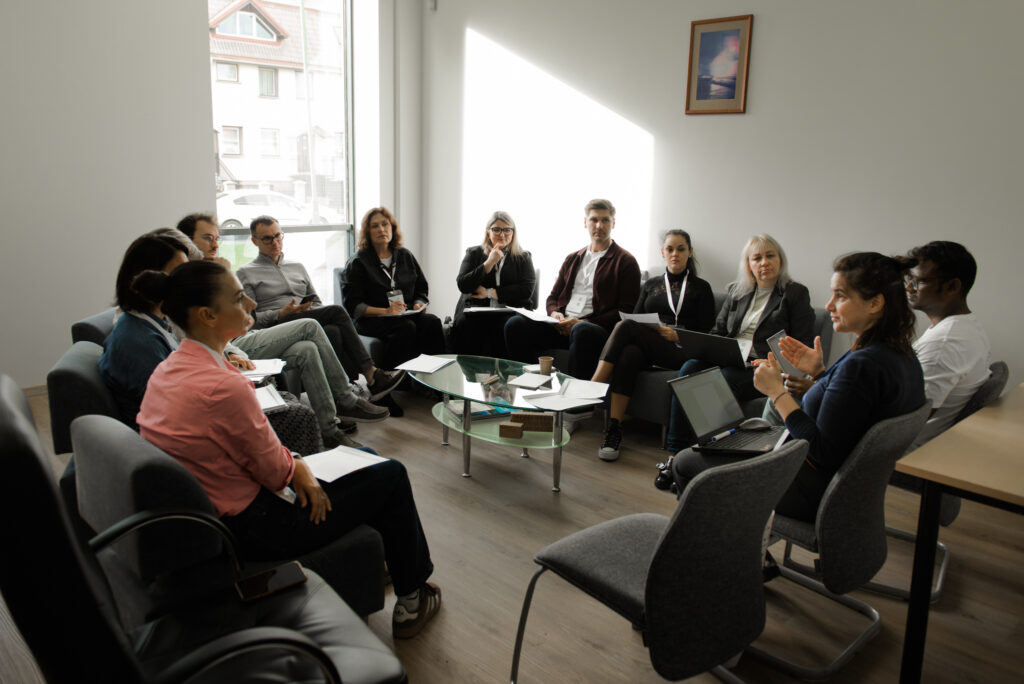
An important part of PORTATHON was not only the work carried out by the teams, but also their continuous interaction with experts. Throughout the weekend, participants were supported by an international team of mentors, bringing together researchers from four universities in Lithuania, France and Romania, as well as representatives of the ports of Klaipėda and La Rochelle, businesses and other organisations within the innovation ecosystem.
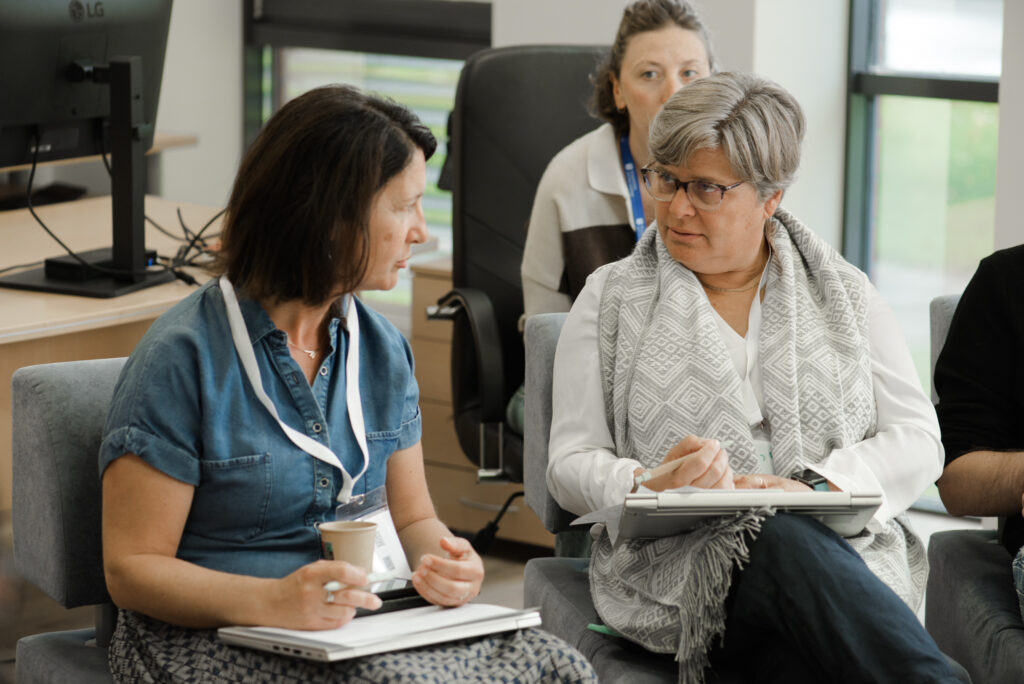
The mentors helped the teams assess the potential of their ideas, test their practical applicability, identify areas for improvement and further develop their proposed solutions. This exchange of knowledge and expertise allowed participants to approach the challenges from different technological, business and sustainability perspectives.
The collaboration demonstrated one of the core principles of EU-CONEXUS Enables in practice: bringing together universities, researchers and external stakeholders from different European regions to transform real-life challenges into opportunities for new solutions and innovation.

Funded by the European Union. Views and opinions expressed are however those of the author(s) only and do not necessarily reflect those of the European Union or European Research Executive Agency. Neither the European Union nor the granting authority can be held responsible for them.