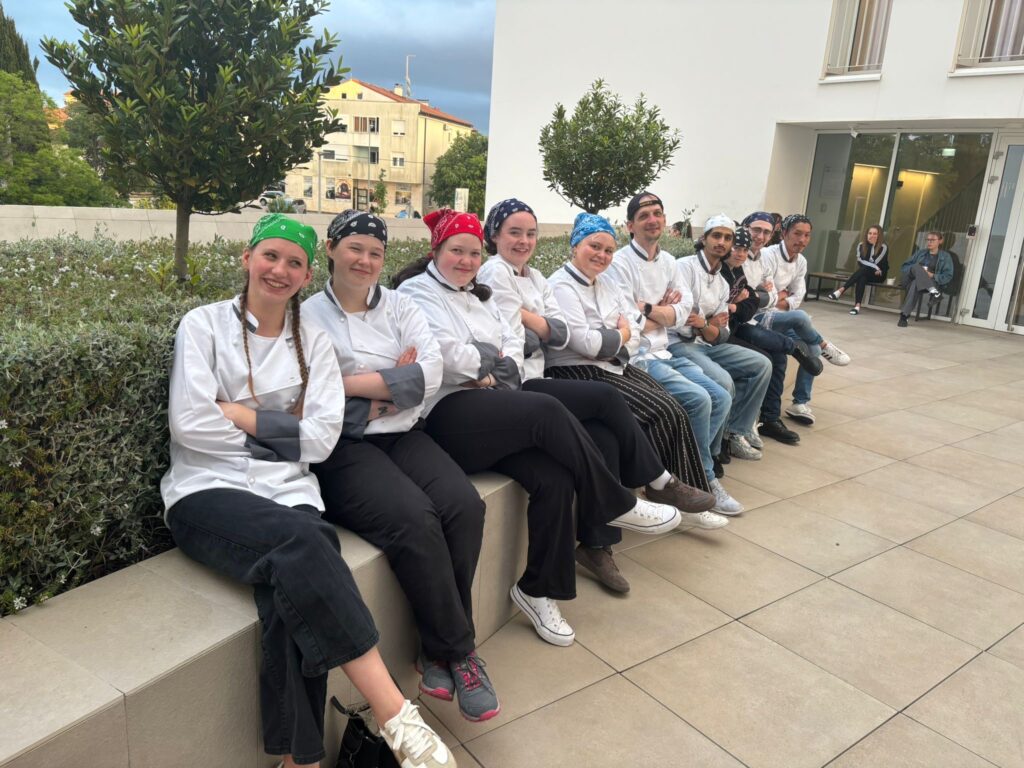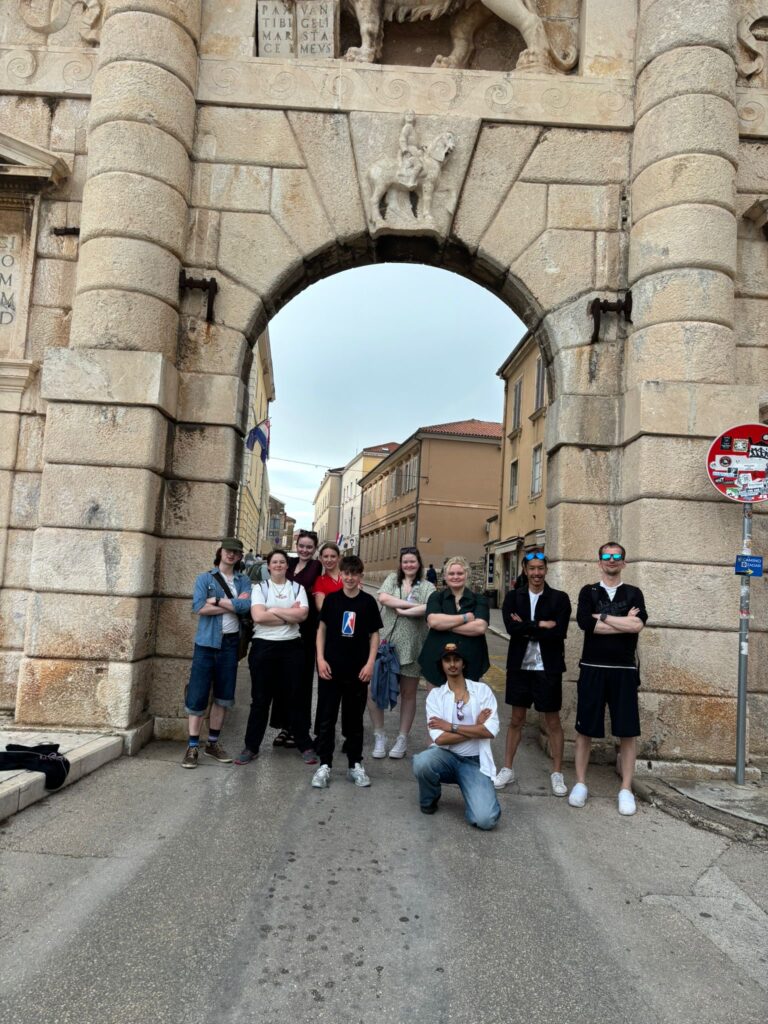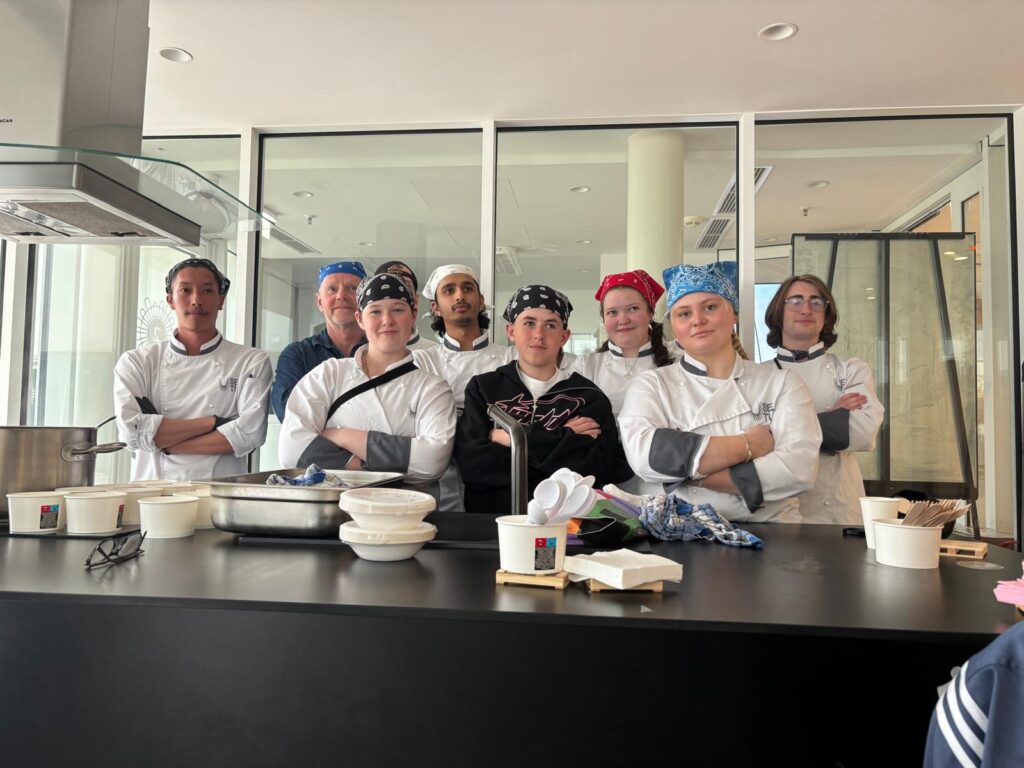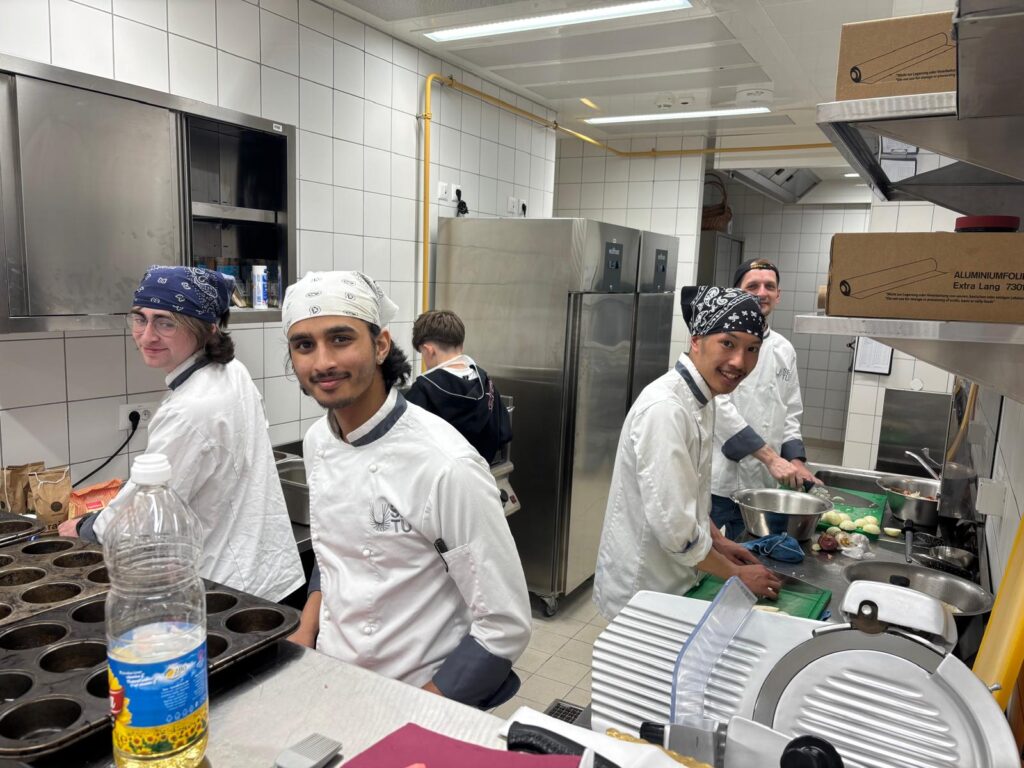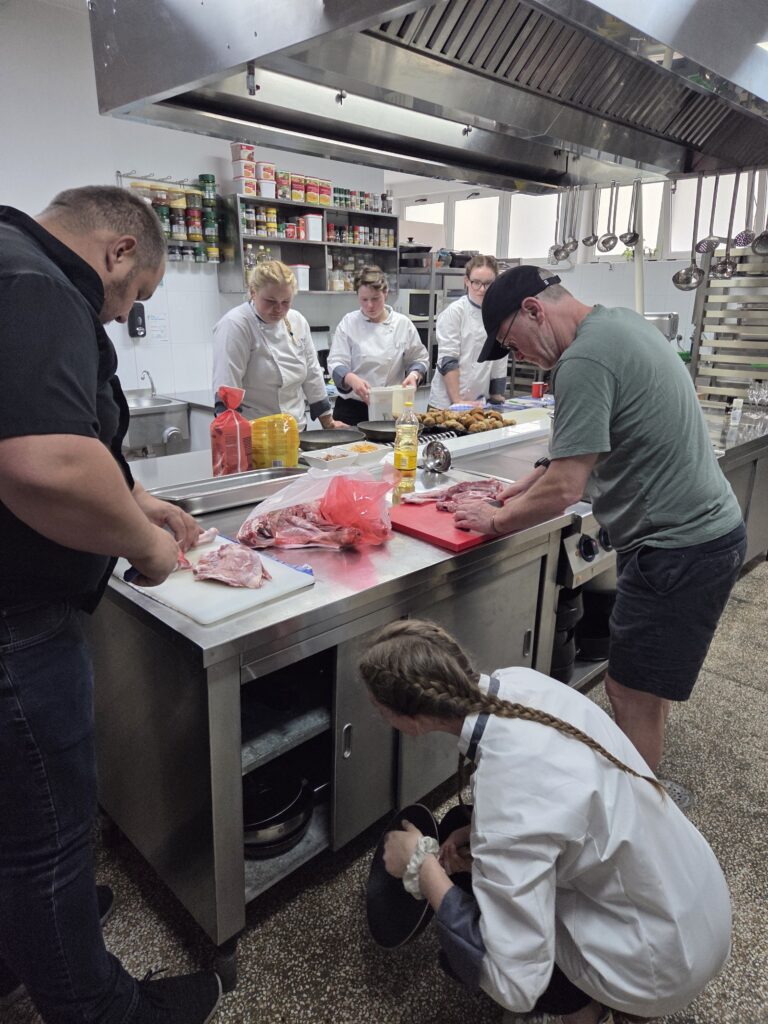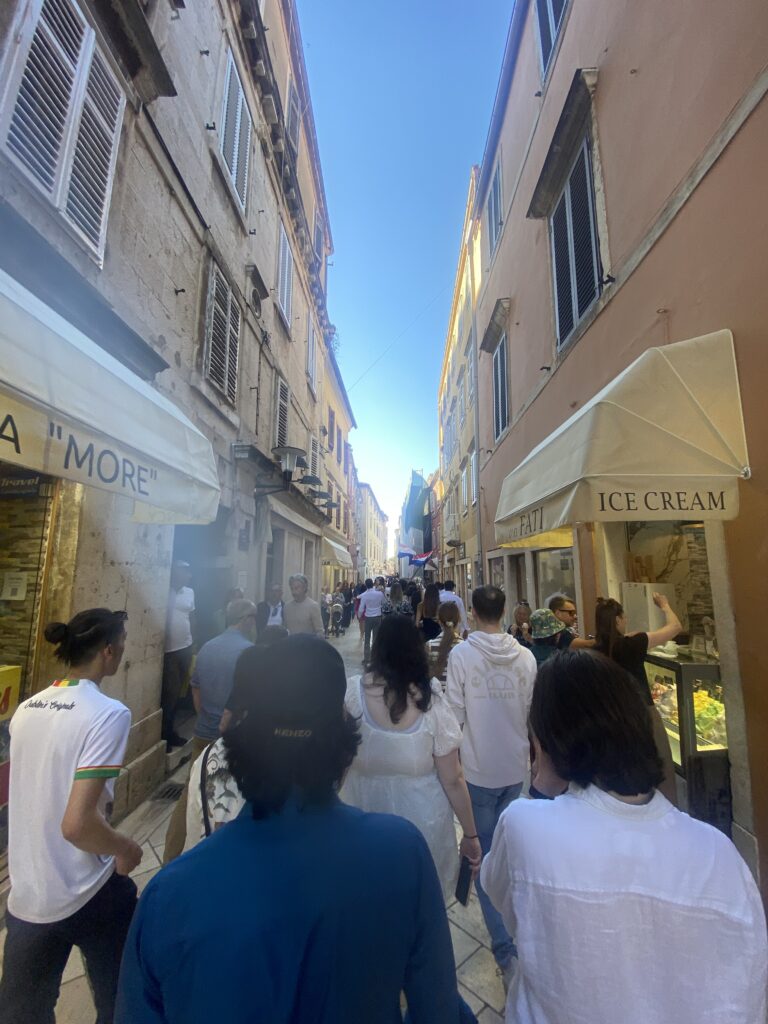
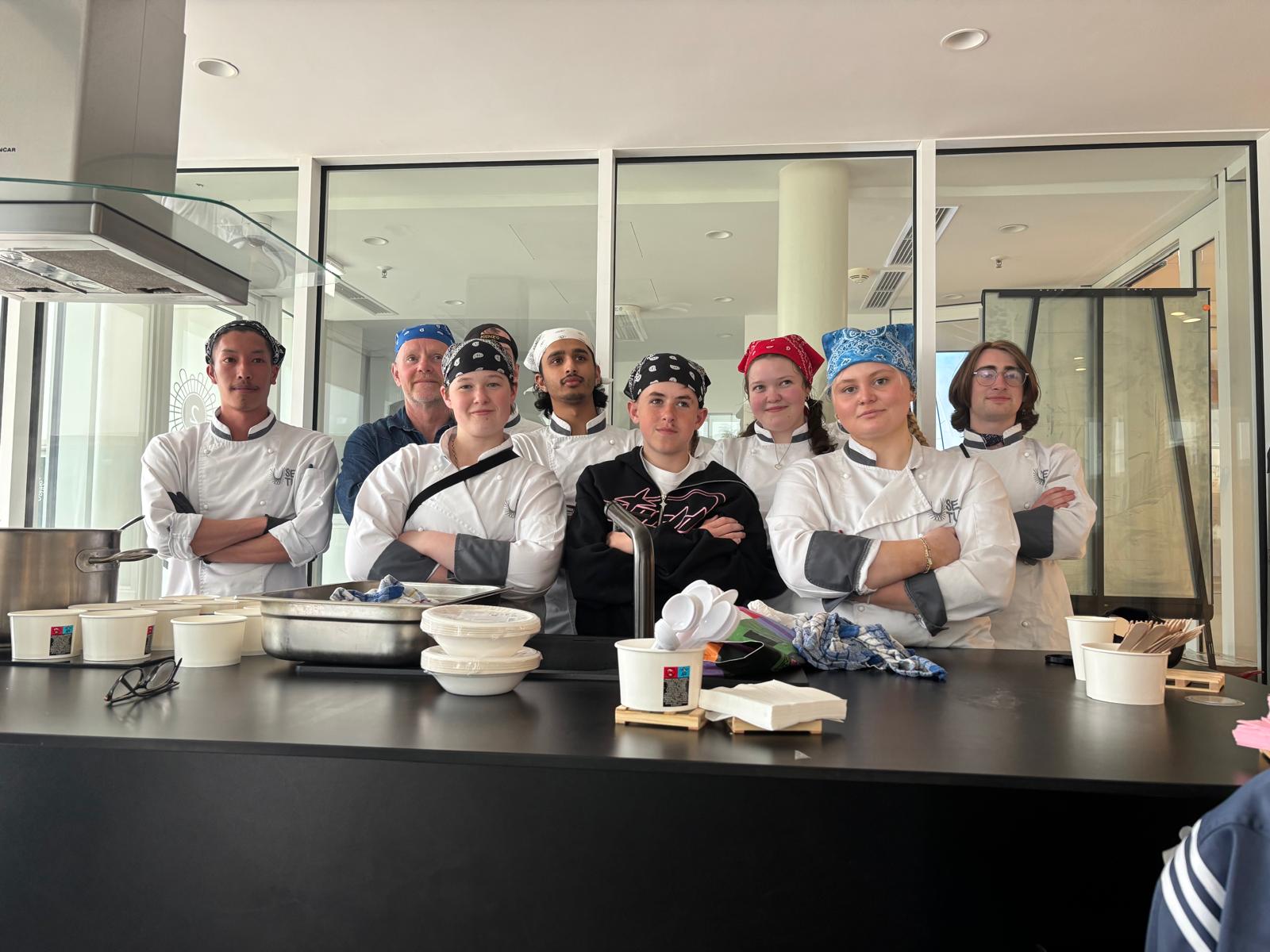
Nine Culinary Arts students from South East Technological University (SETU) recently travelled to Zadar, Croatia, to take part in a Student Research Hub developed through EU-CONEXUS in collaboration with the University of Zadar.
The initiative brought together Culinary Arts students with students from Art History and Archaeology to explore the intersections of food systems, cultural identity, biodiversity and sustainability through a place-based, practice-led research experience.
Supported by the EU-CONEXUS team, colleagues at the University of Zadar and lecturer Michael Quinn, students explored themes including sustainability, food systems, cultural heritage, the bioeconomy and education for sustainable development.
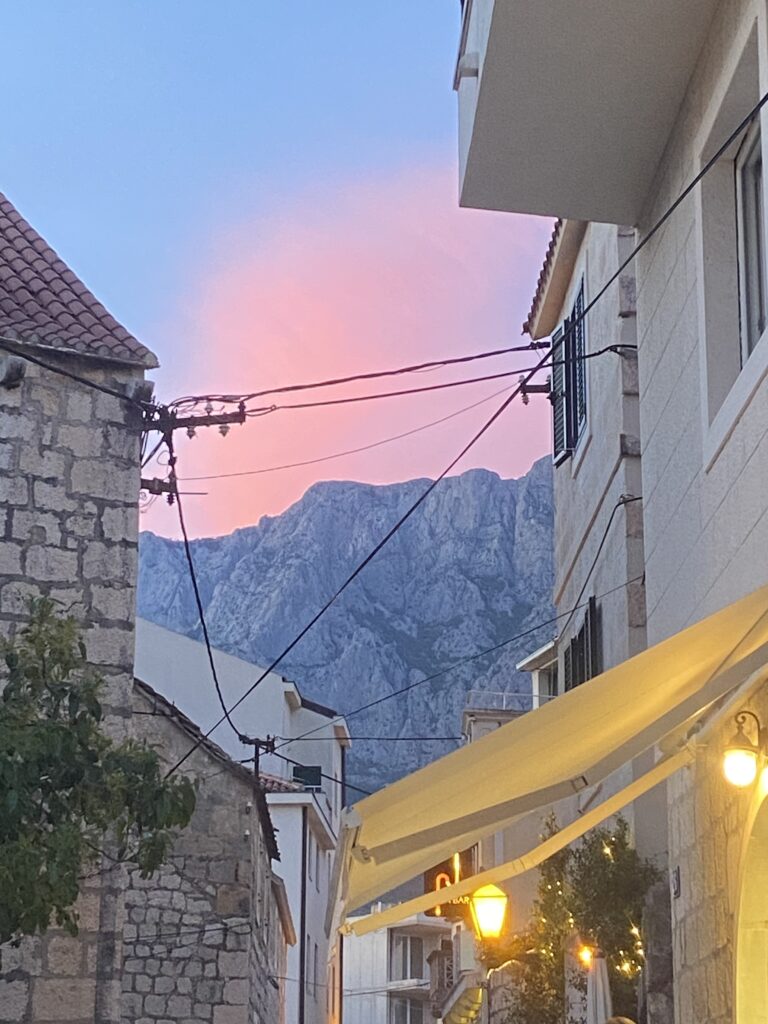
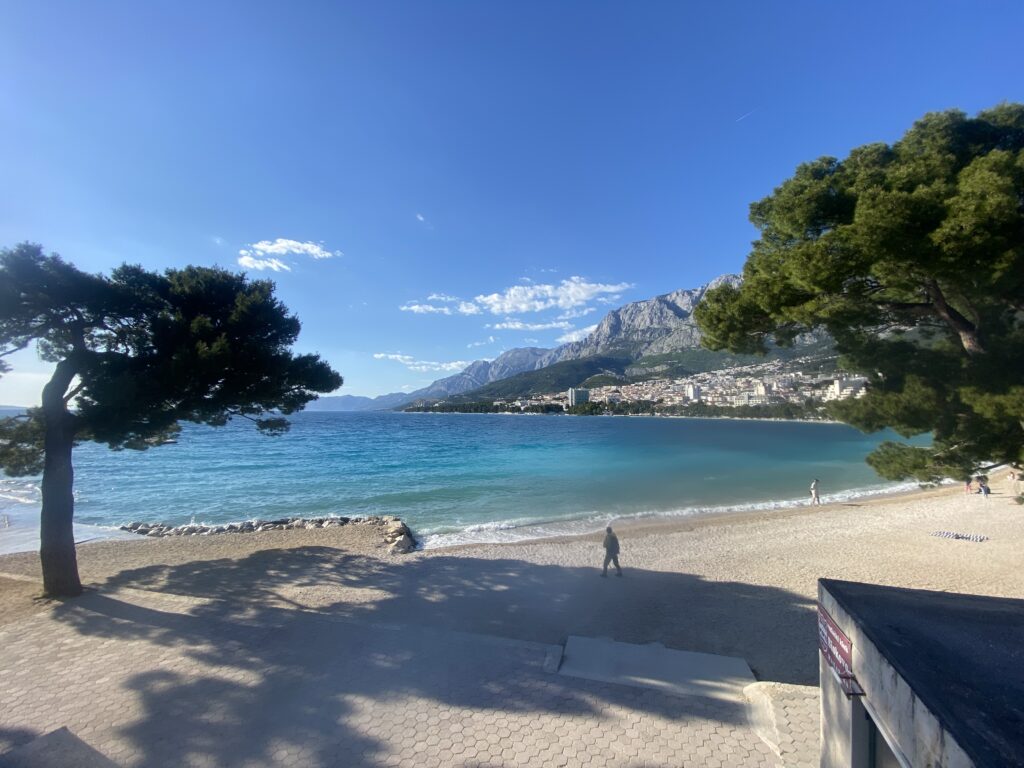
During their time in Croatia’s Dalmatian region, including Makarska, students took part in hands-on fieldwork alongside chefs, food producers and archaeologists. The programme encouraged students to examine how food traditions reflect ecological adaptation, sustainable practices and cultural heritage.
The experience combined cooking workshops, cultural site visits and stakeholder engagement to support student-led research into both traditional and contemporary sustainable food systems. Drawing inspiration from the Cetina culture and Mediterranean agroecological practices, students developed critical thinking and reflective research skills while exploring sustainability through a culinary lens.
As part of the programme, students prepared dishes from a Croatian-Irish cookbook produced through EU-CONEXUS seed funding.
Hear what the students had to say
Reflecting on the experience, SETU student Dhruv Chippalkatti said he particularly enjoyed experiencing a new culture and cuisine. He explained that the project gave him a different perspective on Croatian culture and its strong sense of community.
For Sarah Fahey, one of the highlights was cooking at the cookbook launch, which gave students the opportunity to showcase their culinary skills. She also described the archaeology lecture as particularly impactful and spoke about the influence of Croatia’s “beautiful landscape and culture”, as well as the opportunity to experience local food traditions firsthand.
“An unforgettable experience”
Sarah Fahey also expressed her gratitude for the opportunity to participate in the Student Research Hub.
“For me, it was an unforgettable experience that will help me in my future studies and career,” she said.
Roksolana Hrusha explained how the experience helped improve her communication and teamwork skills.
“I became more confident, independent and open-minded. The Student Research Hub gave me the opportunity to meet new people, learn about different cultures and gain valuable international experience,” she said.
Ruby Walsh described attending the event in Makarska where a cookbook featuring both Irish and Croatian traditional recipes was launched.
“The cookbook explored recipes and their significance to both countries’ landscapes and traditions. As a group, we prepared and cooked one of the dishes from the book to serve at the event,” she said.
“We also cooked the same recipe at the University of Zadar, enabling students there to experience a traditional Irish meal. It was a wonderful way to strengthen the relationship between both universities while showcasing the research and collaboration involved in creating the book.”
Ruby added that the experience was extremely beneficial, giving students the opportunity to meet the team behind the project while also experiencing traditional Croatian cuisine.
“The Student Research Hub was a massive benefit to me because I got to experience the unique cuisine of Croatia while learning about the history behind it. I also had the opportunity to showcase our own traditional cuisine abroad and really bond with my classmates, which brought us much closer together,” she said.
Research to education
This Student Research Hub builds on the ongoing collaboration between Culinary Arts at SETU and the University of Zadar. The initiative hopes to grow through authentic, student-led sustainability projects. This evolving partnership reflects a shared commitment to real-world, place-based learning that connects students to community, culture and global challenges.
“This collaboration has gone from strength to strength over the last two years. The students are exposed to so much culture, gastronomy and history in Croatia. It is a joy to watch them bond as a group and see how they interact with other students from Zadar. This is all made possible by EU-CONEXUS.” – Michael Quinn
More information on EU-CONEXUS student research hub offerings is available here.