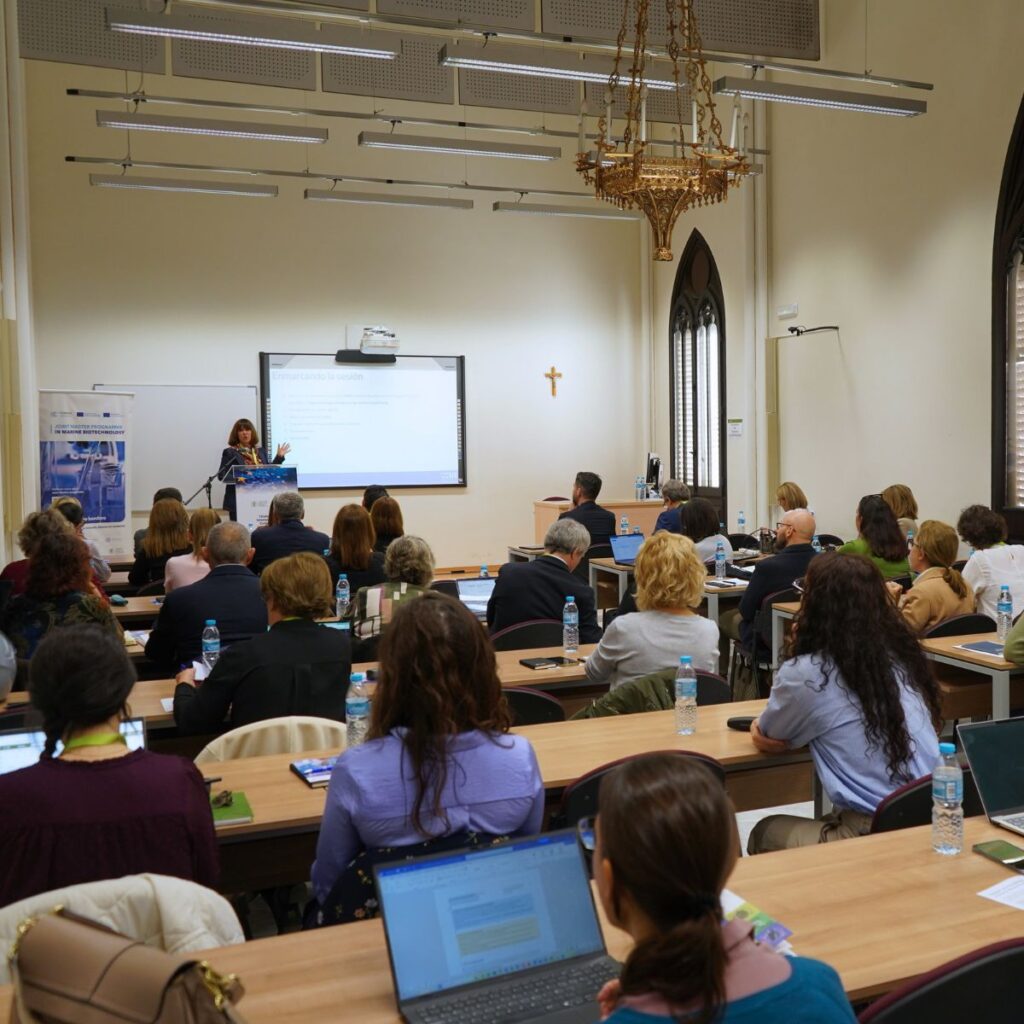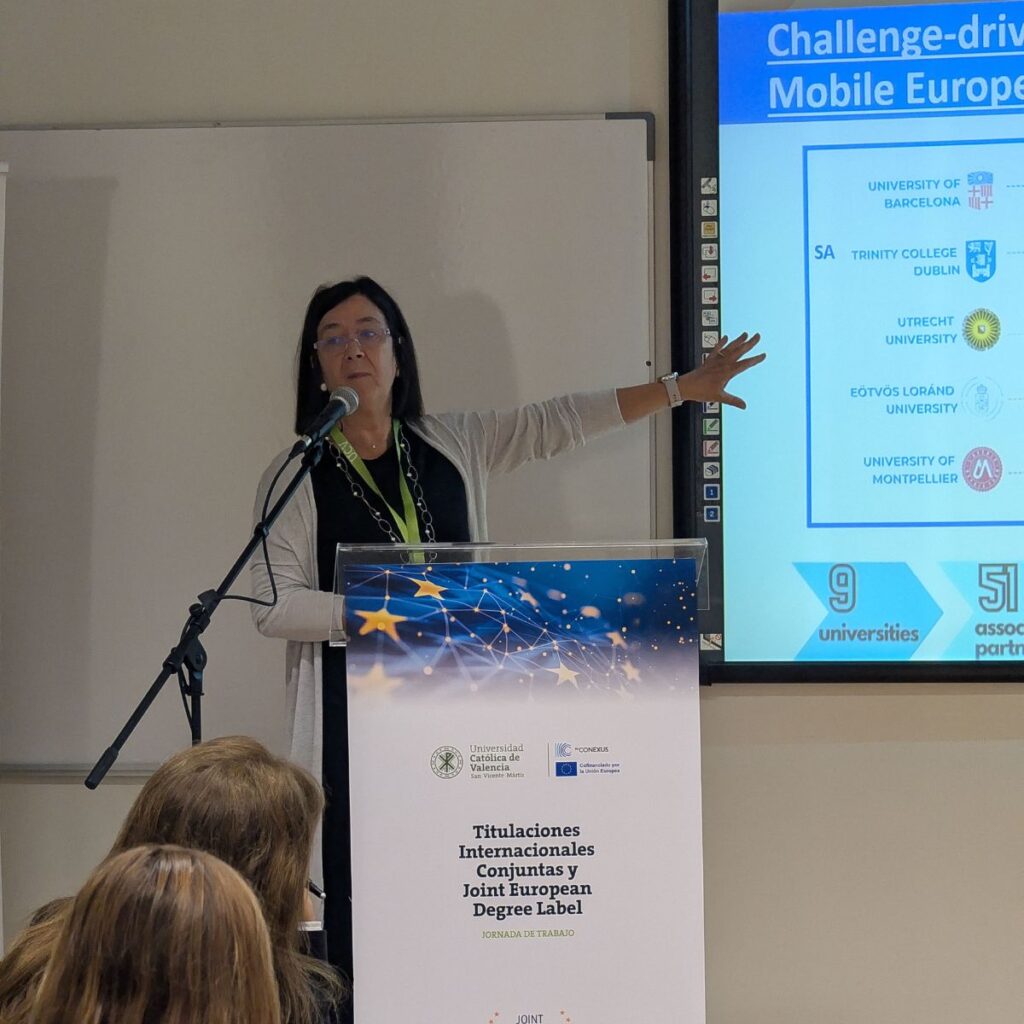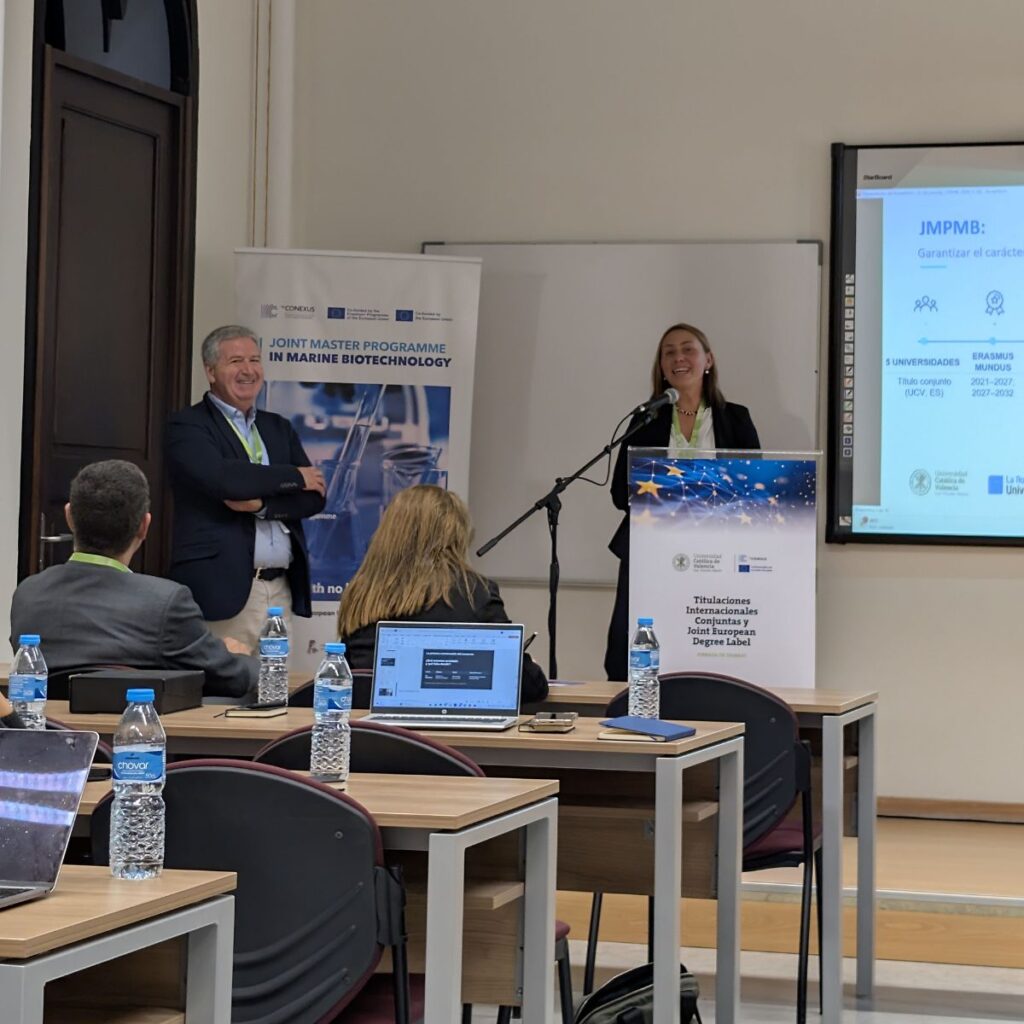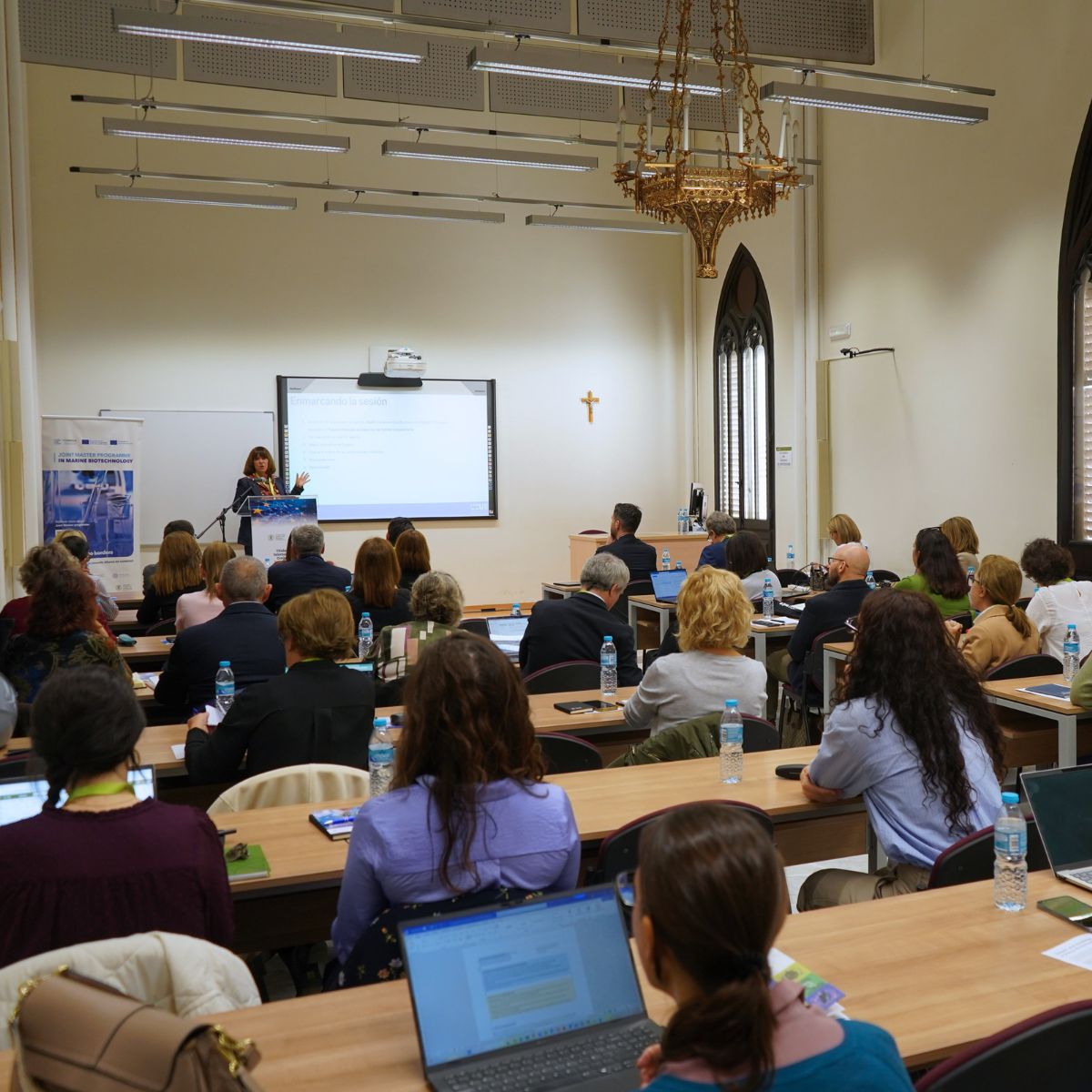
The Catholic University of Valencia (UCV) hosted a working session on international joint degree programmes and the European Degree Label on 10 November 2026. The event brought together universities from the Valencian Community, representatives of European university alliances and the regional administration to share experiences, learn about different initiatives and discuss the challenges and opportunities of joint programmes in the European context.
The session came at a significant time. In July 2026, the European Degree Label was awarded for the first time to two Master’s programmes: the Joint Master’s Programme in Marine Biotechnology, led by UCV as part of EU-CONEXUS, and the Master’s in Global Challenges for Sustainability, coordinated by the University of Barcelona as part of CHARM-EU.
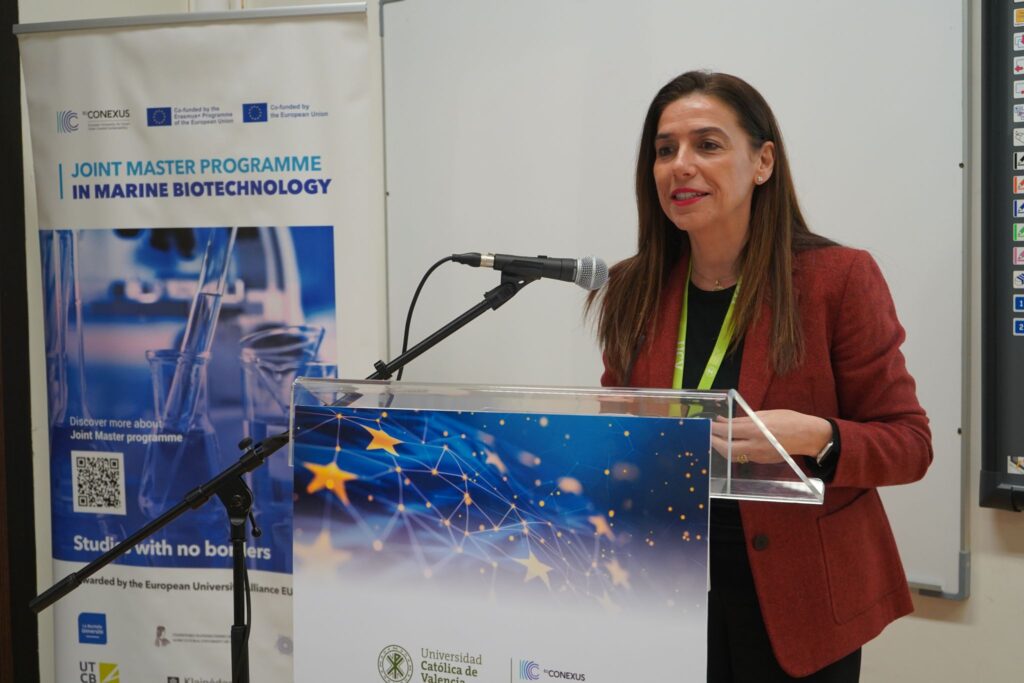
Valencian Regional Secretary for Universities Esther Gómez described the achievement as “worth communicating, not only for the Catholic University itself. It is also a responsibility for us to turn this experience into a path that others can follow.” She explained that the label recognises joint degrees designed, delivered and managed by universities from different countries. It does not replace national degrees but serves as “a European quality mark”.
UCV Rector José Manuel Pagán called for these meetings to go beyond exchanging experiences and lead to practical progress: “There is still a long way to go, so being able to take a step back, identify difficulties and propose solutions is something I believe we should recognise.”
All nine Valencian universities belong to European alliances
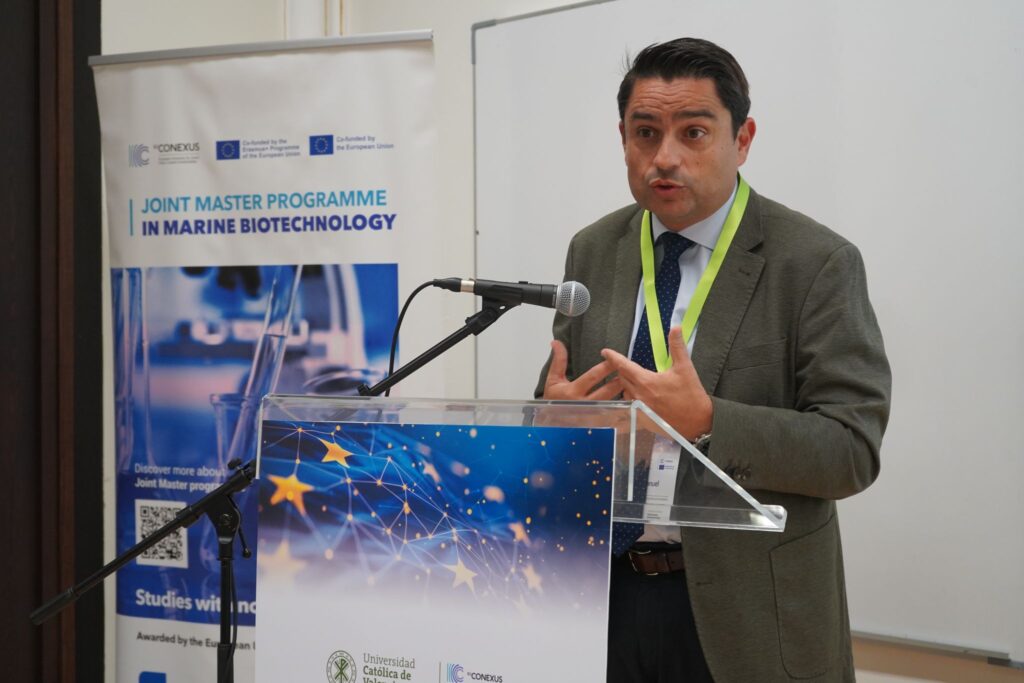
Javier Oliver, Director of the Valencian Agency for Evaluation and Forecasting (AVAP), noted that all nine Valencian universities are members of European alliances, which “usually leads to the development of various joint degree programmes”. He called for a regulatory framework that provides legal certainty and practical tools.
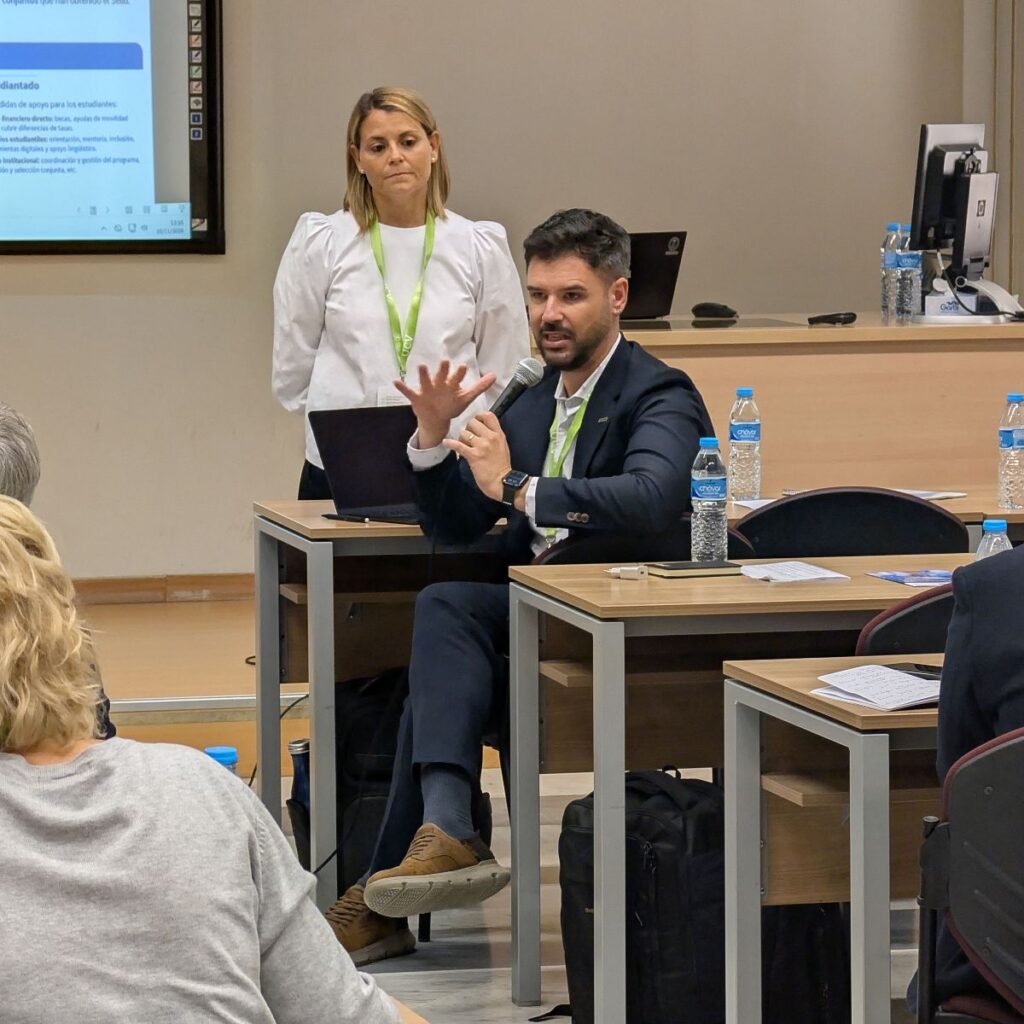
The first session covered the regulatory framework, the criteria and added value of the label and its early implementation. The second focused on academic design and concluded with a round-table discussion on accreditation, mobility, enrolment, tuition fees and degree awarding.
Participants agreed to work together at regional level, coordinate regional education policies with national authorities where appropriate, exchange good practices in developing joint programmes and collaborate more closely with the quality assurance agency.
Attendees included representatives of CHARM-EU and EELISA, the University of Valencia (FORTHEM), the Polytechnic University of Valencia (ENHANCE), Jaume I University (EDUC), Miguel Hernández University (Neurotech EU), the Regional Ministry of Education, Culture and Universities and AVAP. Fernando Galán (EU-CONEXUS), Meritxell Chaves (CHARM-EU), Neringa Narbutienė (EU-CONEXUS at UCV) and Arantza Mota (Technical University of Madrid, EELISA) also contributed.
The event was co-financed by the EU-CONEXUS LevelUP project.