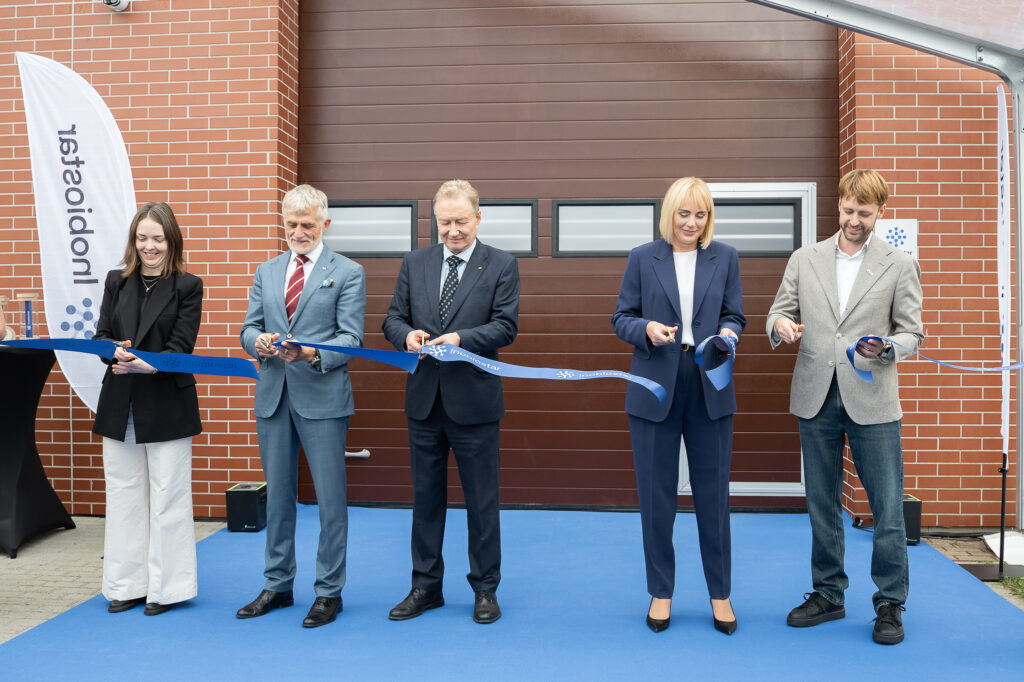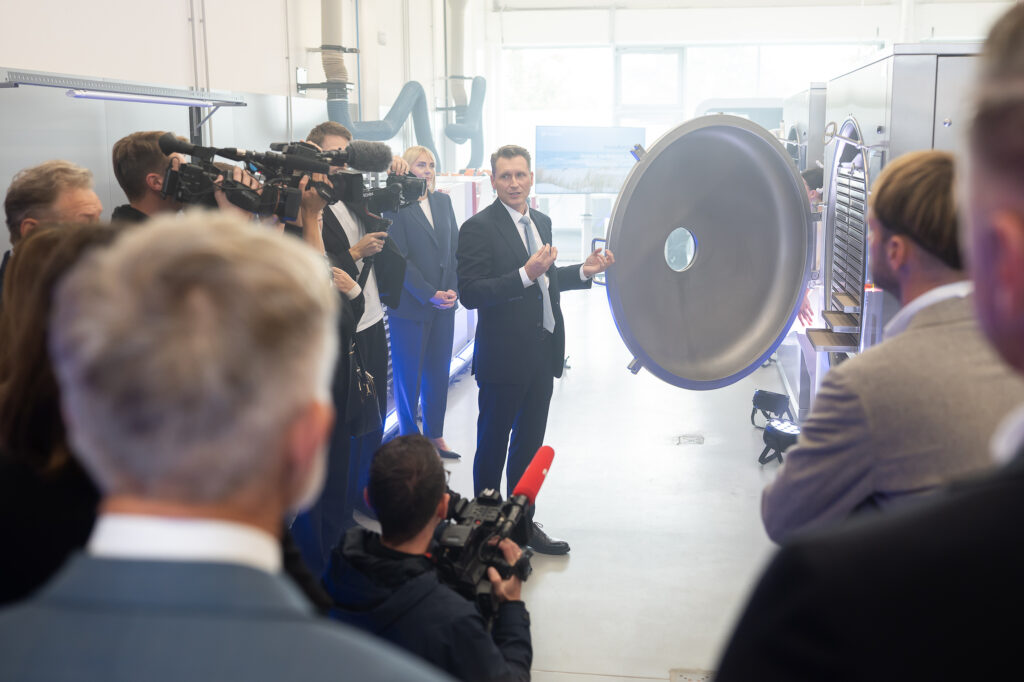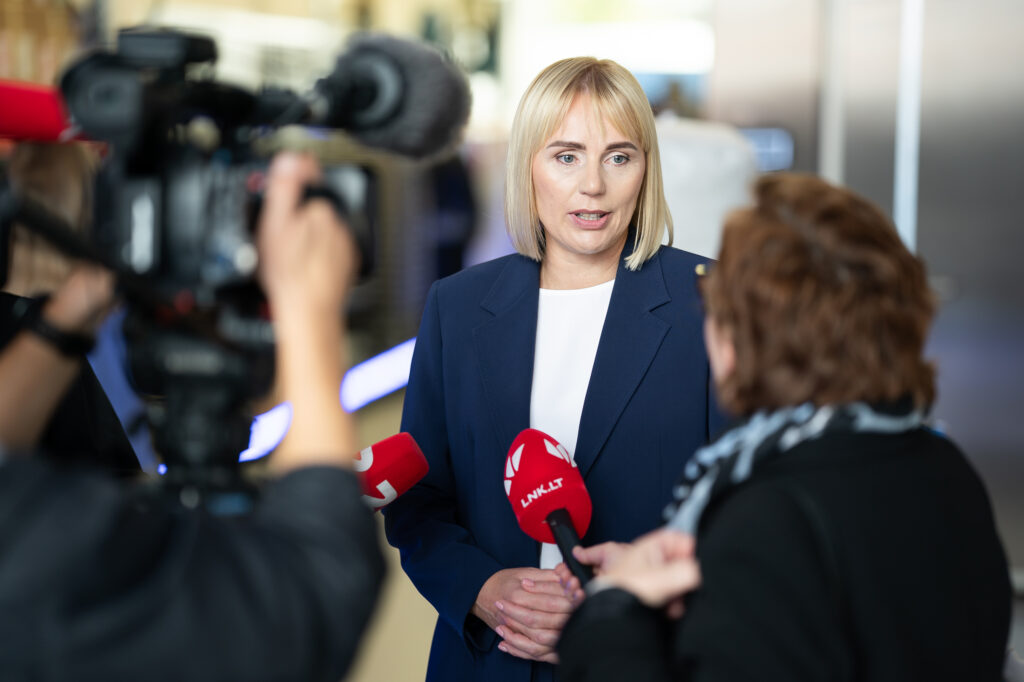
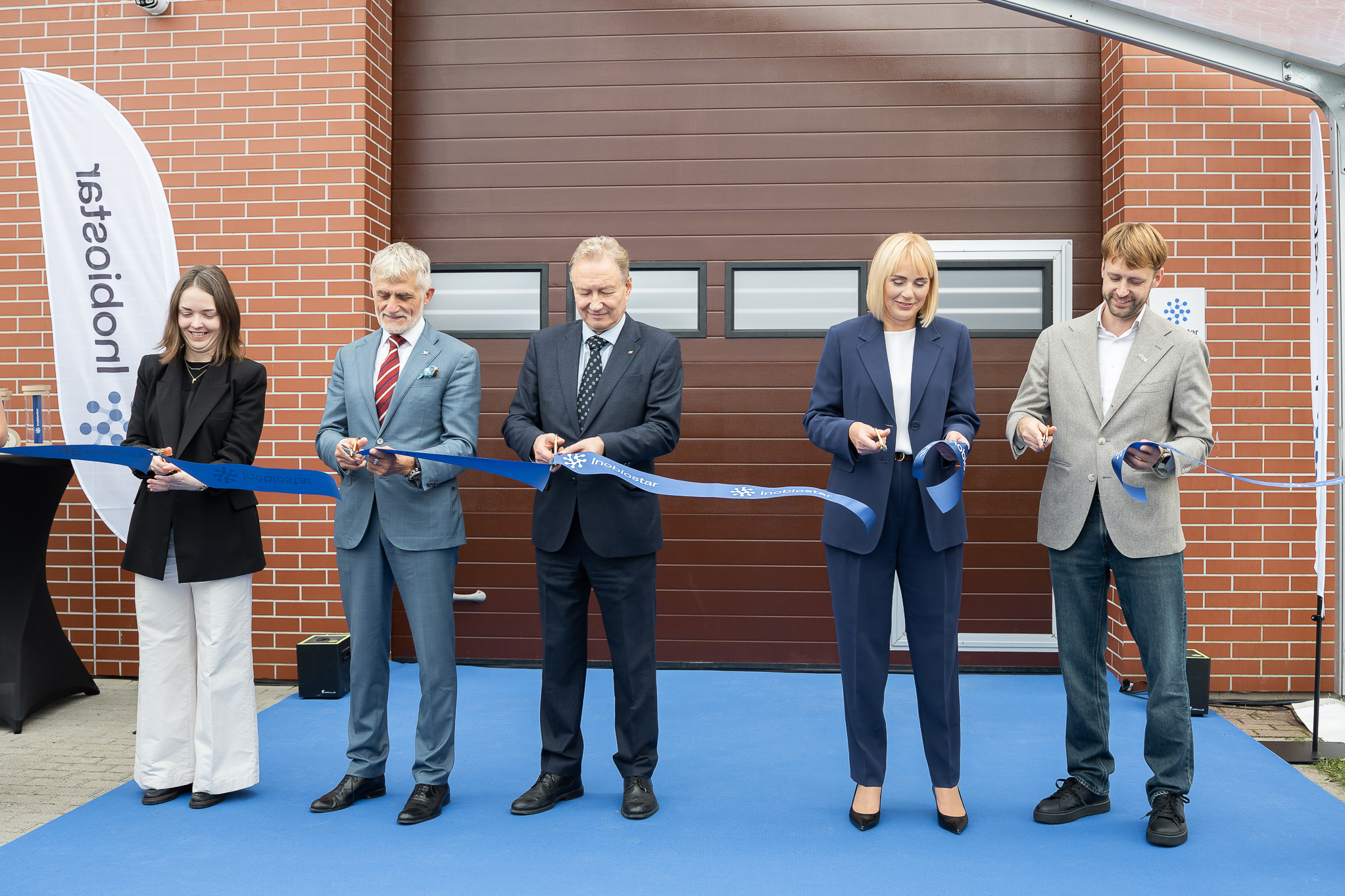
Inobiostar, a spin-off of EU-CONEXUS partner Klaipeda University, has launched a pilot production line for InnoAerogel® in Klaipeda, Lithuania. The milestone brings a research-based solution for tackling oil pollution closer to wider practical use.
The new facility will enable production in quantities of hundreds of kilograms, allowing the company to refine its manufacturing process and prepare for larger-scale applications.
Made from recycled paper waste, InnoAerogel® is a lightweight sorbent that can absorb more than 20 times its own weight in petroleum products. Microorganisms isolated from the Baltic Sea and incorporated into the material help biodegrade the absorbed pollutants.
International testing through EU-CONEXUS
The production milestone follows international testing, including field trials in Athens carried out with the Agricultural University of Athens through EU-CONEXUS. These trials assessed the technology under Mediterranean conditions, helping researchers explore its potential beyond the Baltic Sea.
InnoAerogel® has also undergone independent evaluation by CEDRE, France’s centre of expertise in accidental water pollution, and testing in Finland. Following its evaluation, the material was included in CEDRE’s database of oil spill response products.
The next step: testing at the Port of Klaipeda
During the launch, Klaipeda University, Inobiostar and Klaipeda State Seaport Authority signed an agreement to test the technology at the port. The partners will assess its suitability for oil pollution prevention and clean-up in operational conditions.
For EU-CONEXUS, this development illustrates how collaboration across the alliance can support the testing of university-born innovations. It also connects directly with the alliance’s focus on smart urban coastal sustainability: bringing research, industry and coastal partners together to address shared environmental challenges.
Inobiostar plans further testing, its first commercial sales and increased production in 2027.