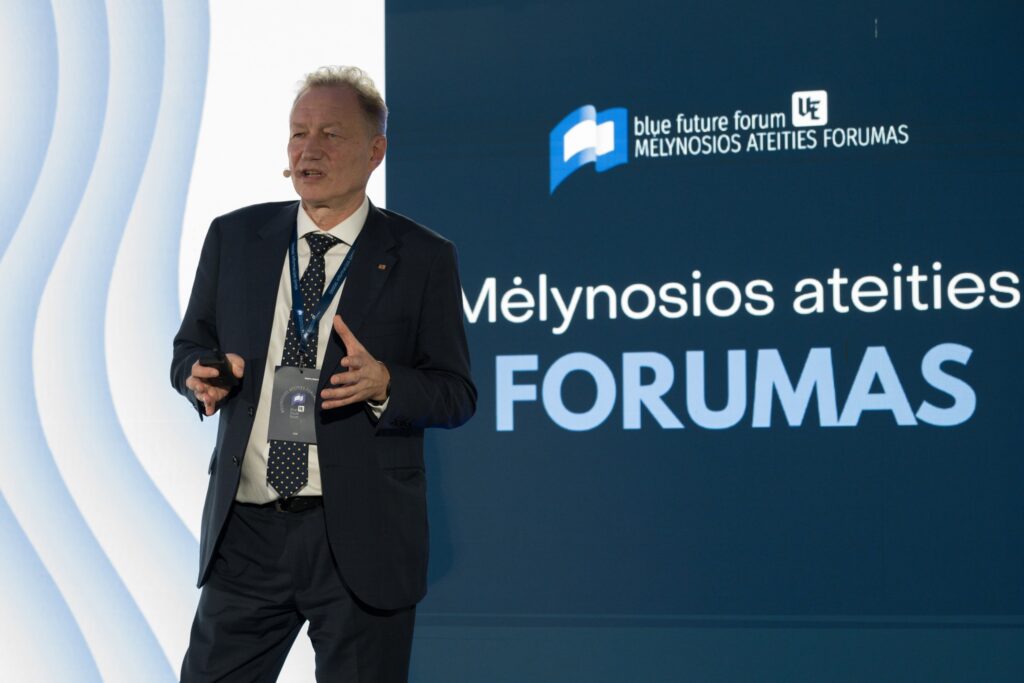
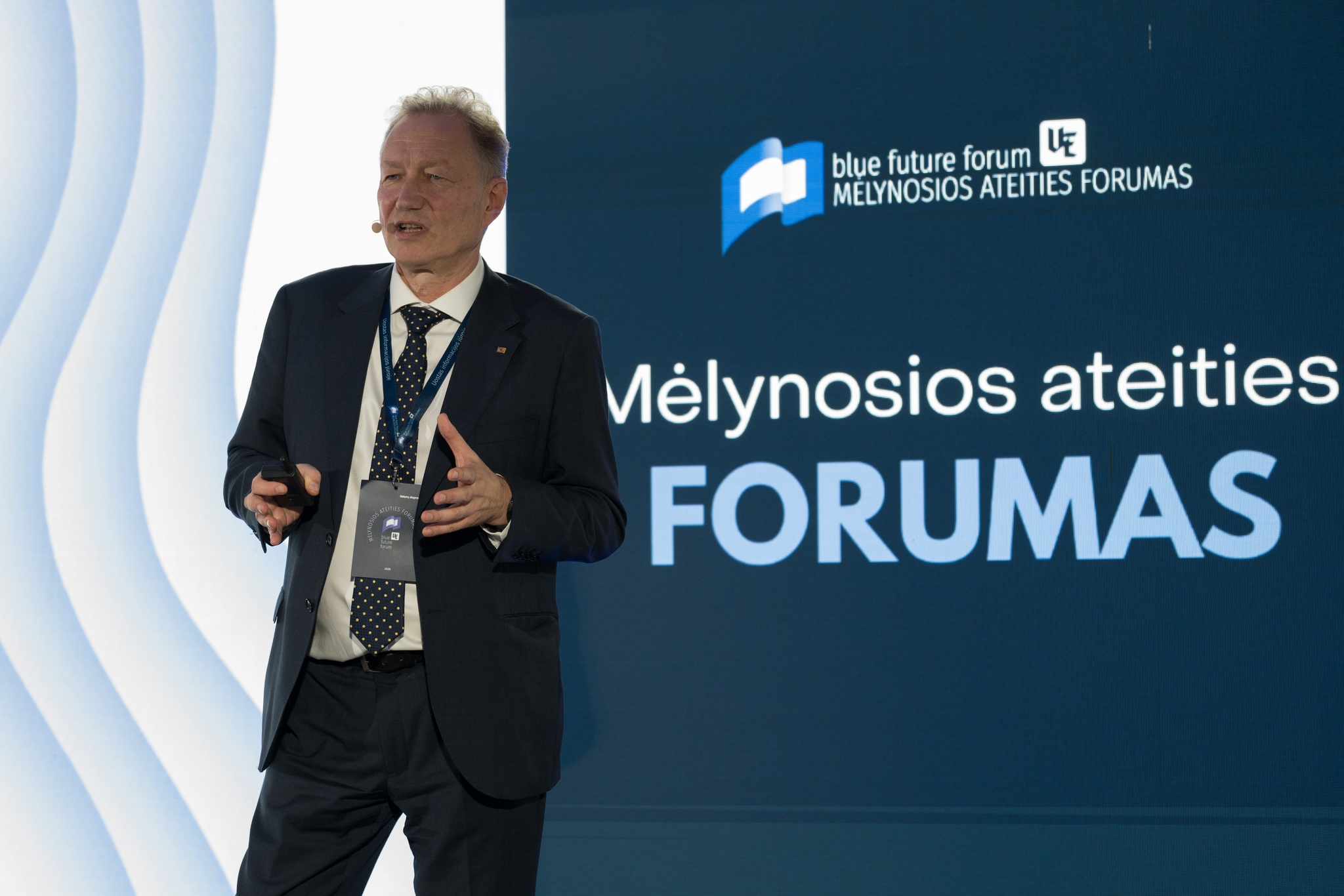
The future of coastal cities depends on the people who shape them. At the Blue Future Forum, held in Klaipeda on 24 September, discussions explored how cooperation between cities, businesses and communities, port development and new technologies can support long-term prosperity. Talent development was one part of this wider picture: how can cities help people build the skills to turn ideas into progress?
Klaipeda University Rector Prof. Dr Artūras Razbadauskas addressed the university’s role in this process, from encouraging early curiosity to supporting research with practical applications. The challenge is shared across Europe: sparking an interest is only the beginning. People also need guidance, experience and room to grow.
For EU-CONEXUS, connecting these stages is closely linked to its focus on smart urban coastal sustainability. Through cooperation between universities in nine European countries, the alliance broadens the knowledge, perspectives and networks available to students and researchers working towards this shared goal.
Help curiosity become a direction
A first visit to a university laboratory can make an unfamiliar subject feel accessible. At Klaipeda University’s STEAM Centre, pupils explore aquatic ecosystems, carry out experiments and discover robotics and engineering. Testing water may spark an interest in environmental science; building a robot may open a route into programming.
The lasting value depends on what follows. Further projects, encouragement from teachers and contact with researchers can help pupils turn an enjoyable experience into a deeper interest. University-linked classes in engineering, entrepreneurship and environmental technologies offer a way to continue exploring before making study choices.
For schools and universities, this means treating early engagement as a continuing relationship. A pupil who discovers an interest needs a clear next step and someone who can help them take it.
Show where knowledge can lead
As learners progress, real problems give their studies a purpose. Cleaning up an oil spill, for example, requires an understanding of the pollutant, the affected ecosystem and how a treatment will work outside the laboratory.
At Klaipeda University, researchers are developing biotechnology to tackle oil pollution in the Baltic Sea. This offers a concrete example of scientific knowledge being used to address an environmental need.
For students, involvement in research of this kind can make the learning process more meaningful. Defining a problem, testing an idea and assessing the results builds both technical knowledge and judgement. Cooperation with researchers and external partners also helps students understand the practical constraints that shape a solution.
Let talent grow across borders
The next step is to encounter different ways of thinking. A student may understand a challenge in their own region, but how is it approached elsewhere? Which lessons can be shared, and which solutions need to be adapted?
EU-CONEXUS creates a framework for this exchange through joint education, mobility and research activities. Students and staff can learn with peers from other countries, draw on expertise beyond their own institution and develop ideas together. These experiences build the ability to communicate across cultures and work with people from different disciplines.
The alliance’s joint research institutes extend this cooperation across life sciences, environmental research, coastal engineering, social sciences and the humanities. Such connections are essential when a problem involves both natural ecosystems and human decisions. A technology’s success may depend as much on community needs and behaviour as on its technical performance.
Make the next step possible
At every stage, progress depends on access to support: a teacher who recognises an interest, a research team that welcomes a new perspective, or a partner who helps test an idea. Mentoring, facilities, funding and professional networks give people the means to keep moving forward.
EU-CONEXUS strengthens this continuity by connecting the support of a home university with a wider European academic community. For the individual, that means more people to learn from and more possibilities to explore. For coastal regions, it means nurturing people who can connect knowledge across borders and use it where it is needed.
Growing talent is a long-term commitment: ensuring that an initial spark of curiosity has somewhere to go.