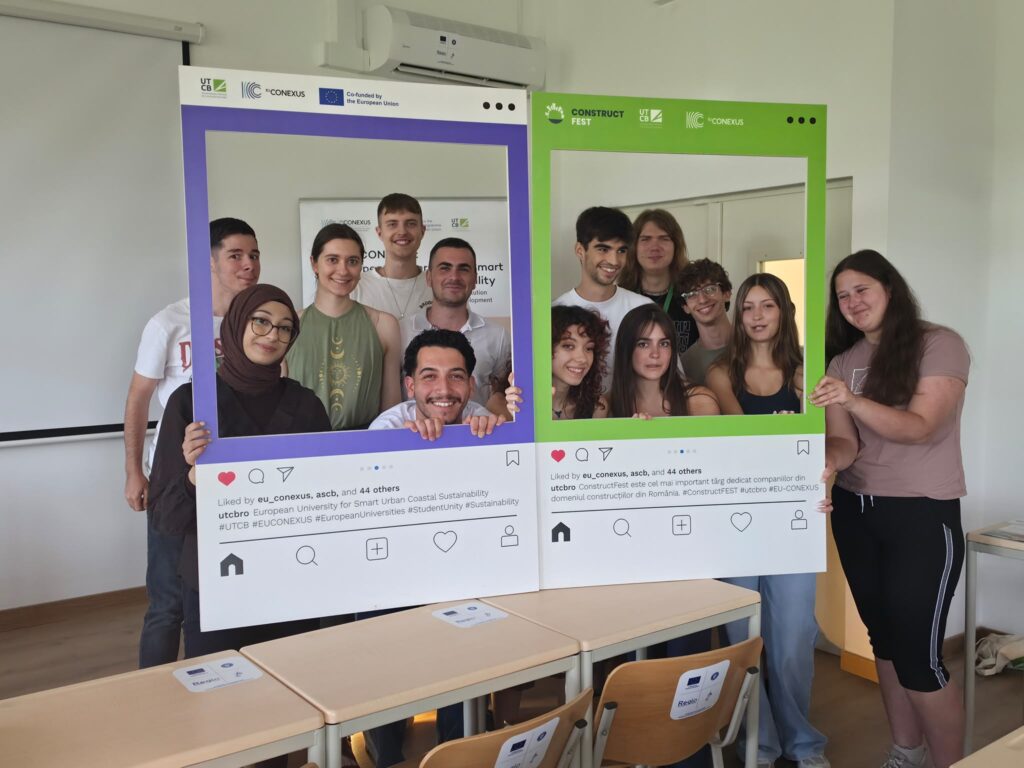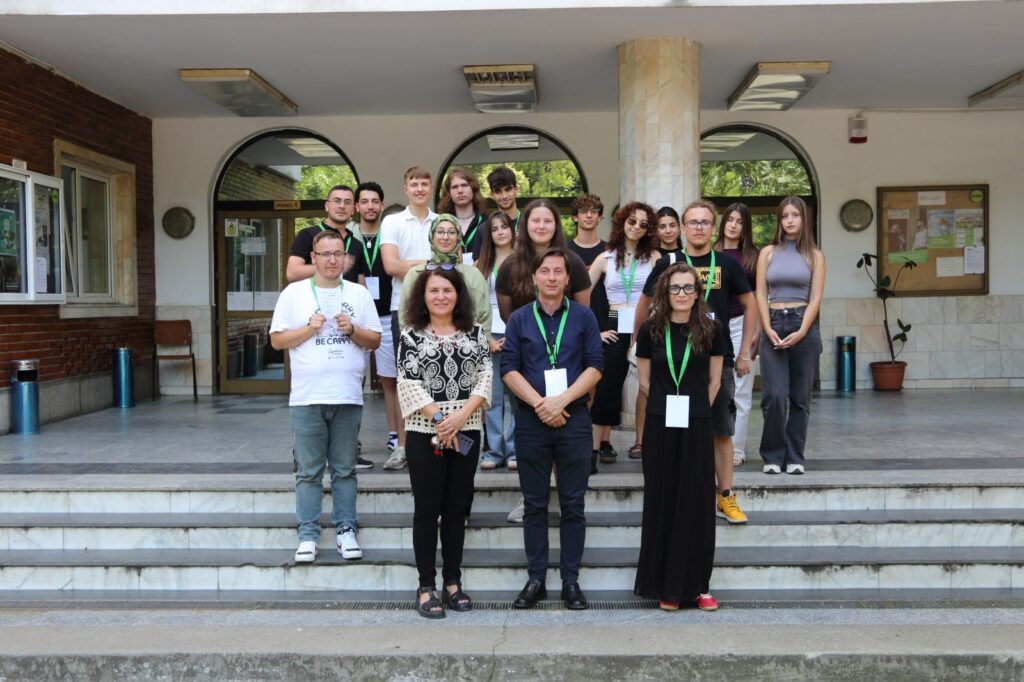
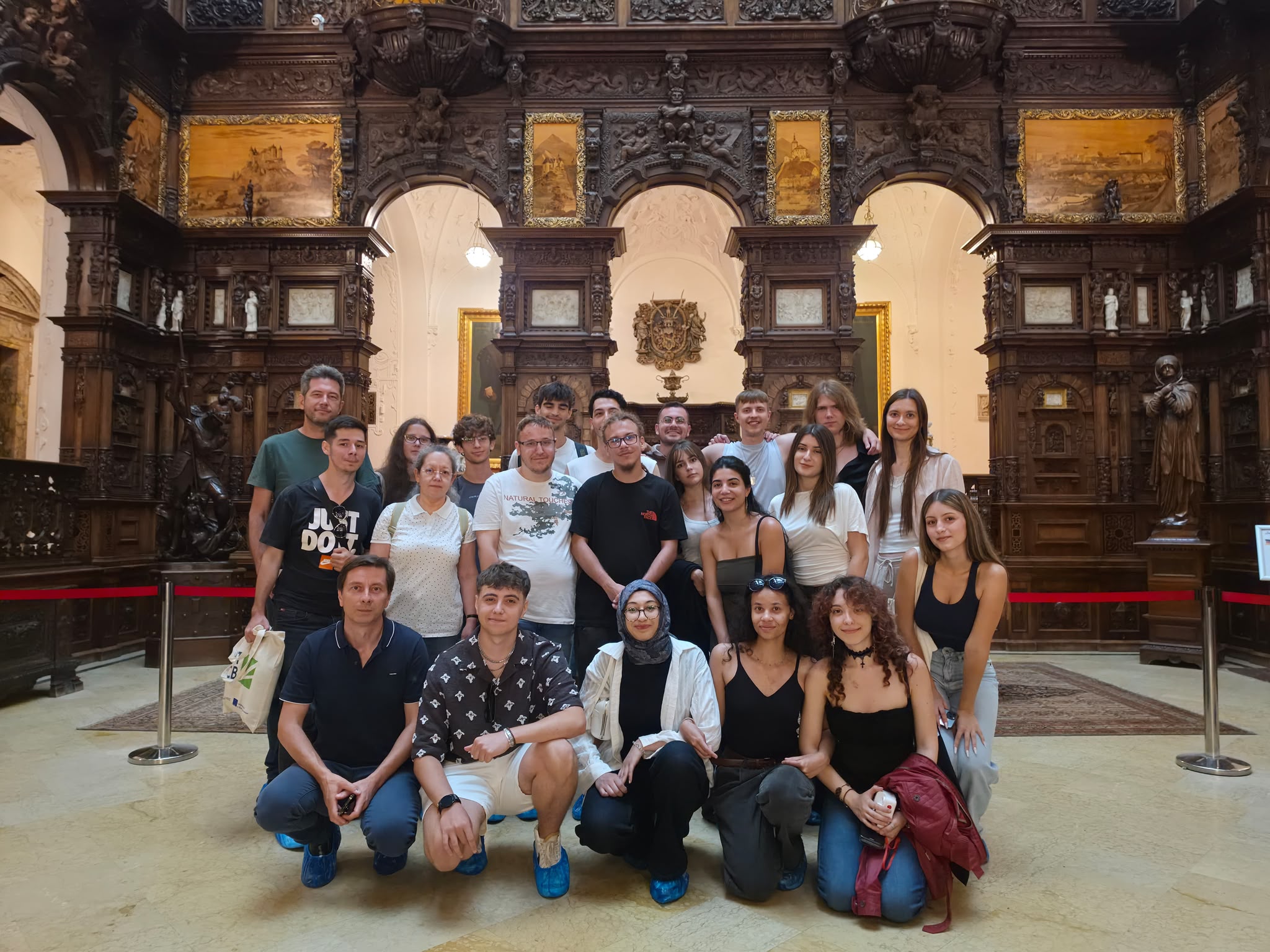
Between 29 June and 3 July 2026, the Technical University of Civil Engineering Bucharest (UTCB), through its Faculty of Geodesy, successfully organised the Blended Intensive Programme (BIP) “Digital Interaction with the Real World” in collaboration with academic partners from the University of Zadar (Croatia) and Frederick University (Cyprus). The programme brought together 20 students from six higher education institutions belonging to the EU-CONEXUS Alliance and the Erasmus+ network, offering an international and interdisciplinary learning experience centred on digital technologies, geospatial sciences and engineering practice.
The programme was designed to strengthen both technical and transferable skills by combining academic instruction with challenge-based learning (CBL), field activities, collaborative projects and intercultural teamwork. Throughout the week, participants worked in multinational teams, applying theoretical knowledge to practical scenarios while exploring the role of digital technologies in addressing real-world engineering challenges.
The academic programme covered a broad spectrum of topics within geospatial sciences and digital mapping. Lectures introduced students to maps as a medium of communication, geographical literacy, WebGIS applications for spatial data collection, GNSS-based geospatial data acquisition and processing, map projections, cartographic design and the integration of GIS as a design intelligence tool supporting urban planning and decision-making. These sessions provided participants with a comprehensive understanding of the digital workflows underpinning contemporary geodesy and engineering.
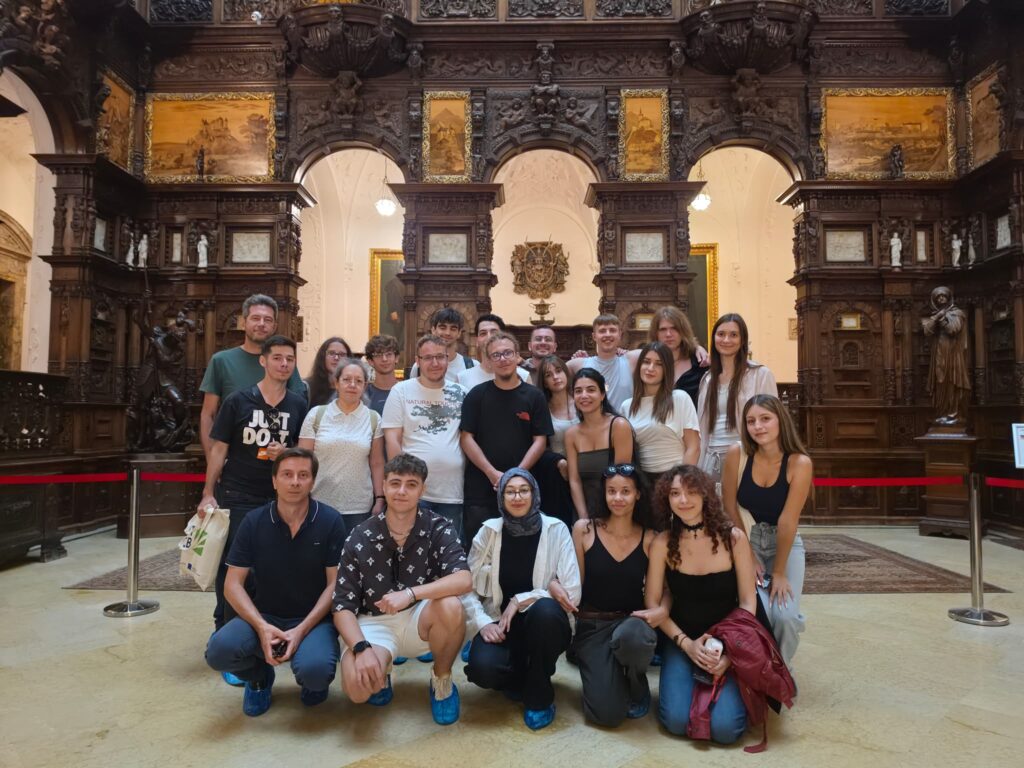
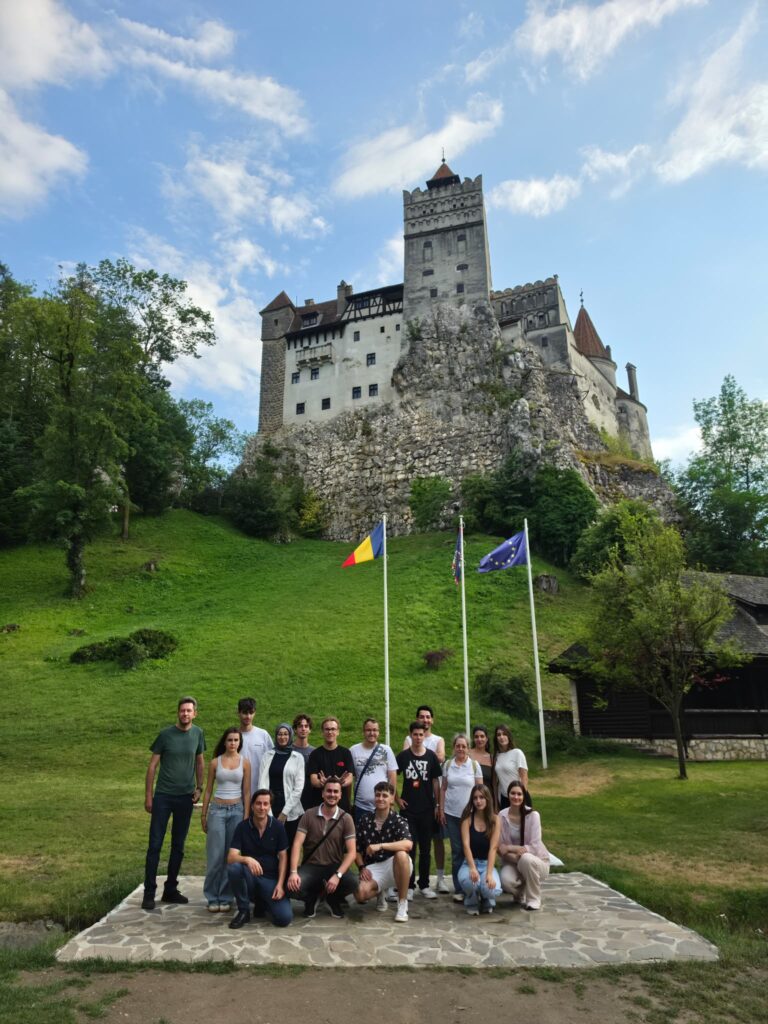
A defining feature of the programme was its emphasis on experiential learning. Students actively participated in a series of challenge-based activities that combined digital technologies with field investigations. Working in international teams, they created 3D models from photographic datasets, followed photogrammetric workflows for spatial documentation, identified and mapped points of interest in the Bran and Sinaia areas, collected building information using WebGIS applications at the Dimitrie Gusti National Village Museum, documented historical navigation methods during activities at the Astronomical Observatory, and explored the importance of cartographic heritage through practical exercises at the National Museum of Maps and Old Books. These experiences enabled participants to bridge theoretical concepts with practical applications while developing essential fieldwork and digital data processing skills.
The programme also integrated online learning components through Moodle, where participants completed a sequence of assignments involving dataset preparation, analytical reporting and the digital representation of spatial information. The final stage of the programme culminated in team presentations, during which students showcased the outcomes of their collaborative projects, reflected on their learning experience and demonstrated their ability to communicate technical results within an international academic environment.
Beyond the acquisition of technical expertise in GIS, WebGIS, GNSS technologies, photogrammetry and cartography, the Blended Intensive Programme fostered the development of key transferable skills, including intercultural communication, teamwork, critical thinking, problem-solving and project management. By working alongside peers from different academic and cultural backgrounds, participants gained valuable international experience while strengthening their capacity to address complex engineering challenges collaboratively.
The successful implementation of Digital Interaction with the Real World reflects UTCB’s continued commitment to internationalisation, educational innovation and academic excellence. Through initiatives developed within the EU-CONEXUS Alliance and the Erasmus+ Programme, the Faculty of Geodesy continues to promote interdisciplinary education that connects digital technologies with societal needs, preparing future engineers and geospatial specialists for an increasingly interconnected and technology-driven world.
The programme stands as another example of how international academic cooperation can enrich higher education by combining scientific knowledge, practical experience and multicultural collaboration, while creating meaningful opportunities for students to learn, innovate and contribute to the future of sustainable engineering and digital transformation.