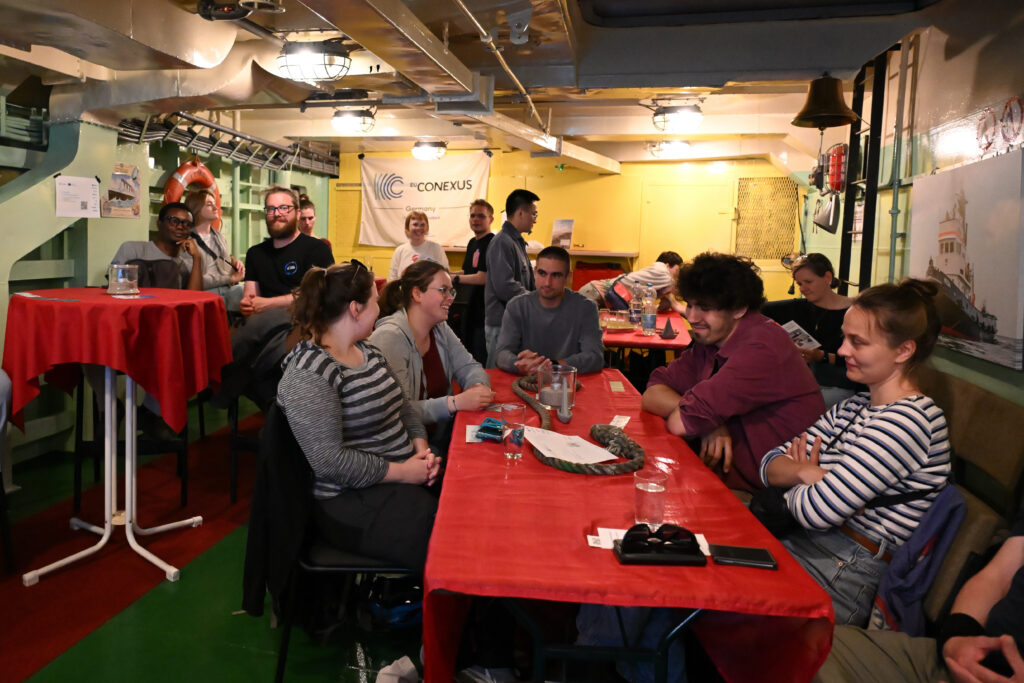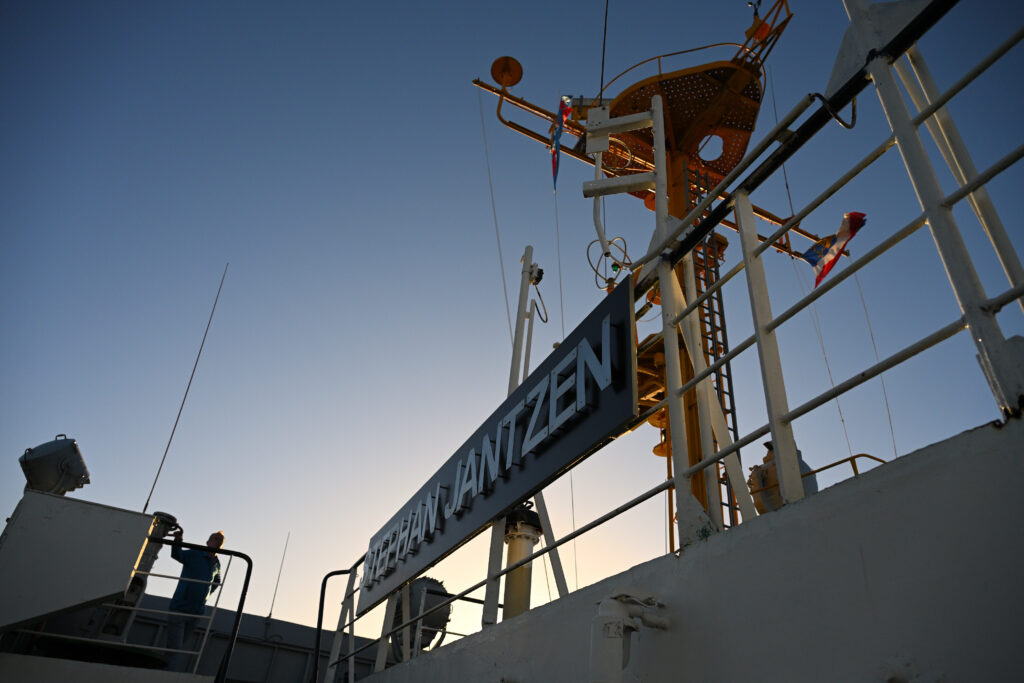
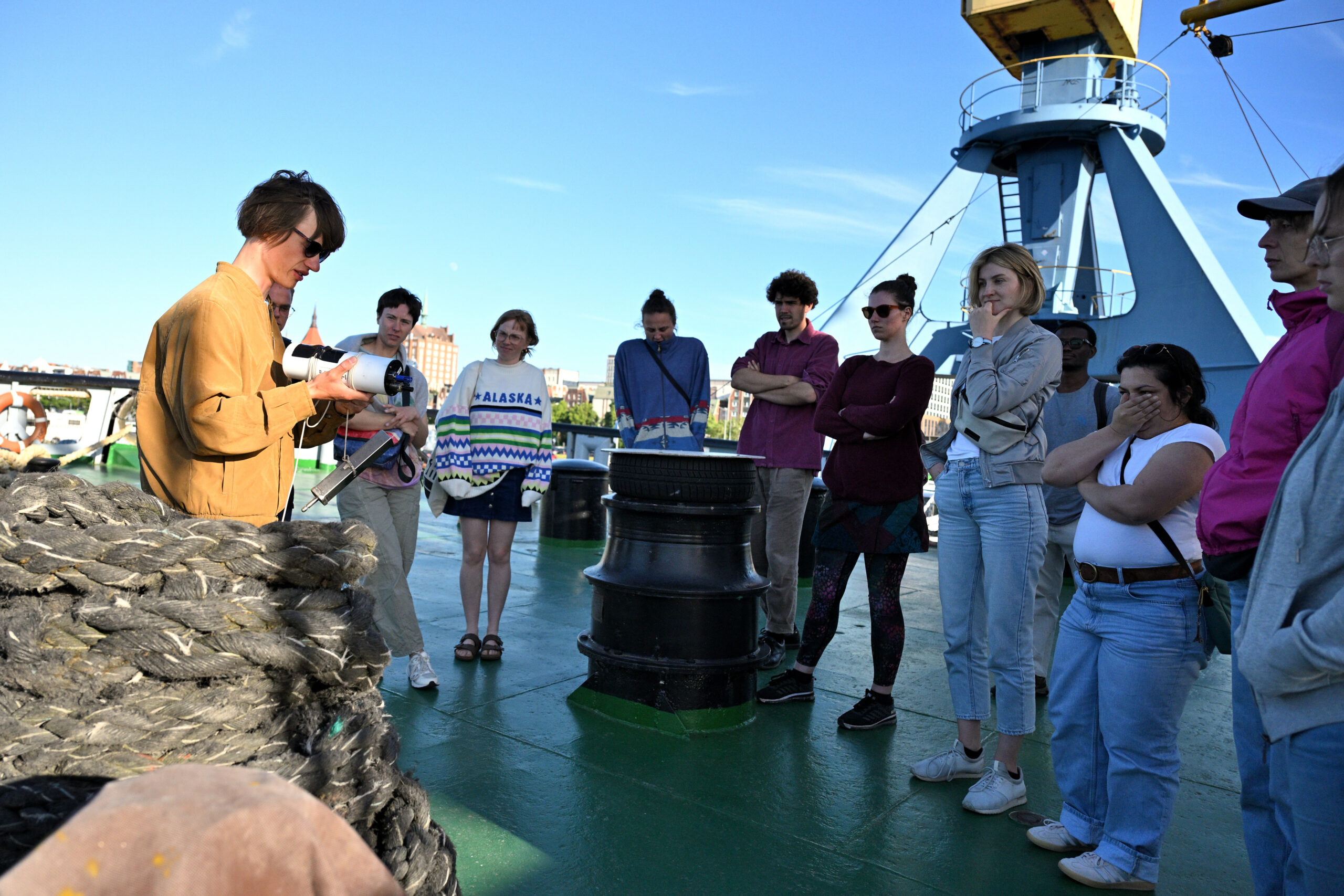
On a mild evening in Rostock’s city harbour, the historic vessel Stephan Jantzen became the setting for an event that showcased how student ideas can evolve into real research. Around 20 participants gathered for “Adventure with Added Value”, an evening dedicated to the international student project Sail CONEXUS within the EU-CONEXUS community.
Student ideas turned into real research at sea
Sail CONEXUS began as a student initiative and developed into an international sailing and research expedition across the Baltic Sea. Students from Germany, Lithuania and Croatia joined forces aboard the sailing vessel UNIVERSITAS, combining marine research with teamwork, navigation and intercultural collaboration.
During the expedition, the team collected environmental data on water temperature, salinity and oxygen levels, contributing to ongoing research on the Baltic Sea while experiencing life and work at sea.
Hands-on science on board the Stephan Jantzen
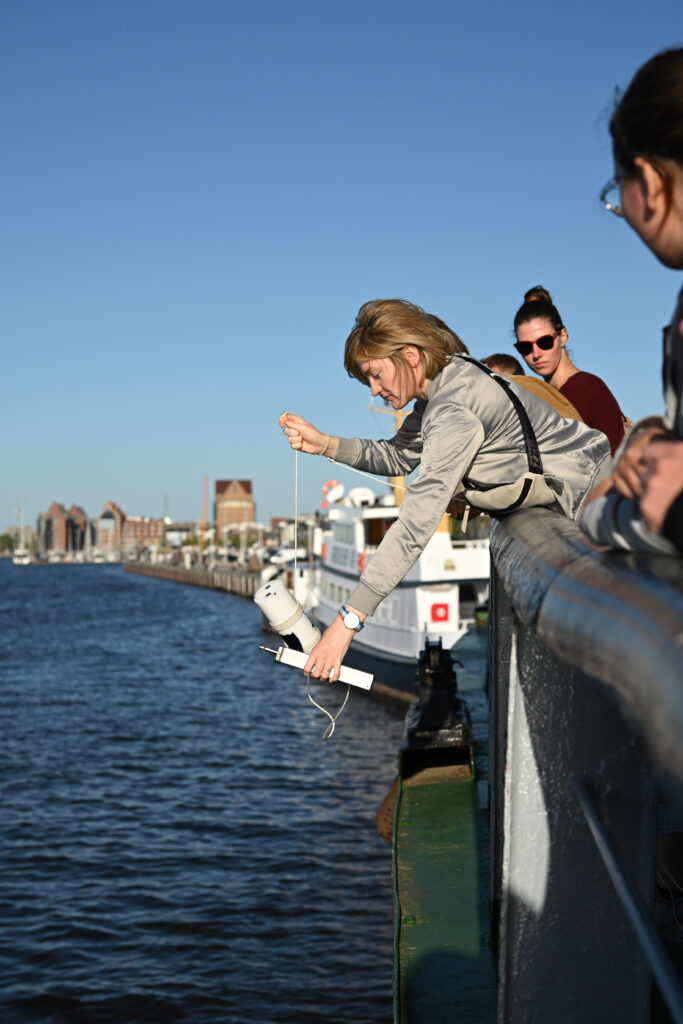
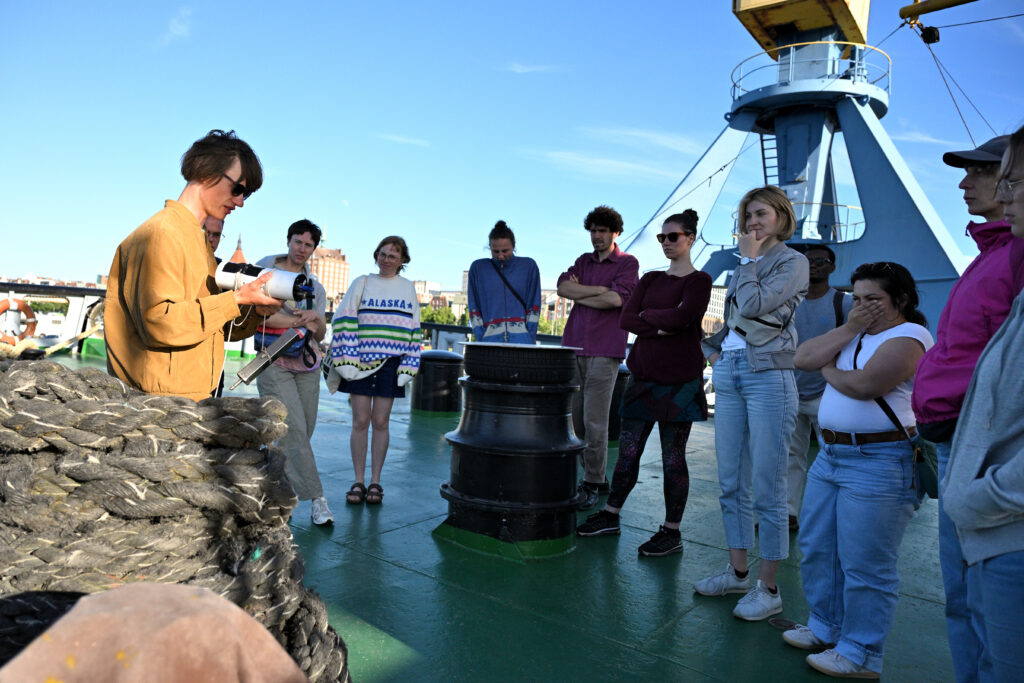
A key moment of the event was a live demonstration on the aft deck of the Stephan Jantzen. Using the open-source measuring system HyFiVe, participants were able to observe how environmental data is collected in real time as sensors were deployed into the water.
The demonstration illustrated how marine research can be made accessible beyond traditional laboratory or research vessel settings.
Learning beyond the classroom
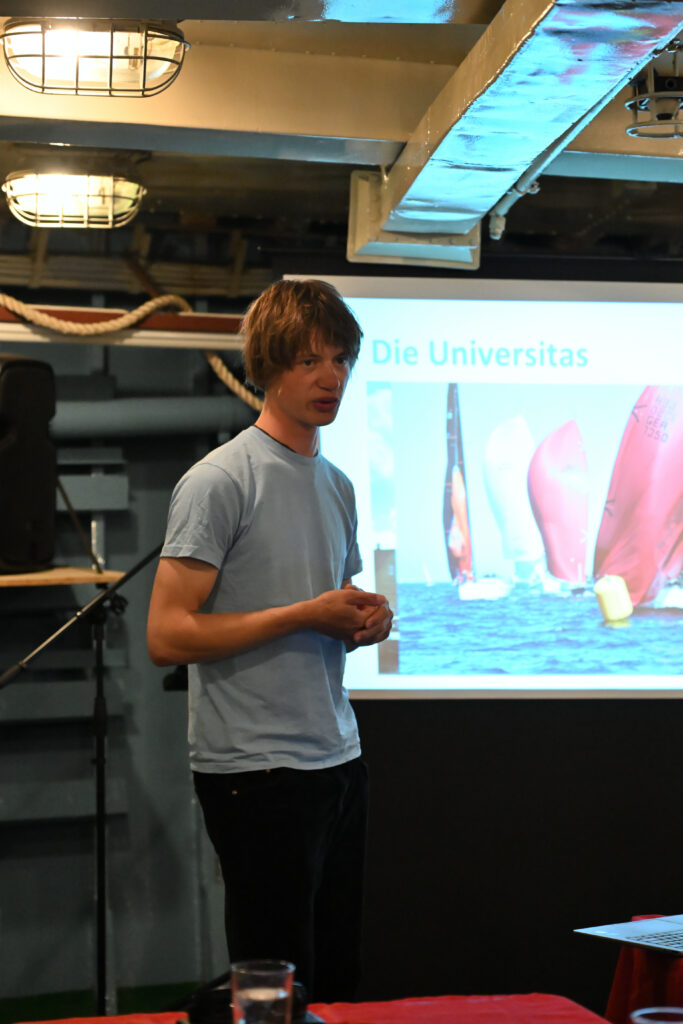
Project initiator Theobald Goltz, a student of environmental sciences at the University of Rostock, shared insights into the expedition. A total of 15 students participated in the project, with around ten on board at any given time.
Life at sea included night-time measurements, close teamwork in limited space and challenging conditions such as changing weather and seasickness — all of which contributed to a strong team dynamic and shared learning experience.
While balancing the project with university studies was demanding, the experience provided learning opportunities that extended far beyond the academic curriculum.
Scientific relevance for the Baltic Sea
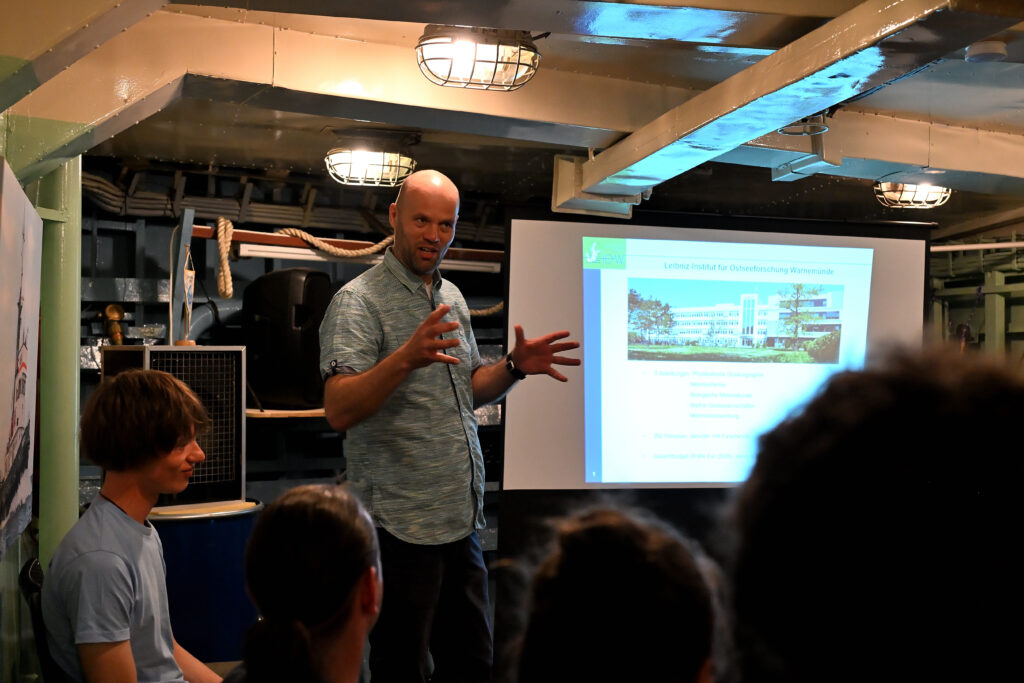
From a research perspective, Dr Michael Naumann of the Leibniz Institute for Baltic Sea Research Warnemünde (IOW) highlighted the importance of long-term environmental monitoring in the Baltic Sea. Continuous data on temperature, salinity and oxygen levels is essential for understanding ecosystem changes and environmental trends.
The open-source system HyFiVe is designed to support this approach by enabling broader data collection beyond traditional research infrastructures, including potential use in fisheries or shipping.
Wider environmental context
The importance of such monitoring became particularly evident following a fish kill off the coast of Rostock in autumn 2025, which was linked to oxygen-depleted water layers. Events like this underline the need for continuous and wide-scale environmental observation in the Baltic Sea.
European collaboration in action
The event took place as part of the European Weeks and demonstrated how European cooperation in higher education can work in practice. Within EU-CONEXUS, students develop ideas together, collaborate across borders and actively contribute to scientific research.
Sail CONEXUS stands as an example of how student initiatives can grow into meaningful international projects when given the space and support to develop.