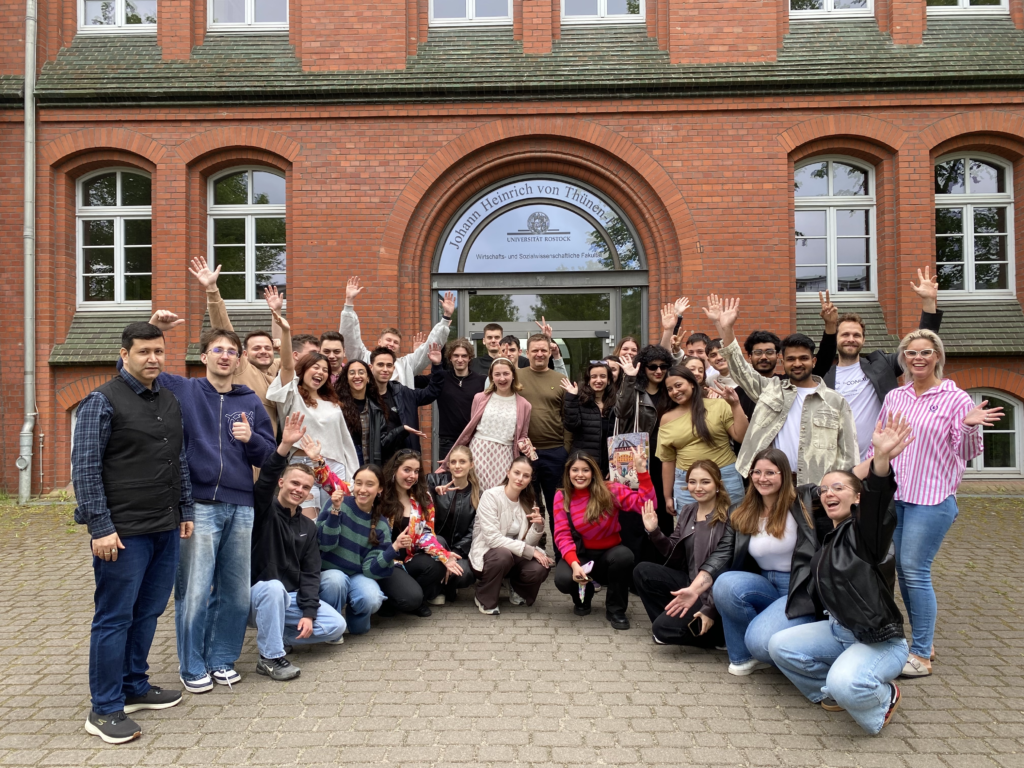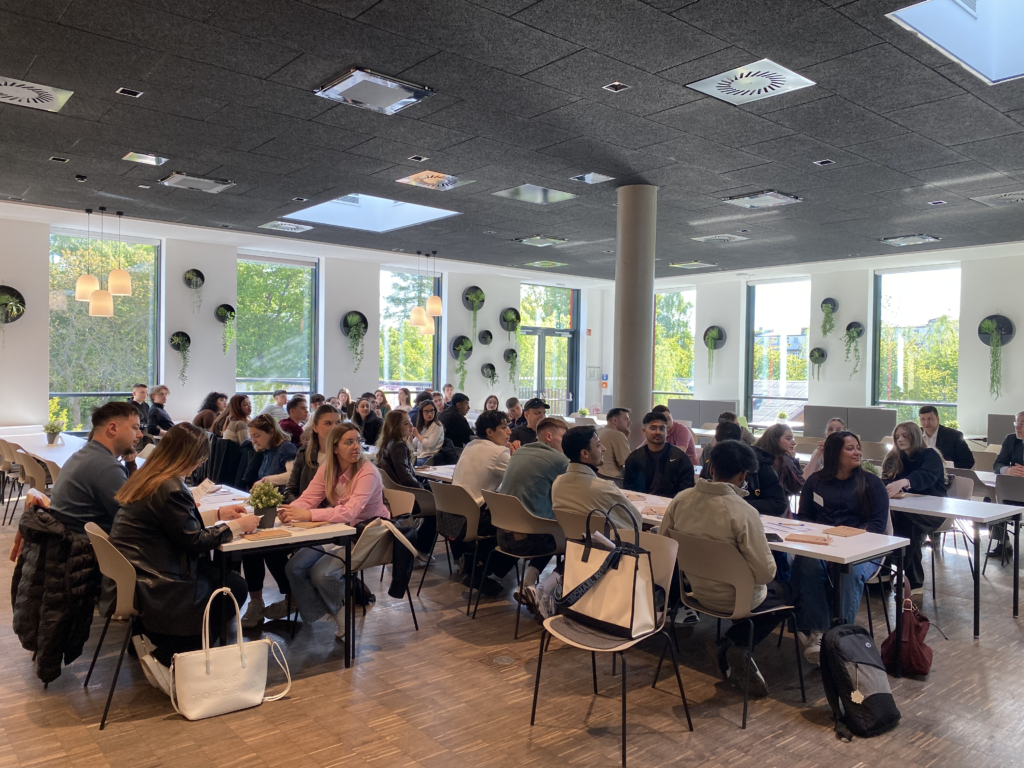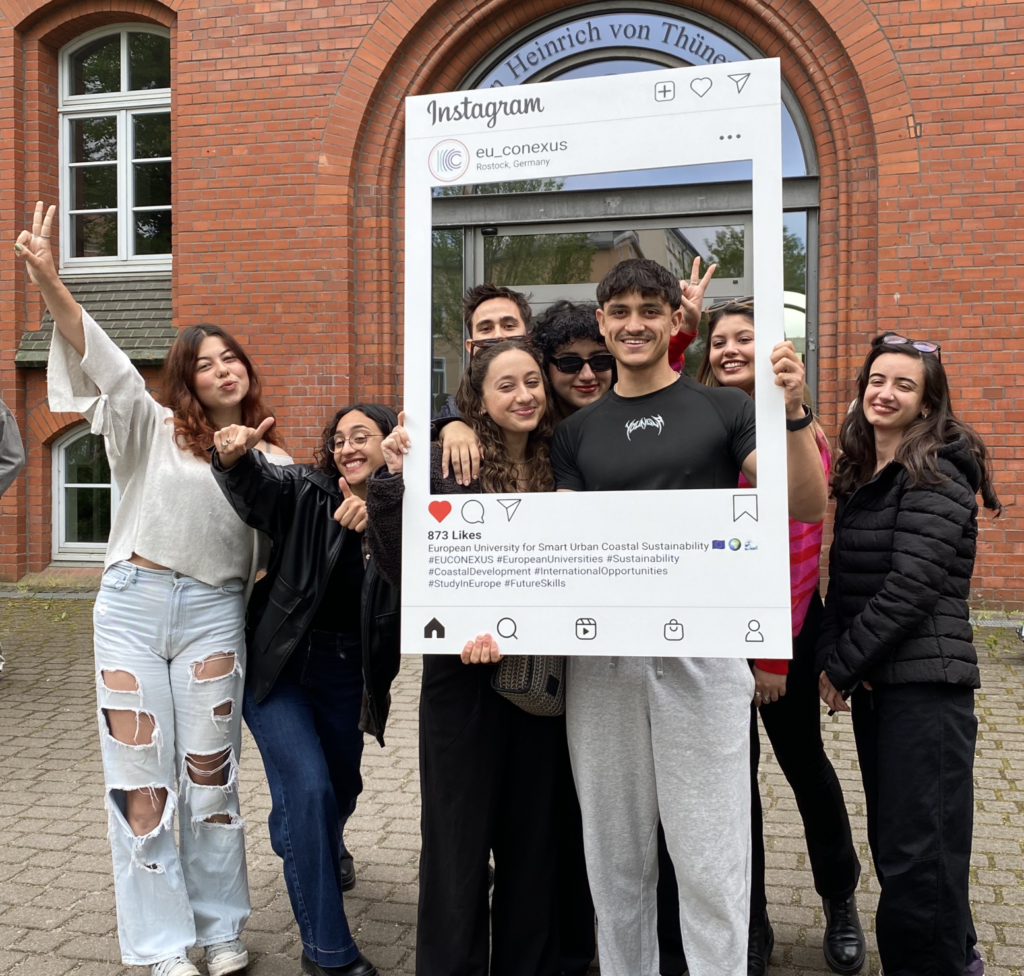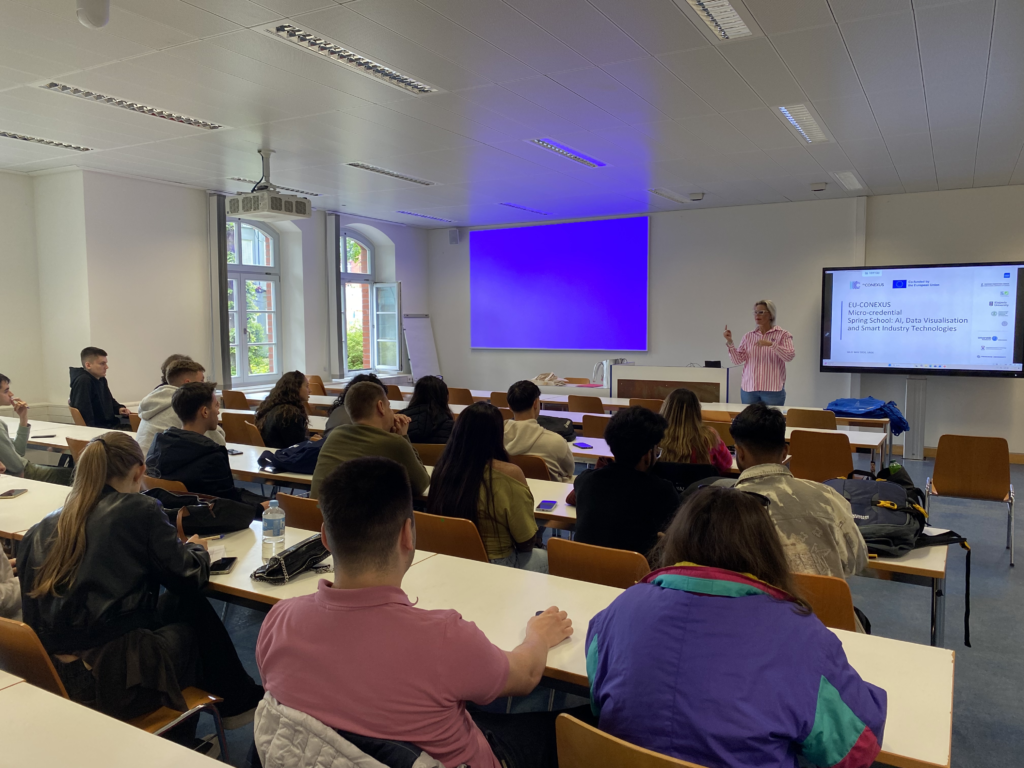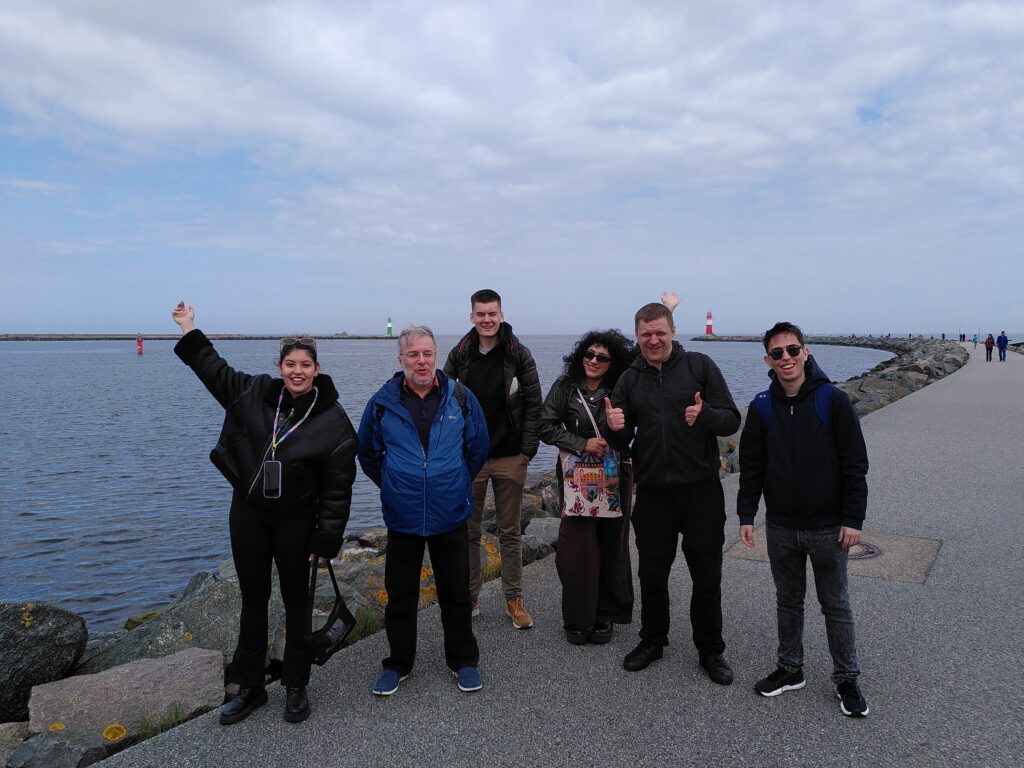
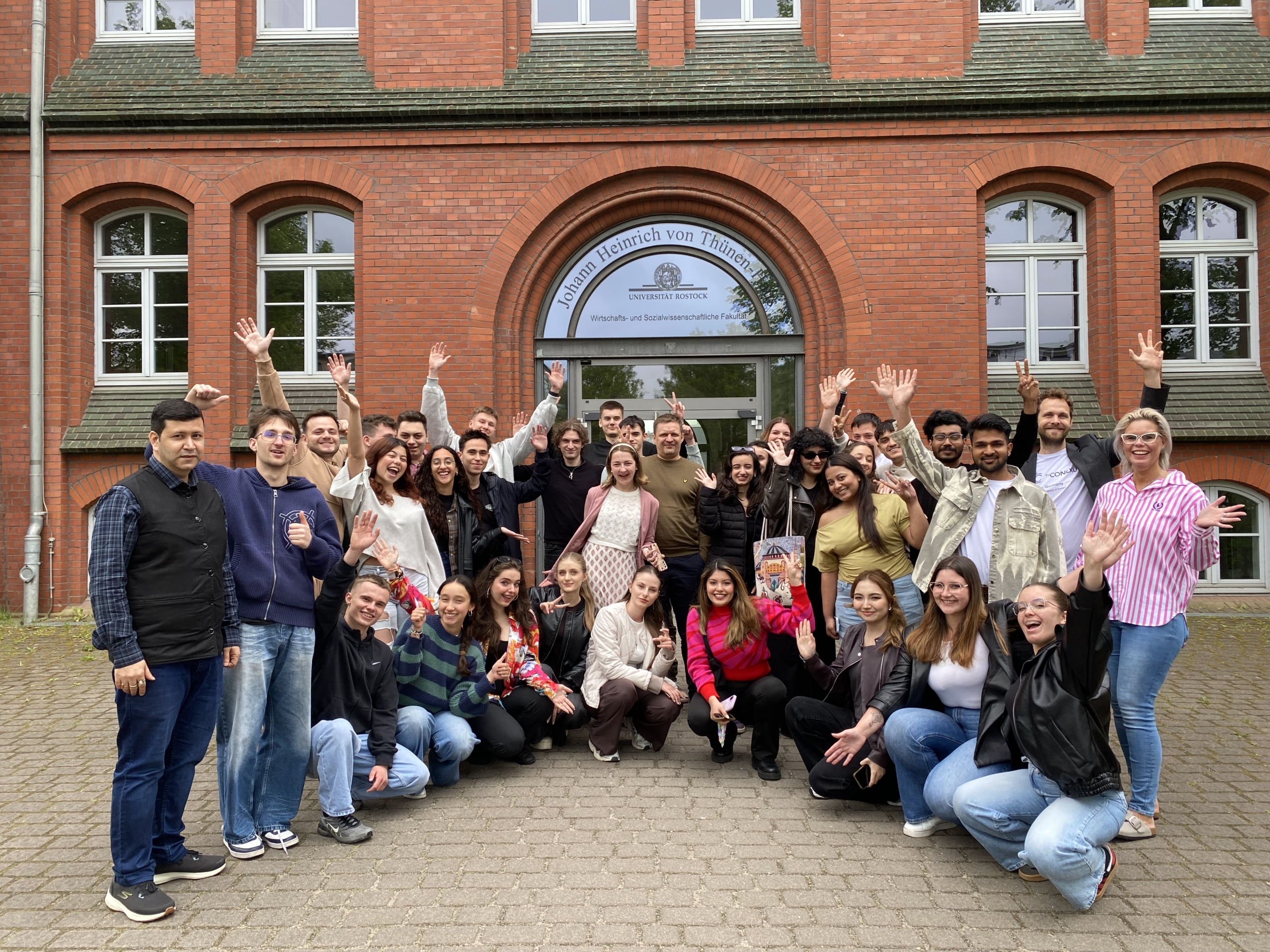
From 18 to 22 May 2026, the University of Rostock hosted the EU-CONEXUS Micro-Credential Spring School “AI, Data Visualisation & Smart Industry Technologies”. The intensive programme brought together 45 students from EU-CONEXUS partner universities, offering a compact, practice-oriented week focused on key topics in digital transformation.
The Spring School was organised by the University of Rostock under the coordination of Sabine Brüser, in collaboration with academic staff and participating departments.
Flexible courses and applied learning
Participants selected two out of four available Micro-Credentials. All courses were designed to be accessible without prior knowledge and strongly practice-oriented:
- Artificial Intelligence (in a Nutshell) – Prof. Thomas Kirste, Dr. Sebastian Bader
- Essentials of Power BI Data Visualisation and Modelling – Dr. Jayanta Bora
- IoT Cloud for Digital Twins– Prof. Jörn Plönnigs
- Advanced Technologies for Sustainable Industries 4.0 – Prof. Giovanni Di Noto
Focus on digital future skills
The programme focused on key competencies for digital transformation, including artificial intelligence, data visualisation, industrial digitalisation and sustainable technologies.
By combining foundational knowledge with applied perspectives, the Spring School enabled students to develop skills relevant to both academic and professional contexts – from data-driven decision-making to innovative industrial applications.
European collaboration within EU-CONEXUS
A central element of the programme was international collaboration within the EU-CONEXUS alliance. Students worked in a diverse academic environment, exchanged perspectives and engaged with different cultural and educational backgrounds.
The format also provided insight into a “Short Mobility” experience – a short-term international learning opportunity that often serves as a first step towards longer study abroad periods.
Highlight: Marine Science Center in Warnemünde
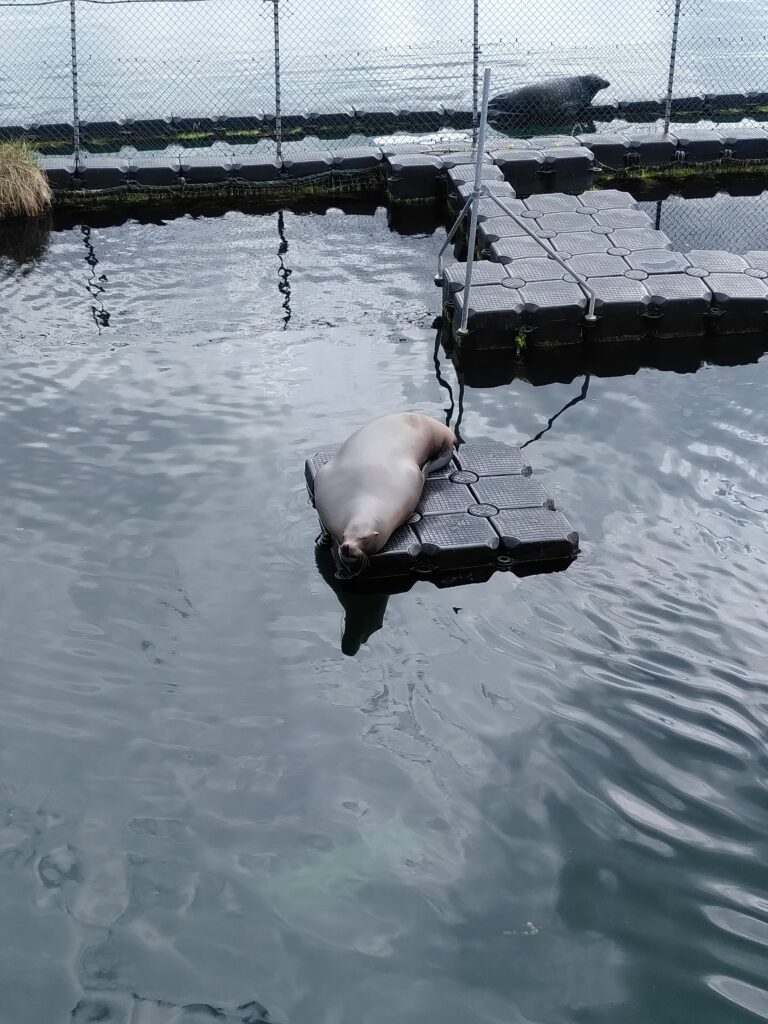
Among the highlights of the week were two visits to the Marine Science Center in Warnemünde, a unique research and outreach facility of the University of Rostock in cooperation with the Leibniz Institute for Baltic Sea Research Warnemünde (IOW).
The facility offers insights into ongoing marine research focusing on the sensory and cognitive abilities of seals. Particular attention is given to their highly sensitive vibrissae (whiskers), which allow them to detect subtle water movements and navigate their environment.
During the visit, students gained first-hand insights into current research practices and observed the interaction between scientific work and animal behaviour. The training of the seals is based on positive reinforcement, with the animals voluntarily participating and being rewarded with fish.
The visit provided a vivid perspective on modern marine research and was widely regarded as one of the highlights of the week.
Conclusion
The EU-CONEXUS Spring School in Rostock demonstrated how compact international learning formats can combine digital skills development with European academic exchange. The combination of hands-on courses, intercultural collaboration and research experiences created an intensive and valuable learning experience for all participants.