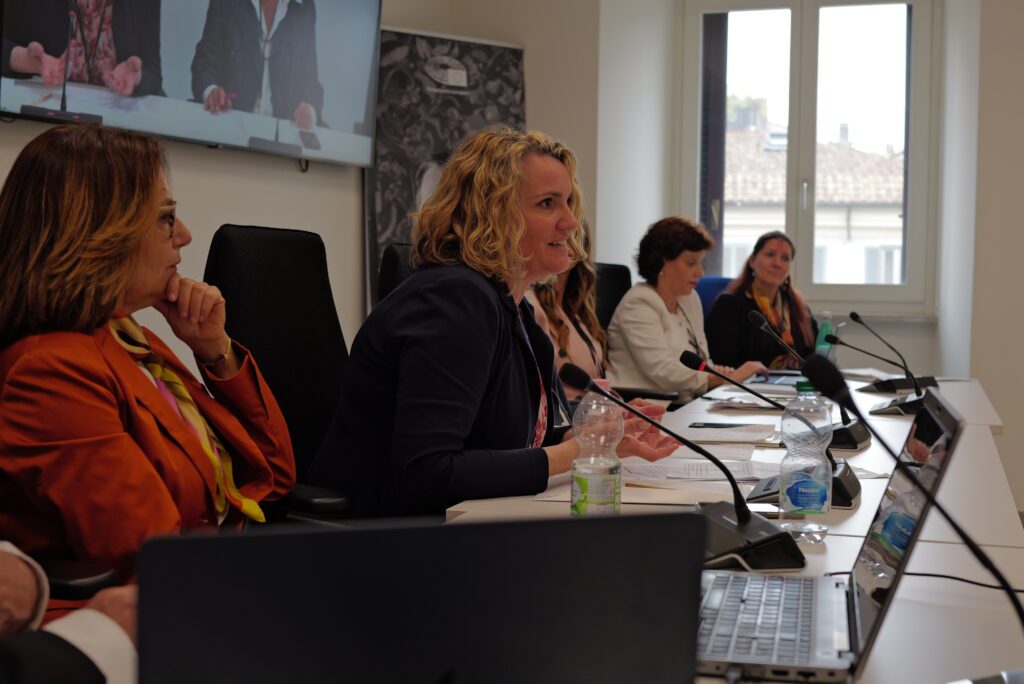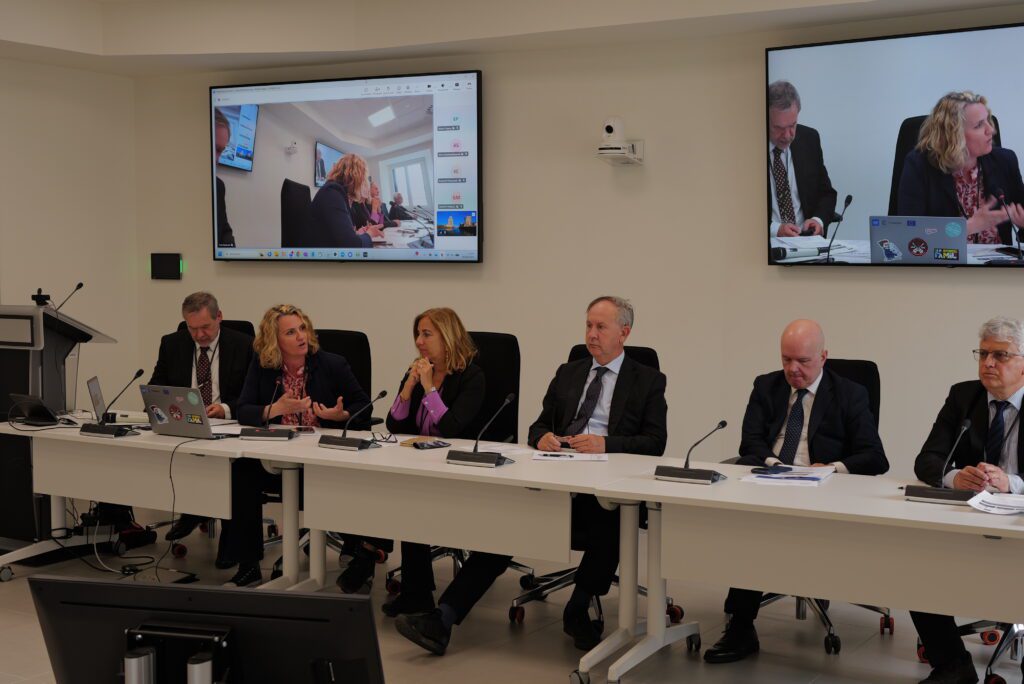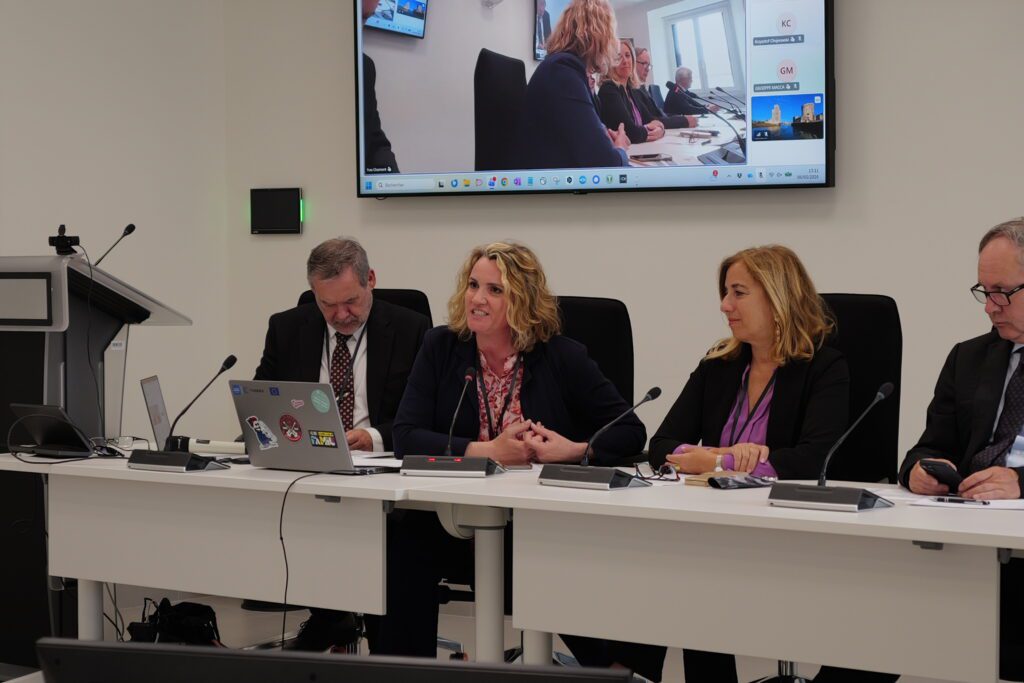
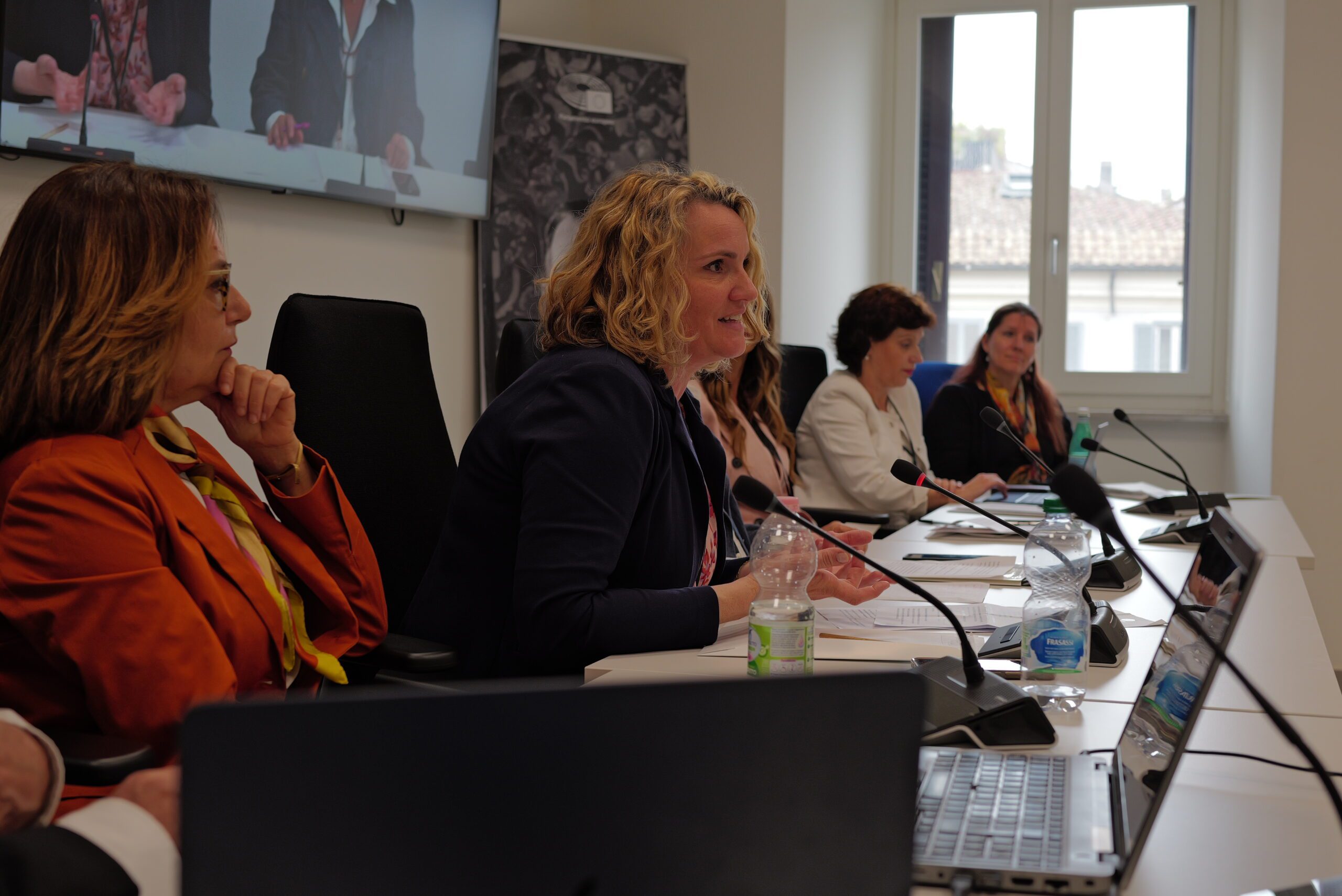
On Wednesday 6 and Thursday 7 May 2026, Caroline Grand, member of the EU-CONEXUS Joint Communication Unit and Director of Communication at La Rochelle Université, took part in the international seminar of the Club of Venice in Rome, organised in cooperation with Cap’Com and Sapienza University of Rome.
The seminar, entitled “Synergies in Communicating Europe”, focused on youth and civil society engagement, cooperation with scientific communities, disinformation, AI and the transformations of European public communication. These themes closely reflected the ongoing reflections and work carried out within EU-CONEXUS by the Joint Communication Unit, particularly during its latest working seminar held in Zadar a few weeks earlier, dedicated to community engagement, communication impact and the qualitative evaluation of European projects.
The seminar opened at the European Parliament Liaison Office in Italy, in Rome, in the presence of Vincenzo Le Voci, Secretary General of the Club of Venice; Laura Cavallo, Director General of the Italian Department for European Affairs at the Presidency of the Council of Ministers; Carlo Corazza, Head of the European Commission Representation in Italy; Claudio Casini, Head of the European Parliament Office in Italy as well as Caroline Grand representing Cap’Com and La Rochelle Université.
The round table featuring Caroline Grand brought together several European speakers from institutions, universities, ministries and the public communication sector, including Gea Ducci (University of Urbino Carlo Bo), Ivana Crnic (Croatian Ministry of Foreign and European Affairs), Nikolina Lakic (Ministry of Finance of Montenegro), Isabel Celeste Monteiro da Fonseca (University of Minho, Braga), Lucie Sýkorová (European Centre for Press and Media Freedom, Prague), Giuseppe Macca (Kore University, Enna) and Arno Scharl (Modul University, Vienna).
Drawing on the experience and work carried out within the EU-CONEXUS Joint Communication Unit, Caroline Grand shared several reflections collectively developed within the alliance on:
- engaging audiences in complex European projects,
- translating European policies and cooperation into local realities,
- cooperation with scientific communities,
- and the importance of going beyond visibility to foster genuine understanding, appreciation and participation.
Her contribution formed part of a broader discussion on the need to move from communication focused primarily on reach and visibility towards more contextualised, useful and impact-oriented approaches, measured through qualitative indicators such as understanding, usefulness, participation and sense of belonging.
This intervention also highlighted the collective work and professionalism of the EU-CONEXUS Joint Communication Unit, which brings together communication professionals from across the alliance around shared reflections on European communication, community engagement and the qualitative assessment of communication impact.
The seminar provided an opportunity to showcase the EU-CONEXUS experience within a European dialogue space bringing together institutions, governments, universities, media organisations and professional public communication networks. It also contributed to wider reflections on how communication can support not only the visibility of European projects, but above all their understanding, appropriation and tangible impact on communities.
PS: The Club of Venice is a European network bringing together, since 1986, communication leaders from governments, European institutions and international organisations around major issues related to public communication in Europe. Cap’Com is the French professional network for public and territorial communication.