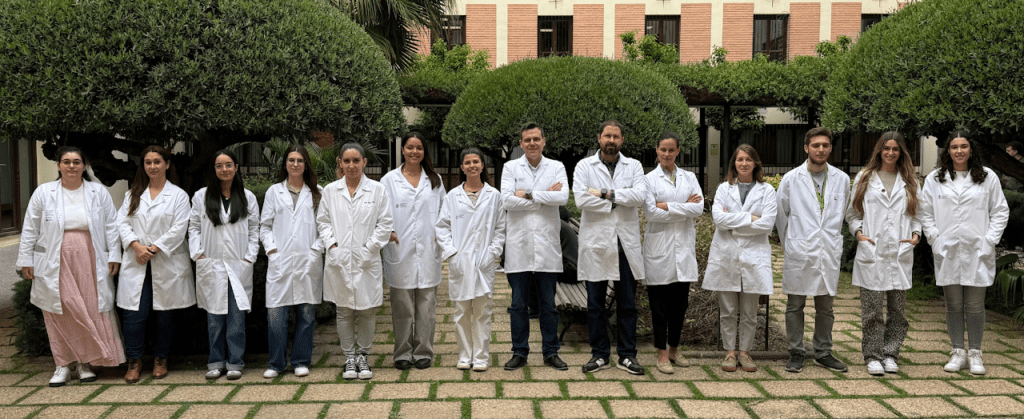
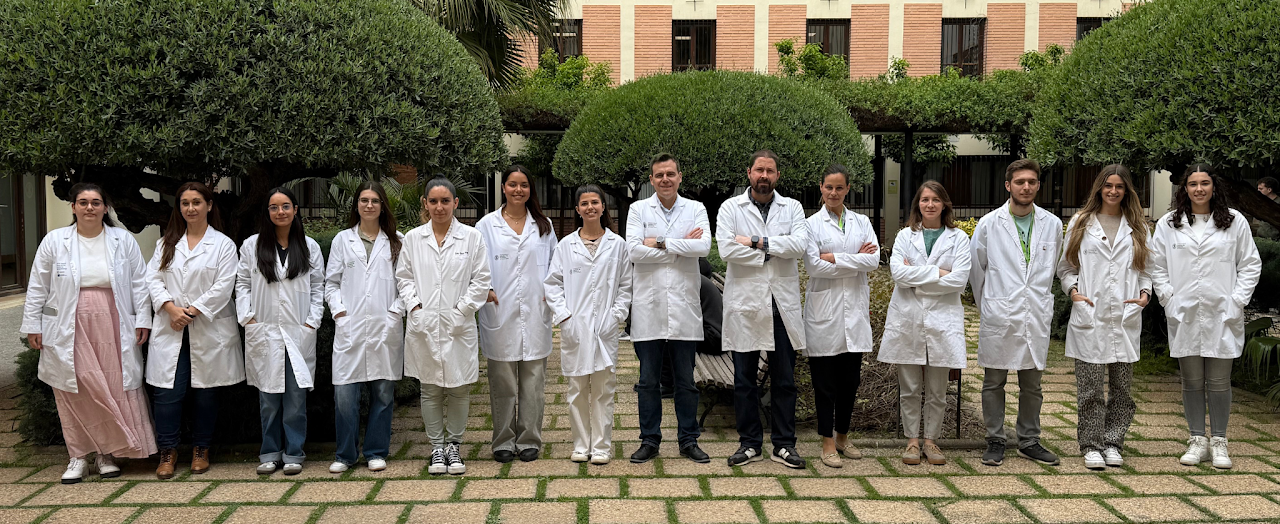
The Biomaterials and Bioengineering Laboratory at the Catholic University of Valencia, led by researcher Ángel Serrano, has spearheaded an international project in collaboration with Kyoto University and the Institute of Science Tokyo that has succeeded in developing an innovative method for evaluating antiviral materials without the need to work with dangerous viruses in high-security laboratories.
This breakthrough, published in the prestigious journal Materials Today Advances, makes it possible to safely and efficiently analyse the ability of different materials to inactivate a virus — achieving efficacy levels that in some cases have exceeded 99% against pathogens such as COVID-19. The system uses bacteriophages, harmless viruses that only infect bacteria, enabling research to be carried out under far more accessible conditions, at lower cost and with reduced biosafety requirements, thereby accelerating the discovery of antiviral materials and reducing the generation of infectious waste. In addition, it combines enveloped and non-enveloped viral models, broadening its ability to assess material effectiveness of materials.
“In the antiviral field, treatments are fairly limited, so a preventive approach is extremely important, and that is where materials play a key role,” explains Miguel Martí, researcher at the Catholic University of Valencia. He points out that the main obstacle until now has been the need to work with pathogenic viruses in high-biosafety environments, which considerably increases costs and restricts this type of research.
The study, led by principal investigator Ángel Serrano, also involved Miguel Martí and Alba Cano from the Catholic University of Valencia, as well as Rina Hashimoto from the Institute of Science Tokyo and Kazuo Takayama from both the Institute of Science Tokyo and Kyoto University.
Applications in healthcare, industry and prevention
The method has broad potential for the development of solutions across a range of fields, from healthcare protection to industrial applications. These include personal protective equipment such as masks and face shields, wound dressings, therapeutic hydrogels, air filtration systems and antiviral surface coatings.
Its versatility has been demonstrated across different types of biomaterials, reinforcing its potential for technology transfer. Specifically, it has been validated in electrospun polyester matrices, commonly used plastics in protective equipment such as polyethylene terephthalate (PET), as well as calcium alginate hydrogels used in biomedical applications, covering systems with a wide range of physical properties and applications.