EU-CONEXUS institutional coordinator at Klaipeda University, professor dr. Rima Mickevičienė, participated in the Erasmus+ “Info Baltic Days 2026” in Riga on 28–30 April 2026, representing the European University alliance EU-CONEXUS and joining discussions on the future of European higher education cooperation, internationalisation, and the evolving role of university alliances in Europe.
The Erasmus+ “Info Baltic Days 2026” in Riga became an important platform for discussing how European higher education is changing in response to geopolitical, societal, and institutional challenges — and what role European Universities alliances will play in this transformation.
One of the strongest messages throughout the event was that international cooperation in higher education is moving beyond short-term project implementation toward long-term strategic integration between universities. Discussions repeatedly highlighted that European Universities alliances are increasingly expected to become stable cooperation structures capable of shaping institutional development, strengthening research capacity, promoting innovation, and creating deeper connections with regional ecosystems.
The presentation by DG EAC representative Albert Sese-Ballart on the future direction of Erasmus+ and transnational higher education cooperation provided important insight into the European Commission’s evolving priorities for the next programming period. Much attention was given to how European higher education policy is gradually shifting from supporting isolated initiatives toward encouraging sustainable institutional transformation, stronger governance models, and measurable long-term impact.
The discussions also revealed that universities are being encouraged to invest more of their own institutional resources into alliance activities, integrating cooperation more deeply into strategic planning, research priorities, and academic development rather than treating alliances solely as externally funded projects.
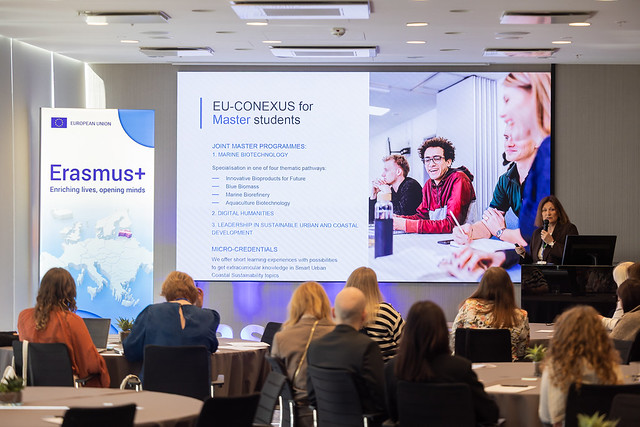
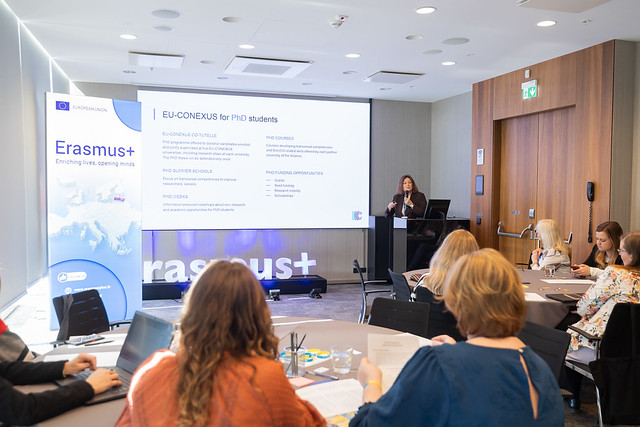
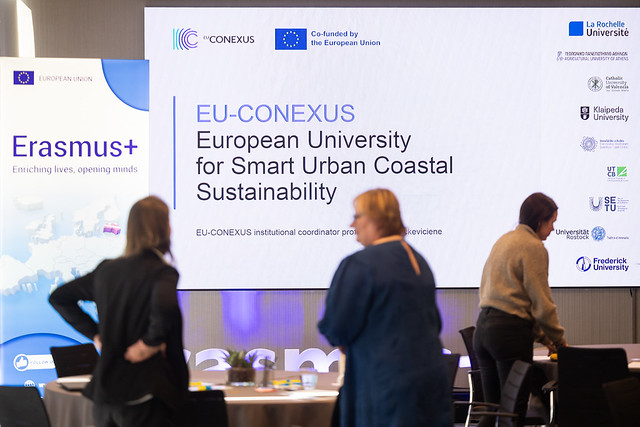
Another important topic was the practical impact of European Universities alliances. During the dedicated session on the European Universities Initiative, Professor Rima Mickevičienė presented the EU-CONEXUS alliance and shared its experience in developing joint activities in education, research, innovation, and stakeholder engagement. The exchange with participants demonstrated that, outside alliance communities themselves, awareness of the initiative still varies considerably. Many participants were interested not only in the organisational structure of alliances, but also in the tangible added value they create for universities, students, researchers, and regional partners.
Questions from participants particularly focused on how alliances organise cooperation across countries and institutions, how joint activities are coordinated, and how universities ensure continuity and long-term sustainability beyond project funding periods. These conversations highlighted a broader need for clearer communication about the real impact and transformative potential of European Universities alliances within the wider higher education community.
The event also addressed the broader international dimension of Erasmus+ cooperation. Discussions on collaboration with Ukraine, Moldova, Montenegro, other Western Balkan countries, and Morocco highlighted the growing importance of academic partnerships as instruments for resilience, solidarity, and knowledge exchange. Particularly impactful were the insights shared by Svitlana Shytikova from the Ukrainian Erasmus+ Office, who presented the realities of implementing international cooperation projects under wartime conditions.
Another recurring theme throughout the event was impact assessment — not only how to measure project outcomes, but how to evaluate long-term institutional and societal change created through international cooperation. Participants discussed the importance of stronger governance structures, scaling successful pilot initiatives, integrating alliance priorities into institutional research strategies, and strengthening collaboration with cities, industry, and NGOs.
Overall, the event demonstrated that European Universities alliances are increasingly seen not simply as Erasmus+ projects, but as long-term strategic instruments contributing to the future development, competitiveness, and resilience of European higher education.