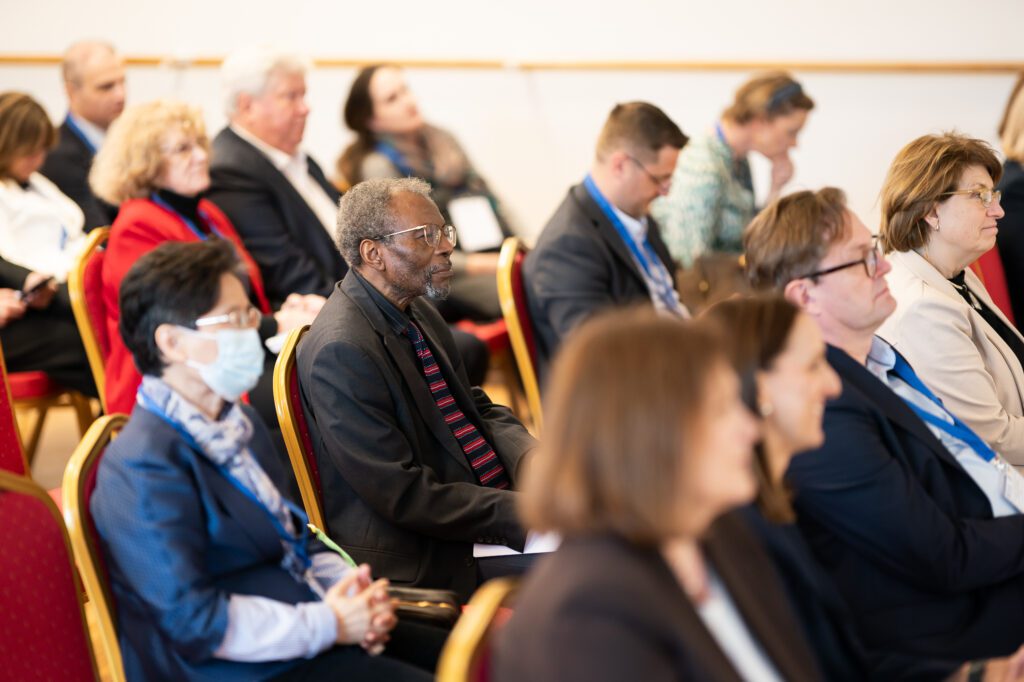
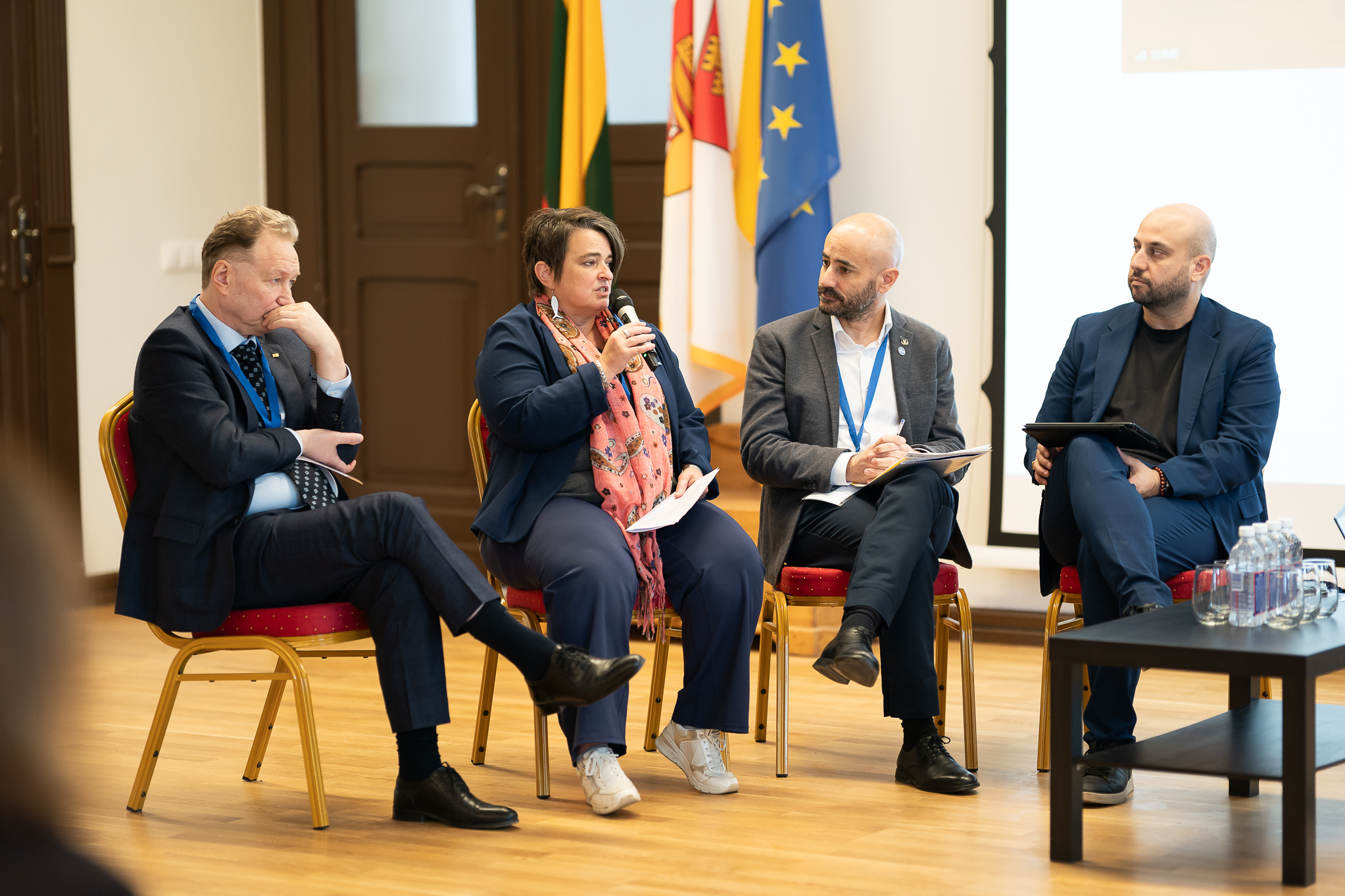
EU-CONEXUS partner Klaipeda University hosted the 22nd annual international scientific conference “Social Innovations for Sustainable Regional Development” on 7–9 May. This year’s conference focused not only on social innovation and sustainable regional development, but also on the future of European university alliances – exploring how alliances can evolve from project-based cooperation into long-term strategic partnerships that generate lasting impact for universities, regions, and society.
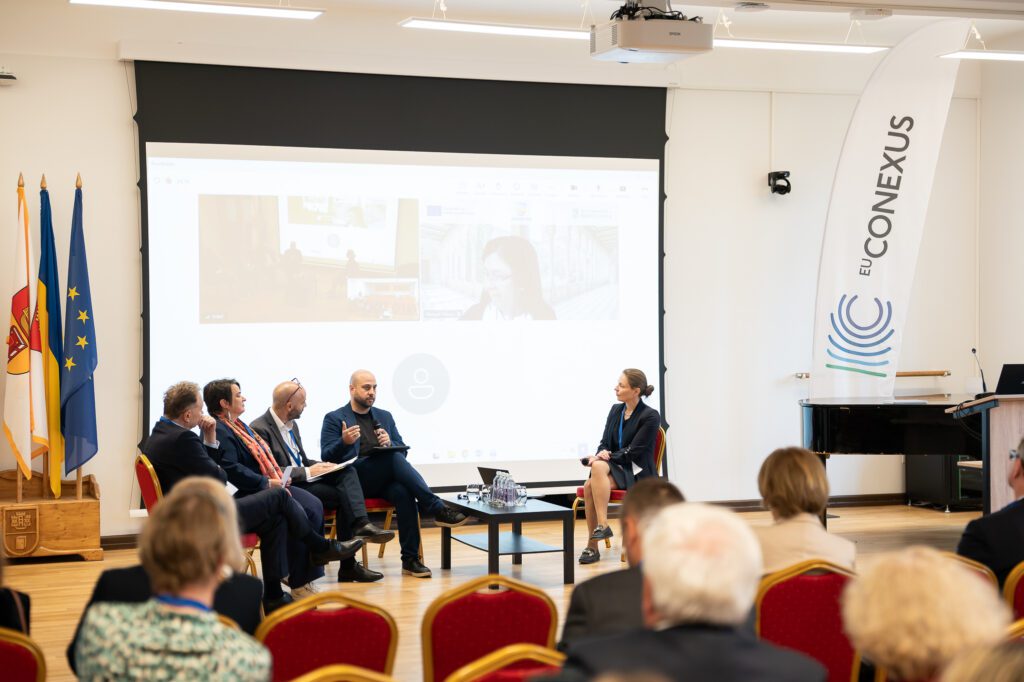
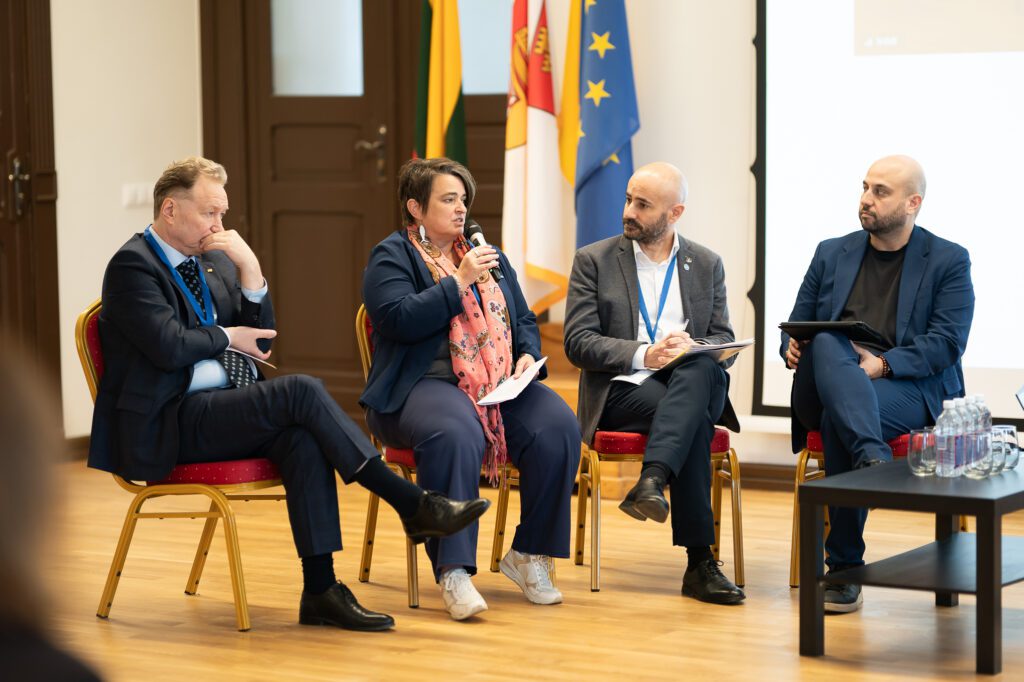
One of the key highlights of the conference was the high-level roundtable discussion “Sustainability of European University Alliances: From Ambition to Long-Term Impact”, organised and moderated by Klaipeda University representative Edita Lenkauskaite. The discussion was especially significant for EU-CONEXUS, as the alliance continues to actively contribute to shaping new models of collaboration among European universities.
The roundtable brought together leaders and representatives of several European university alliances: Prof. Dr Arturas Razbadauskas, Chair of the EU-CONEXUS Governing Board and Rector of Klaipeda University; Dr Nicole Birkle, Secretary General of FORTHEM; Fernando Perez-Peña, Executive Director of SEA-EU; Meritxell Chaves, Secretary General of CHARM-EU; and Naveed Syed, Secretary General of ENHANCE.
At the heart of the discussion was the question of how European university alliances can ensure continuity, institutional integration, and long-term impact. Participants emphasised that alliances should not remain temporary initiatives dependent on funding cycles, but should instead become an integral part of university strategies, studies, research, internationalisation, and institutional governance.
Participants identified several key challenges, including the need for clear organisational structures, effective decision-making mechanisms, continuity of activities despite changes in university leadership or teams, as well as stronger visibility and understanding of alliances within university communities themselves. The discussion also addressed the significance of legal entity status. While participants agreed that legal status alone does not guarantee sustainability, it may help address practical organisational, financial, and coordination-related challenges.
Summarising the discussion, E. Lenkauskaite noted that alliance sustainability is not a single final solution, but rather a continuous balancing process between vision and continuity, flexibility and structure, dependence and autonomy. One of the central insights of the discussion was that alliances do not become sustainable simply because they were designed to be so; sustainability is built through consistent long-term decisions and cooperation.
Following the conference and the roundtable discussion, leaders of European university alliances took part in meetings at Klaipeda University. The meetings involved the KU Rector’s team, including the Vice-Rectors for Studies and Research, the institutional EU-CONEXUS coordinator, and representatives of the Communication and Marketing Department and the International Relations Office. Discussions focused on the strategic directions of EU-CONEXUS, Klaipeda University’s role within the alliance, and opportunities to strengthen interinstitutional cooperation.
Participants also explored how European university alliances could exchange good practices in areas such as alliance governance, communication, community engagement, studies, research, and the implementation of joint initiatives. These exchanges provide alliances with opportunities not only to learn from one another, but also to collaboratively develop solutions that strengthen the long-term impact of the European Universities Initiative.
As part of the programme, alliance leaders visited the Klaipeda University Methodological STEAM Centre. Guests were introduced to innovative STEAM education methods, the centre’s educational philosophy, and KU’s experience in strengthening education in science, technology, engineering, arts, and mathematics. Since STEAM education is recognised by the European Commission as one of the priority areas in education, the good practices developed at the centre may also contribute to broader discussions within European university alliances.