The EU-CONEXUS Office for Development of Study Offers (ODSO) successfully held the online workshop Bridging the Gap: Designing Industry-Aligned Study Programmes while Preserving Academic Mobility” on 6 May 2026. The event brought together participants from diverse academic backgrounds to explore innovative approaches to curriculum design that effectively integrate industry needs while maintaining compatibility with European higher education frameworks.
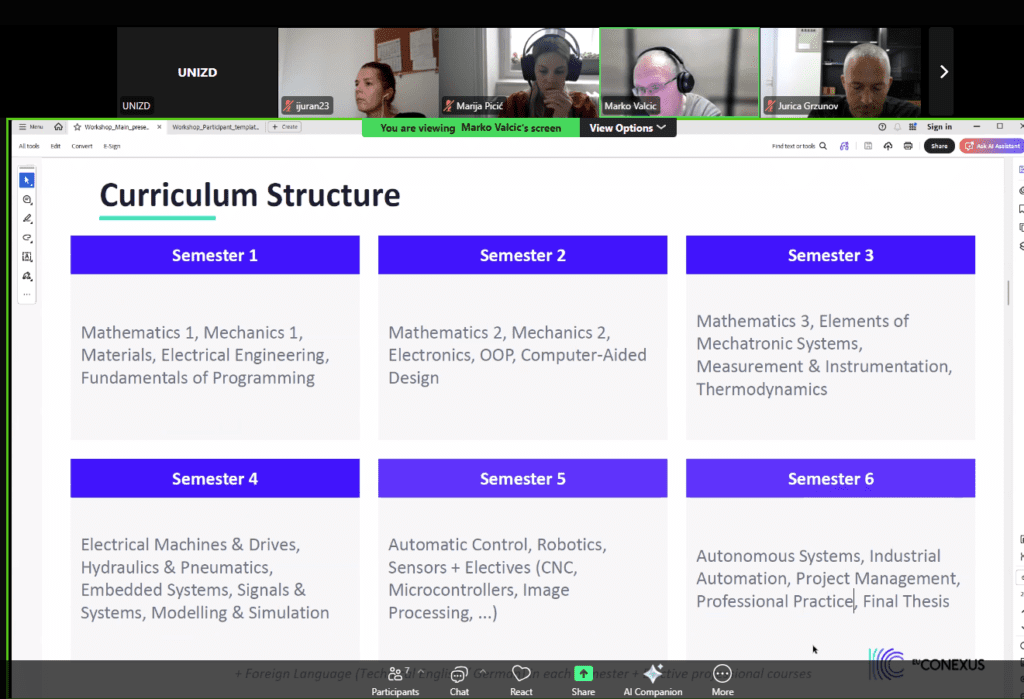
The workshop was led by Dr. Marko Valčić, Associate Professor at the Department of Maritime Studies, University of Zadar, who shared first-hand experience in developing a new undergraduate programme in Mechatronics and Robotics. This initiative represents a significant step for the University of Zadar, traditionally rooted in the social sciences and humanities, demonstrating how institutions can expand into highly technical fields through strategic collaboration and careful planning.
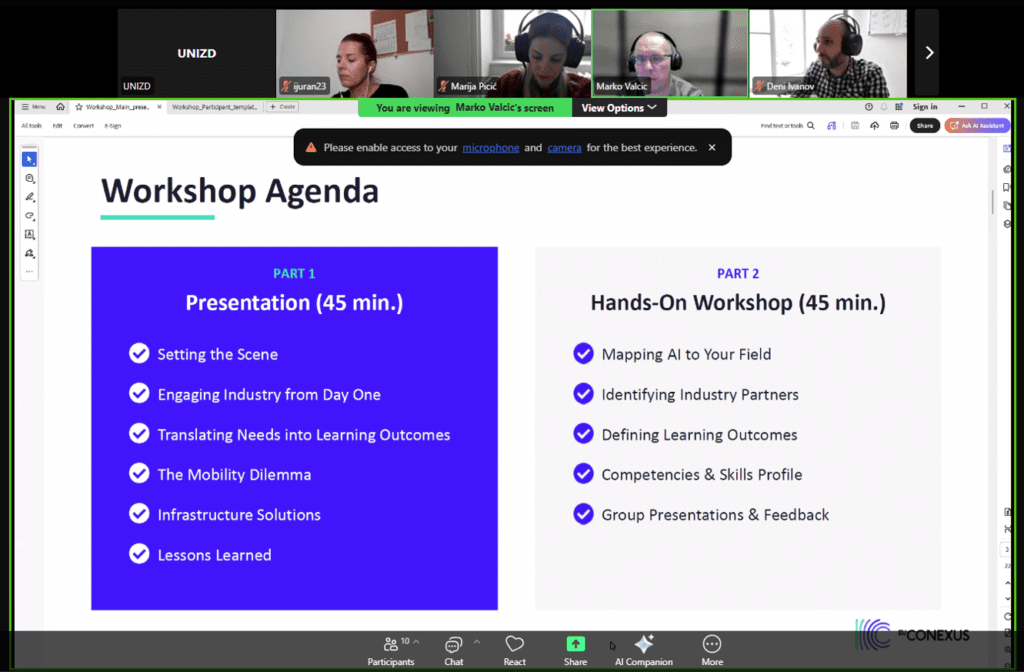
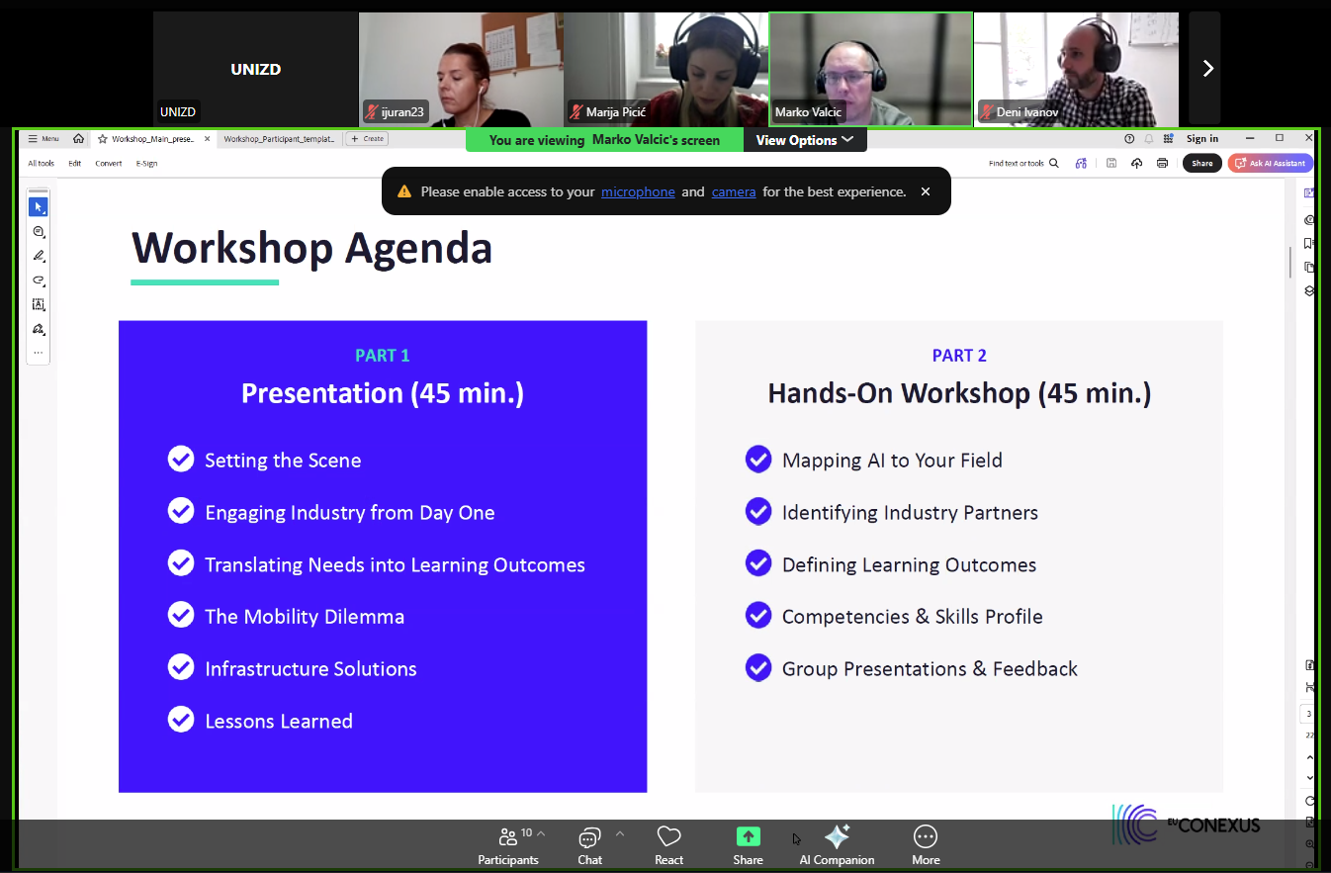
During the first part of the workshop, participants were guided through the complete programme development journey. Particular emphasis was placed on early engagement with industry partners from the Zadar region and how their input shaped course content, competencies and learning outcomes. The session also addressed the challenge of balancing industry-driven specialisation with the requirements of academic mobility within Croatian and broader European higher education systems. Practical insights into infrastructure limitations and creative resource management further enriched the discussion.
The second part of the workshop provided a hands-on, interactive experience. Participants worked in groups to design a condensed lifelong learning programme focused on “AI Applications in Your Field.” Through this exercise, they identified relevant industry stakeholders, defined programme-level learning outcomes and outlined key competencies and skills. The session concluded with group presentations and peer feedback, fostering a collaborative learning environment and encouraging the exchange of ideas across disciplines.
Feedback from participants highlighted the workshop’s practical relevance, clear structure and applicability across various fields. The combination of real-world case study insights and interactive design exercises enabled attendees to better understand the complexities of modern curriculum development and to apply these principles within their own institutional contexts.
Overall, the workshop successfully met its objectives, equipping participants with tools and strategies to design industry-aligned study programmes while preserving the essential principles of academic mobility. It also reinforced the importance of cross-sector collaboration and adaptability in shaping future-oriented education.
“The workshop was extremely valuable, as it provided practical insights and first-hand experience in launching a new study programme. Such experiences are highly beneficial for everyone involved in the development of study programmes and micro-credentials.”
Associate Professor Jurica Grzunov, PhD, Department of Applied Communication Sciences, University of Zadar