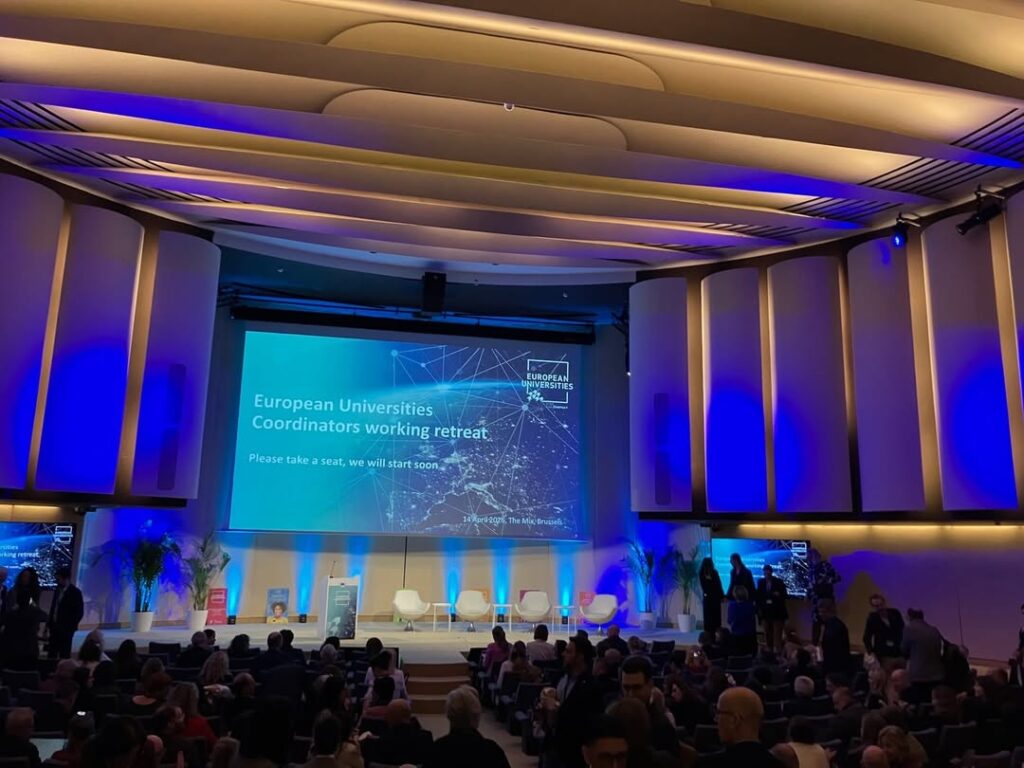
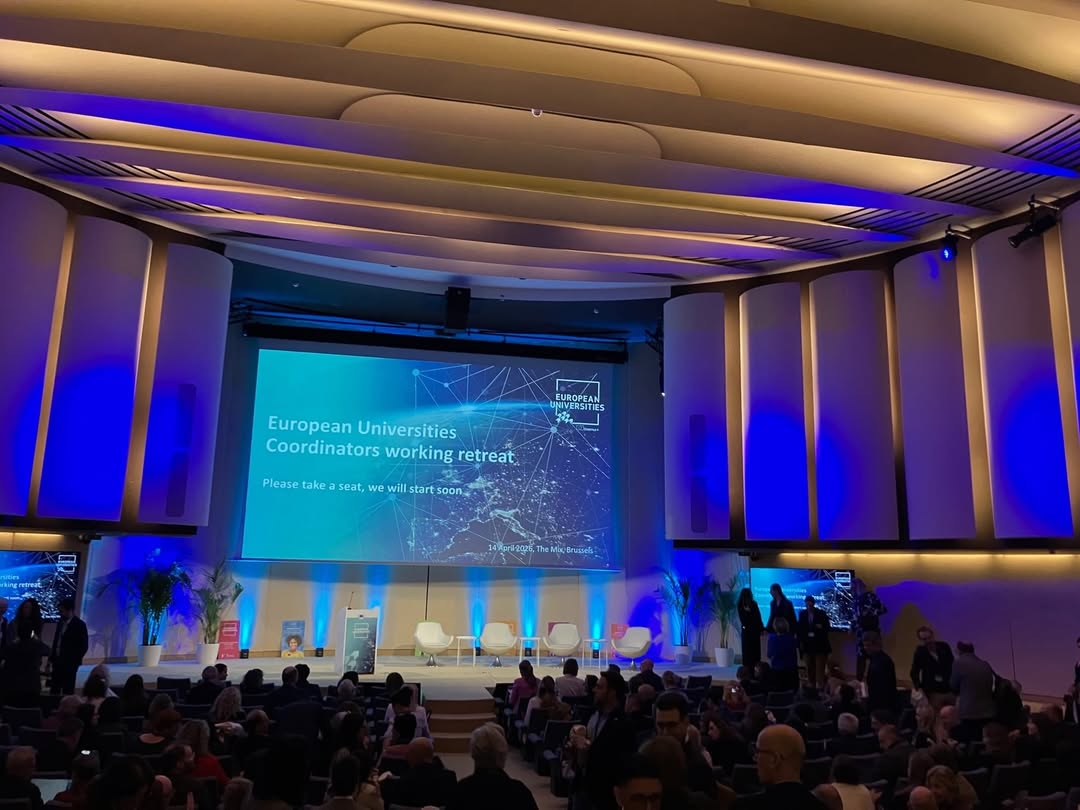
On 14 April, the European Commission organised the “European Universities Coordinators’ Working Retreat” in Brussels. The event brought together alliance leaders, European Commission representatives and sector stakeholders to discuss the future of the European Universities Initiative and its role in strengthening Europe’s competitiveness, talent development and institutional change. EU-CONEXUS played an active role in this key meeting, positioning itself as a proactive voice in shaping European higher education post-2027.
Representing EU-CONEXUS, our Executive Director, Fernando Galán, led a delegation that provided the technical and strategic vision of our member universities. He was joined by Neringa Narbutiene, Institutional Coordinator at the Catholic University of Valencia (UCV), and Fernando Pedraza-Díaz, Head of International Relations at La Rochelle Université.
Key Priorities for the Future of European University Alliances
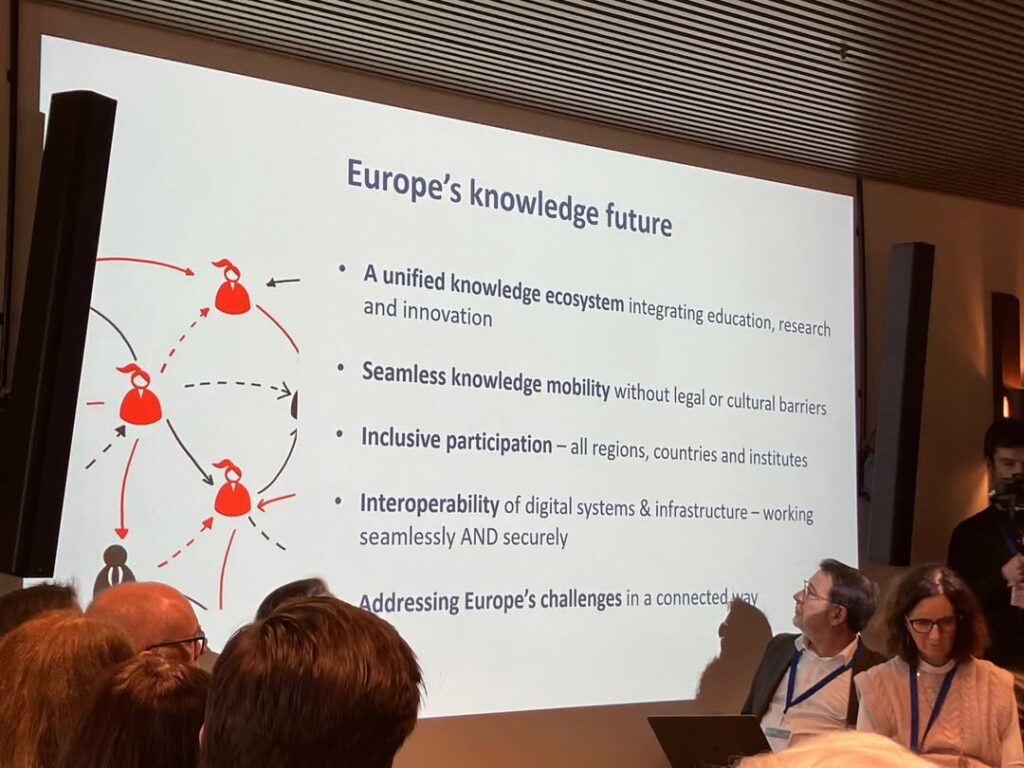
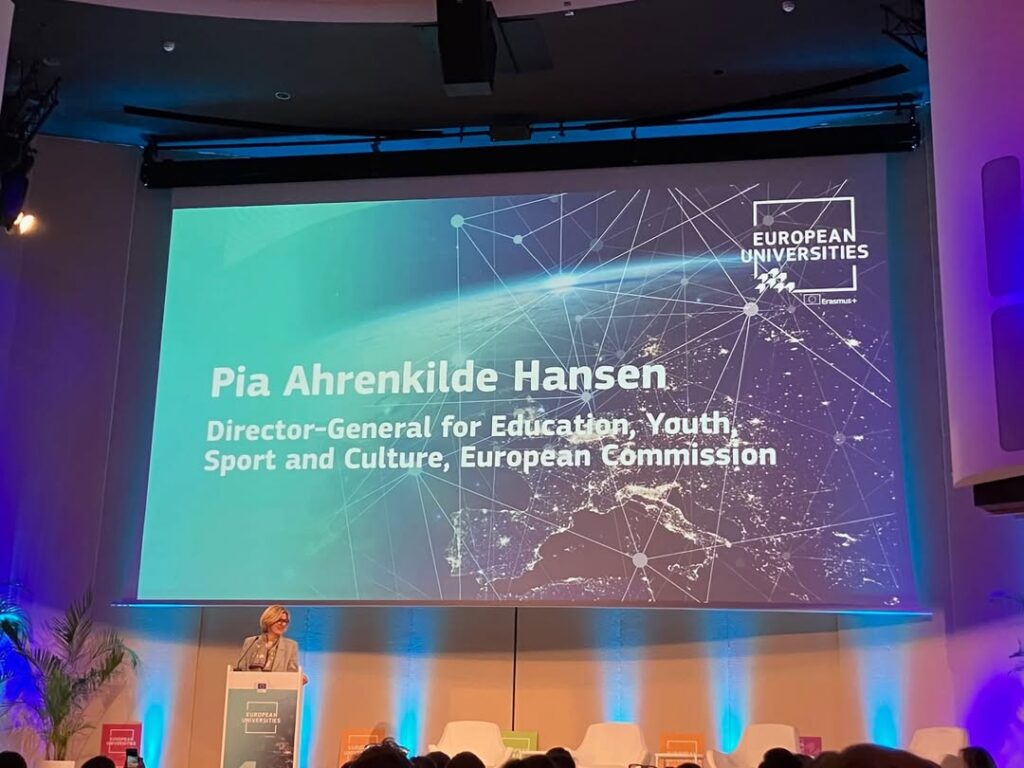
The day opened with keynote speeches from senior European Commission representatives, including Pia Ahrenkilde Hansen, Director-General for Education, Youth, Sport and Culture, who highlighted the Commission’s continued support for the alliances. Discussions focused on free movement, attracting talent, the development of a European degree, inclusion, and future funding programmes that can support lasting progress across institutions.
Throughout the retreat, participants joined a series of thematic breakout sessions focused on key priorities for the years ahead.
Topics included:
- the future Erasmus+ funding model for alliances after 2027,
- mobility,
- international cooperation,
- research and innovation,
- competitiveness,
- and more effective performance monitoring.
How Alliances can support competitiveness and growth
One of the central themes of the event was how alliances can help Europe respond to global challenges. Sessions explored how university alliances can contribute to strategic sectors such as artificial intelligence, clean energy, biotechnology, advanced manufacturing and space, while helping to reduce skills shortages and strengthen Europe’s innovation capacity.
Another key discussion focused on the international dimension of alliances. Participants explored how cooperation with universities outside the EU could create new opportunities, attract global talent and expand long-term partnerships. The need to balance openness with European values and strategic priorities was also highlighted.
The retreat also addressed how alliances can support deeper institutional change within partner universities. Discussions highlighted progress in areas such as joint governance, shared educational structures, more attractive study offers, stronger research collaboration and improved administrative processes. Participants also stressed the importance of clear qualitative and quantitative indicators to measure long-term impact.
EU-CONEXUS role in the strategic discussions
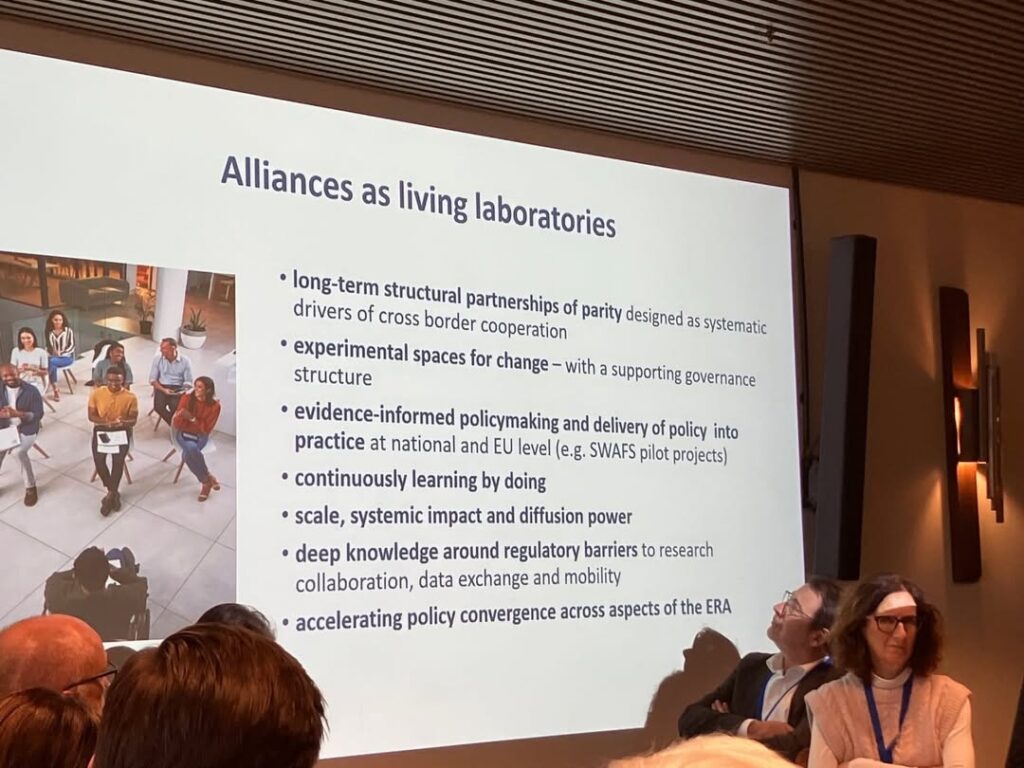
The event concluded with a plenary session dedicated to building communities and increasing the visibility of alliance achievements across Europe and beyond. Speakers noted that European University alliances have moved beyond the pilot phase and are now an established part of Europe’s higher education landscape.
By taking part in the FOREU4ALL retreat, EU-CONEXUS once again showed its active role in shaping the future of European higher education through collaboration, innovation and shared ambition.