When we think of wearable technology, we often picture fitness trackers or smartwatches.
But today, wearable devices can do so much more than count steps or monitor heart rate.
For people with visual impairments, they have the potential to transform how the world is
experienced.
A new line of research explores how wearable devices embedded in clothing can help the
visually impaired navigate their surroundings more independently. By combining sensors,
microcontrollers, actuators and feedback systems, these devices aim to translate
environmental information into touch and sound.
The possibility recently came to life thanks to nanotechnology. Today, powerful miniature
devices can be embedded directly into everyday objects – including clothing. What once
required specialised equipment in clinical settings can now be integrated seamlessly into
everyday life.
This is where the notion of “smart textiles” comes in. They are fabrics that do substantially
more than cover and protect the body. In medicine, they’re monitoring health and tracking
recovery by measuring how movement and function return after events such as stroke. But
perhaps of greatest significance is their potential to improve accessibility.
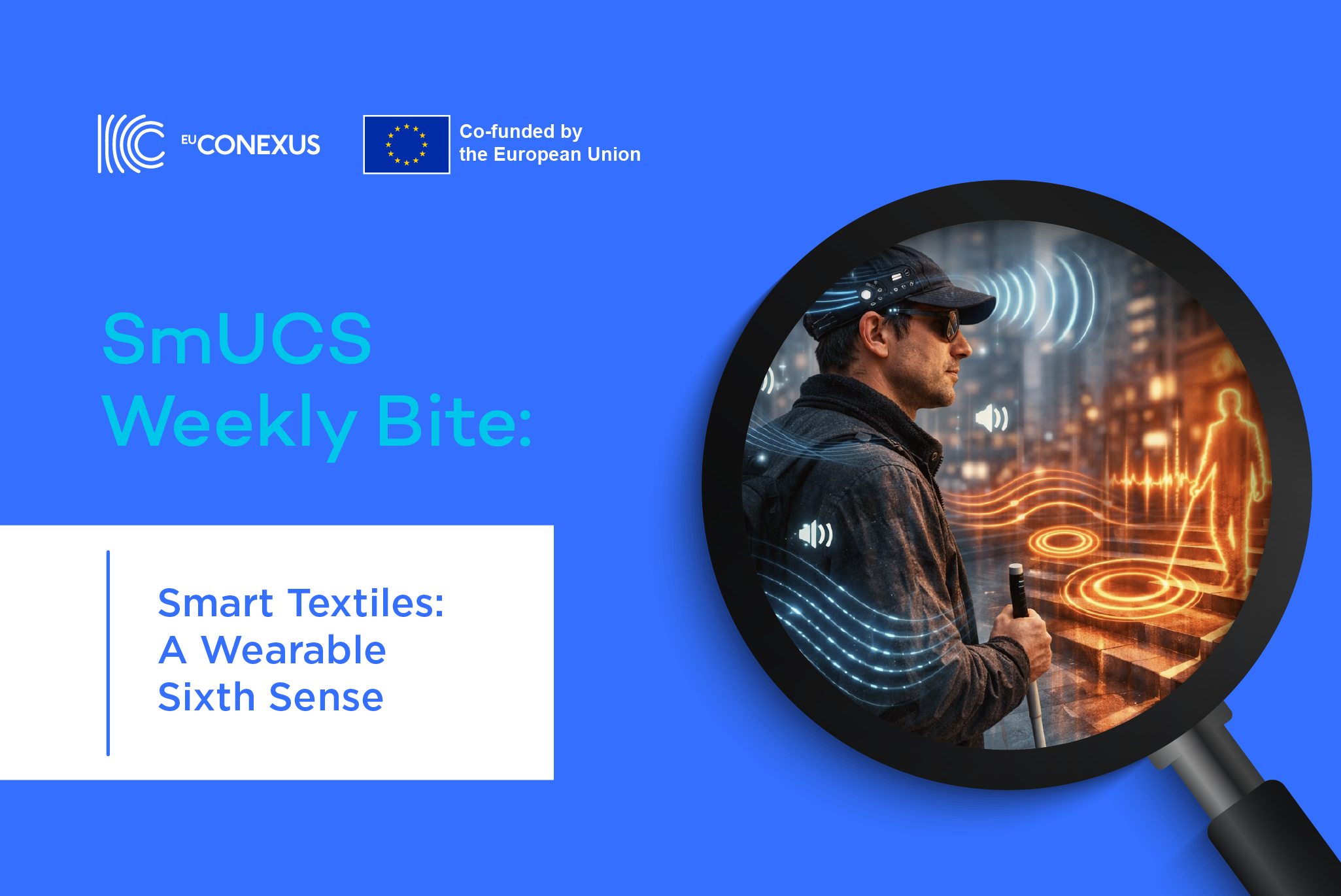
The device proposed in recent research is designed specifically for visually impaired users. It
is lightweight, inconspicuous, affordable, and user-friendly. Designed to be integrated into
common clothing items such as caps or garments, the system combines two types of sensors
a tilt sensor and an ultrasonic sensor – with a microcontroller and two forms of feedback:
gentle vibrations and a discreet buzzing sound.
Together, these components create a simple but powerful system. The sensors detect
obstacles and environmental features, while the actuators convert this information into
tactile and acoustic signals. In effect, the device creates an “image” of the surroundings that
can be felt and heard, rather than seen.
Unlike some assistive technologies, the emphasis here is on usability. The device is designed
to be fast, responsive and intuitive, which requires minimal learning on the user’s side. It is
also intended to be used either on its own or in combination with other mobility aids such as
a white cane, depending on the user’s needs and environment.
To test how the system performs, researchers developed a mathematical model simulating
how a user scans their environment by moving their head. When mounted on a cap, the
device interprets changes in head angle to detect obstacles at different heights and
distances.
The results are promising. The system was able to identify low obstacles – such as stairs – at
distances ranging from around 90 cm to 300 cm. Response times were rapid as well, with
feedback delivered in as little as 12 milliseconds at a distance of 200 cm. The relatively
narrow sensing angle of the ultrasonic sensor – rather than being a limitation – proved
beneficial by reducing information overload and making detected objects easier to
recognise.
Looking ahead, the concept could evolve further. Future versions may incorporate miniature
cameras with wider fields of view, or use further advances in nanotechnology to weave
sensors directly into the fabric itself. In such designs, multiple small sensors distributed
across clothing could work together to build a more complete picture of the surroundings.
Taken together, this work reflects a broader shift in how technology is designed and applied.
Wearable devices are no longer just about convenience or performance – they are becoming
tools for inclusion. By translating the environment into touch and sound, smart textiles have
the potential to make everyday spaces more accessible.
As such, while this technology is likely to deliver strong commercial benefits, its greater
value lies in rethinking how people interact with the world – and ensuring that innovation
benefits not only the majority, but also those who need it most.
Reference