
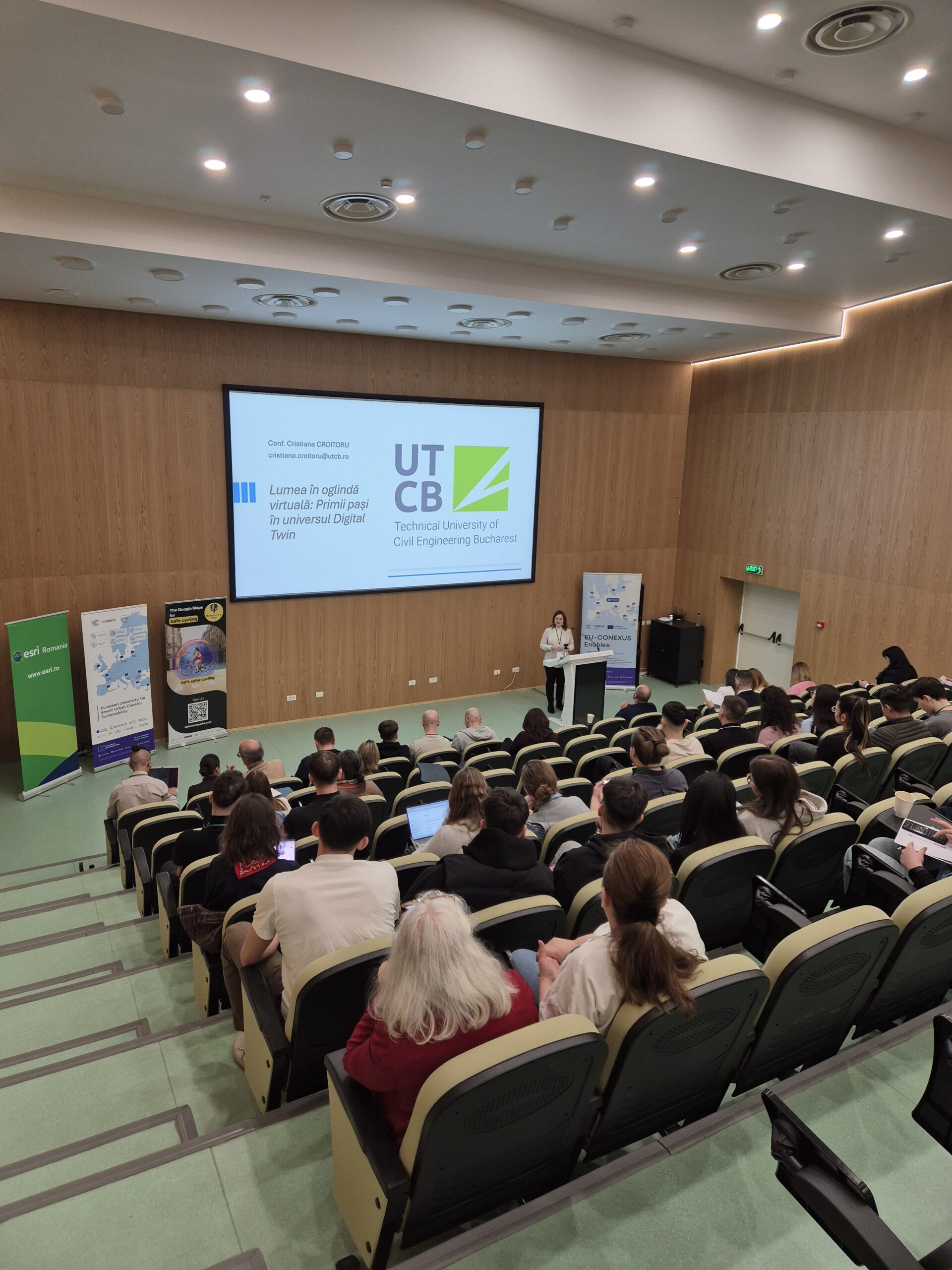
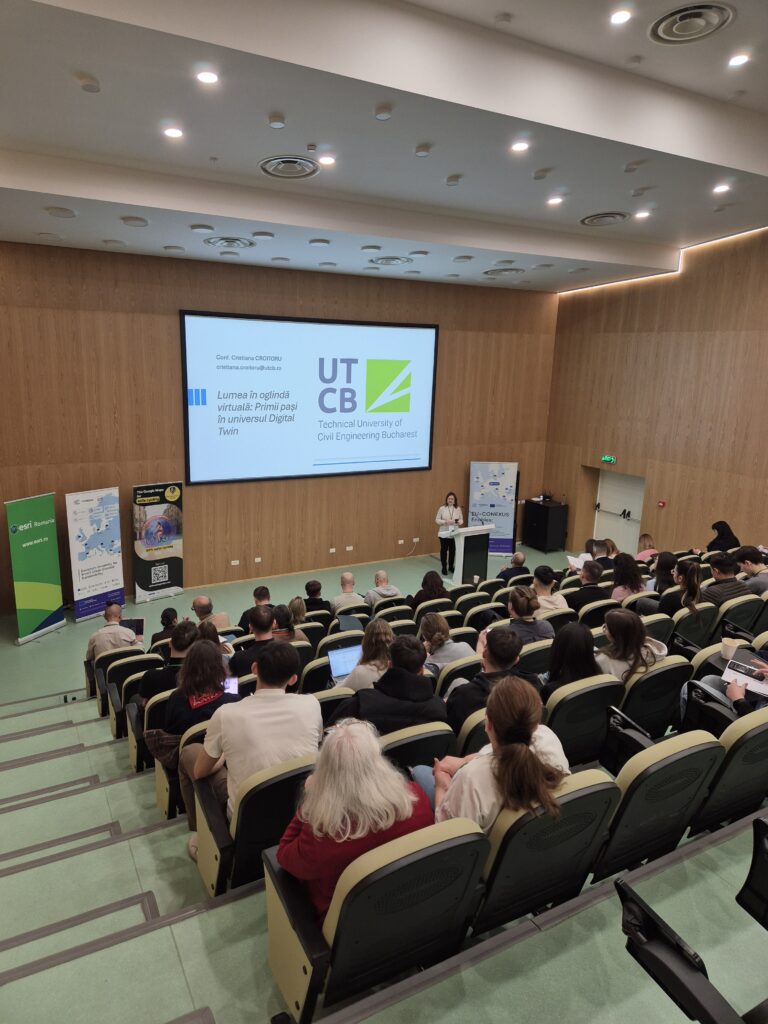
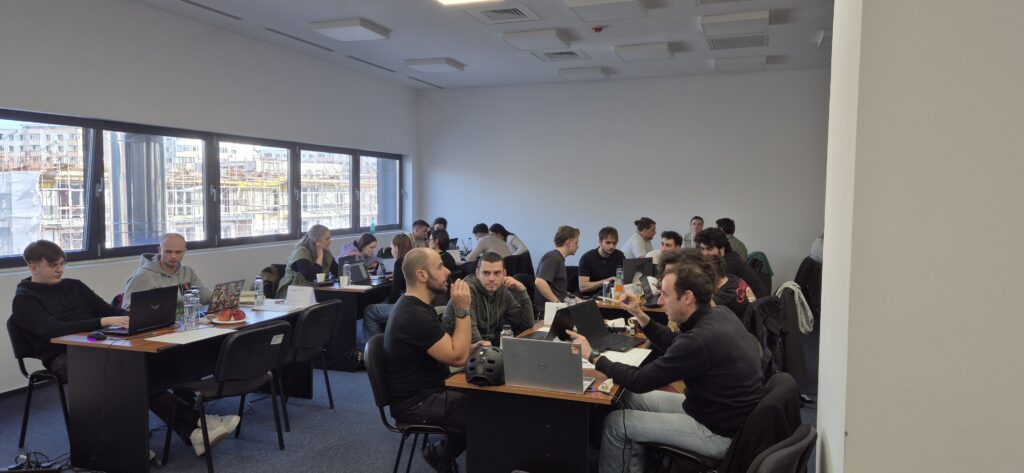
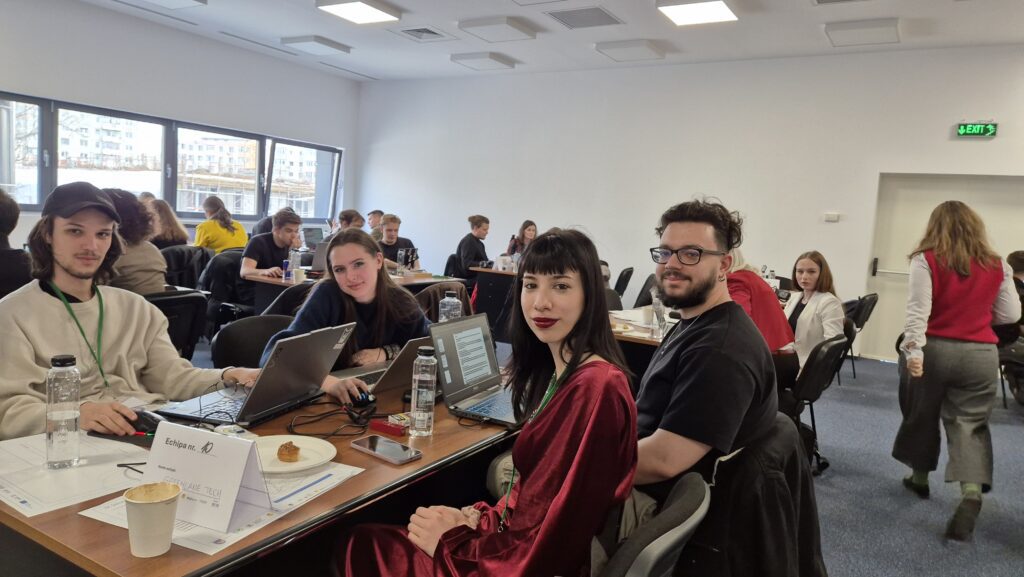
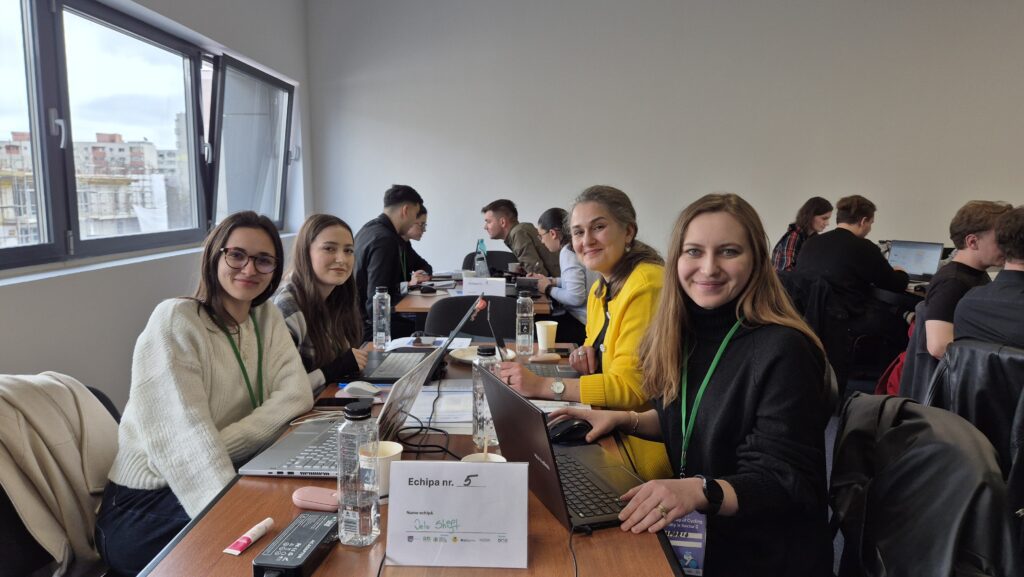
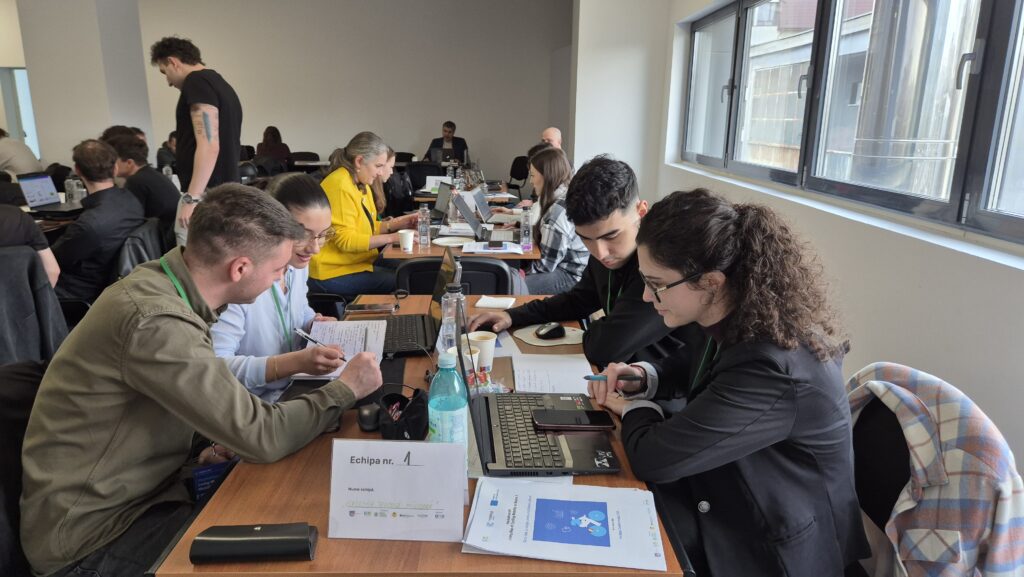
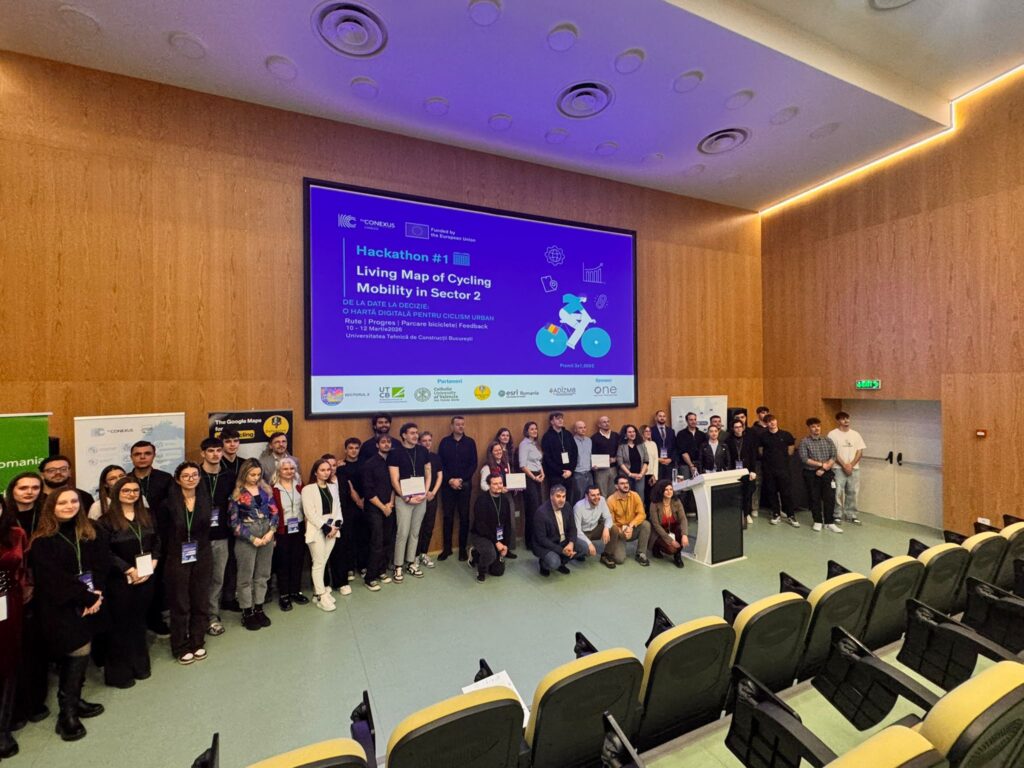
From 10–12 March 2026, the Technical University of Civil Engineering Bucharest (UTCB) hosted the hackathon “Living Map of Cycling Mobility in Sector 2”, organised within the framework of the EU-CONEXUS Enables project. The event brought together students and young professionals from diverse disciplines to design innovative digital solutions supporting sustainable urban mobility.
A Challenge for Smarter Cycling Infrastructure
The hackathon focused on one central question: How can the Cycling Master Plan be translated into a participatory digital tool that supports its implementation in Bucharest’s Sector 2?
Participants were invited to develop ideas and prototypes contributing to a “Living Map” of cycling mobility – an interactive digital platform integrating information on cycling routes, bicycle parking, dangerous areas for cyclists, and real-time citizen feedback.
Such a tool could support local authorities in planning cycling infrastructure, collecting field data, engaging the community, and promoting sustainable urban mobility.
Interdisciplinary Collaboration
The event brought together interdisciplinary teams from fields such as urban planning, civil engineering, geodesy, geography, computer science, and sustainability. Participants represented several academic institutions, including:
- Technical University of Civil Engineering Bucharest
- “Ion Mincu” University of Architecture and Urban Planning
- University of Bucharest
- Military Technical Academy
- various civic organisations and initiatives.
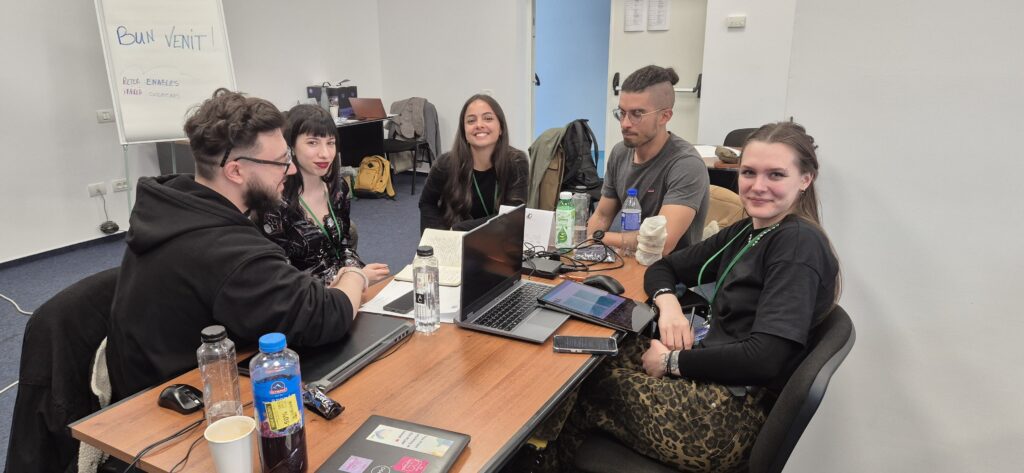
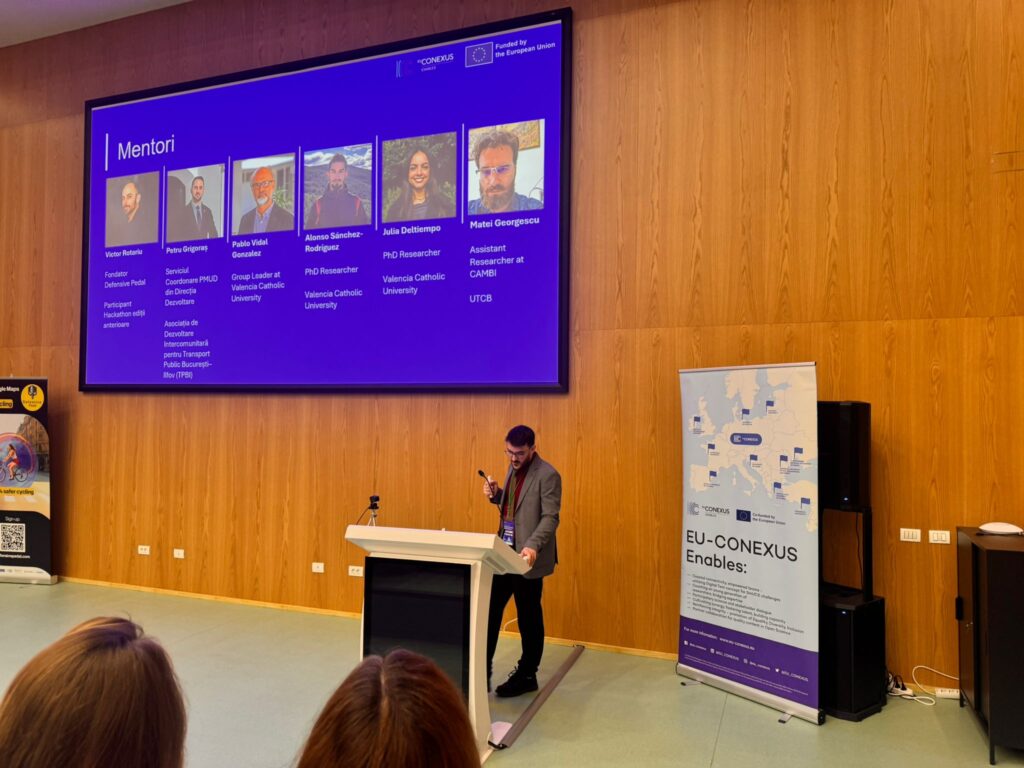
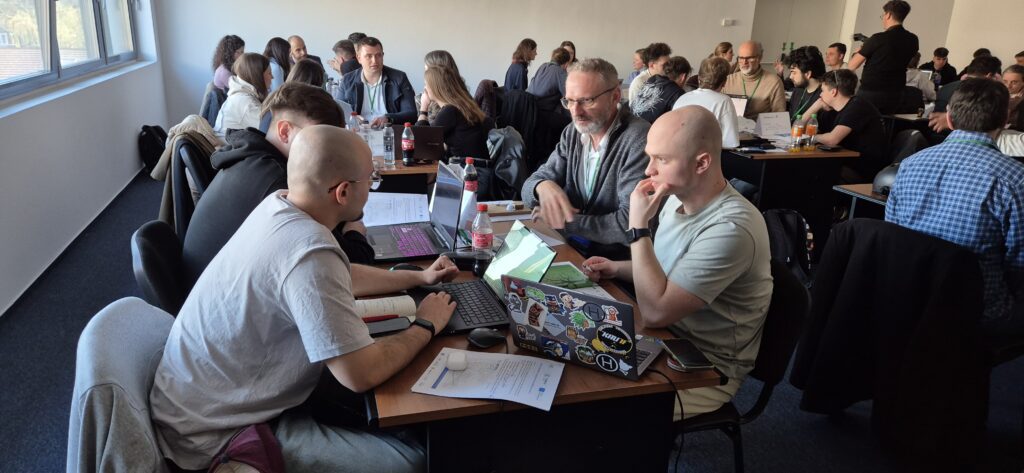
Over three intensive days, teams collaborated to design solutions using GIS analysis, digital prototypes, mobile applications, and participatory platforms, with guidance from mentors and experts in urban mobility, planning, GIS, and technology.
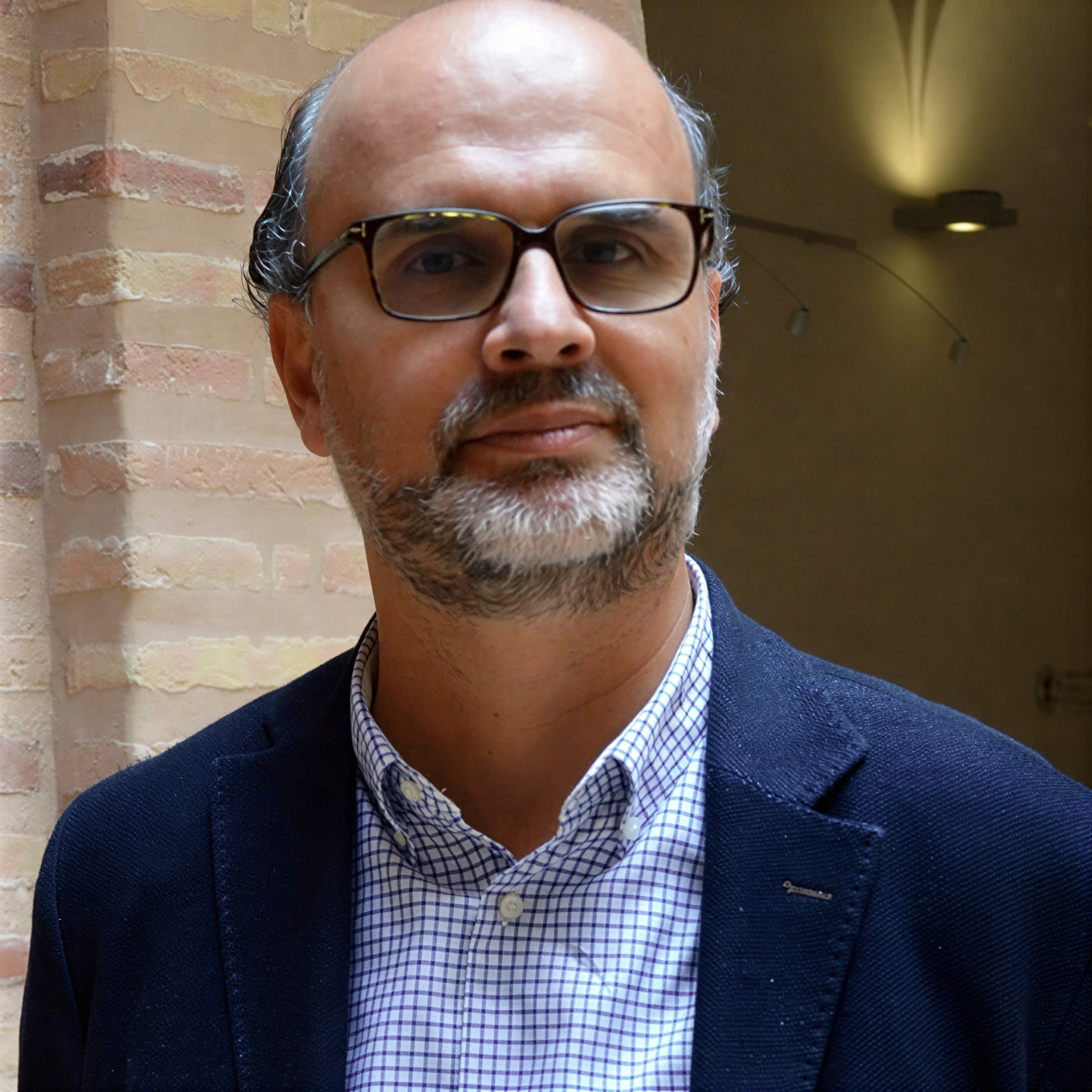
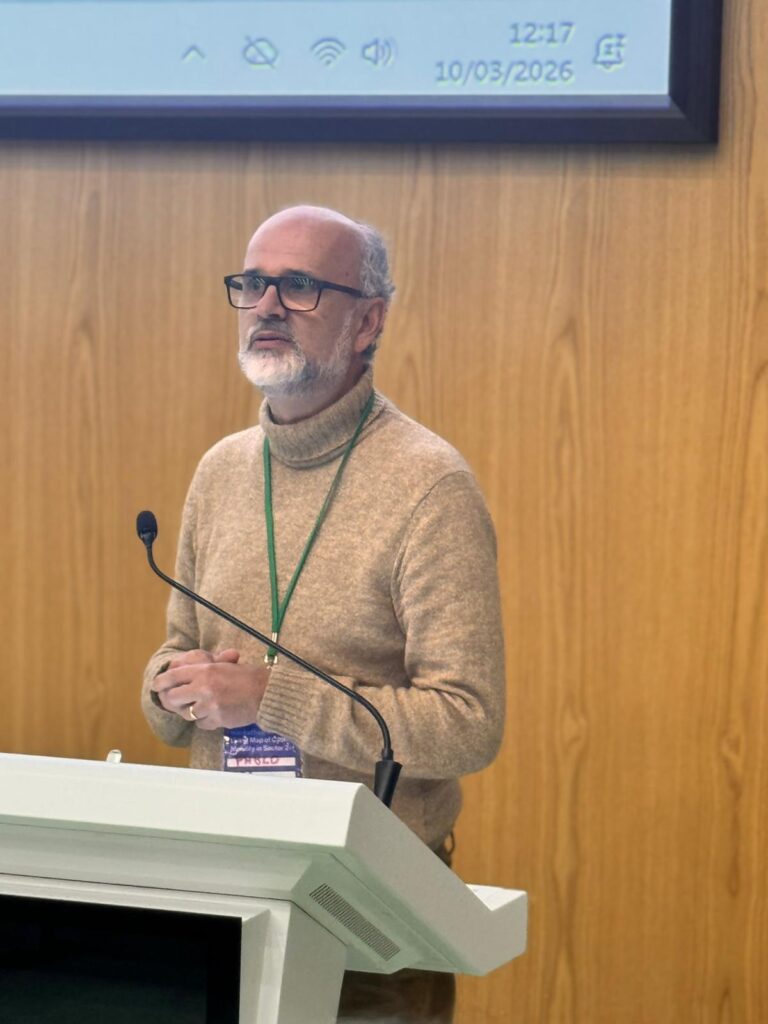
Professor Pablo Vidal, Catholic University of Valencia
Have you identified problems similar to those in Valencia?
It was almost the same in Valencia 15 years ago. We started offering new solutions, and that is what I shared with the students today. They found it really interesting!
Winning Teams and Projects
After the final presentations, the jury selected three winning teams whose projects demonstrated strong potential to support data-driven cycling infrastructure planning.
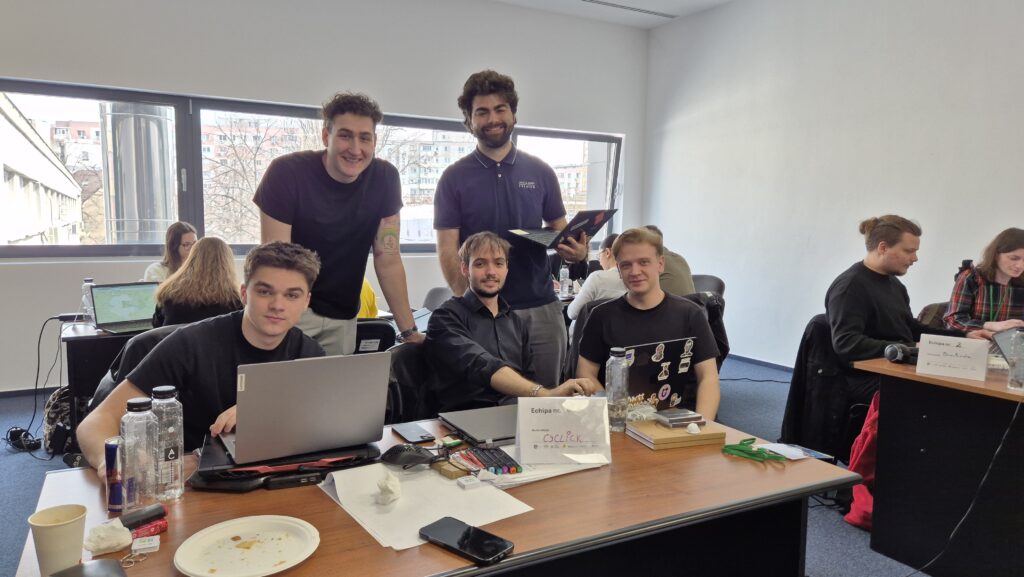
1st Place – Team 6: Cyclick
The Cyclick project proposes a digital solution for collecting and integrating cycling mobility data. The platform gathers user feedback, integrates data on routes and infrastructure, and visualises this information through an interactive map.
The solution can help local authorities identify problems in the field, prioritise investments, and monitor the use of cycling infrastructure.
2nd Place – Team 8: Velo City
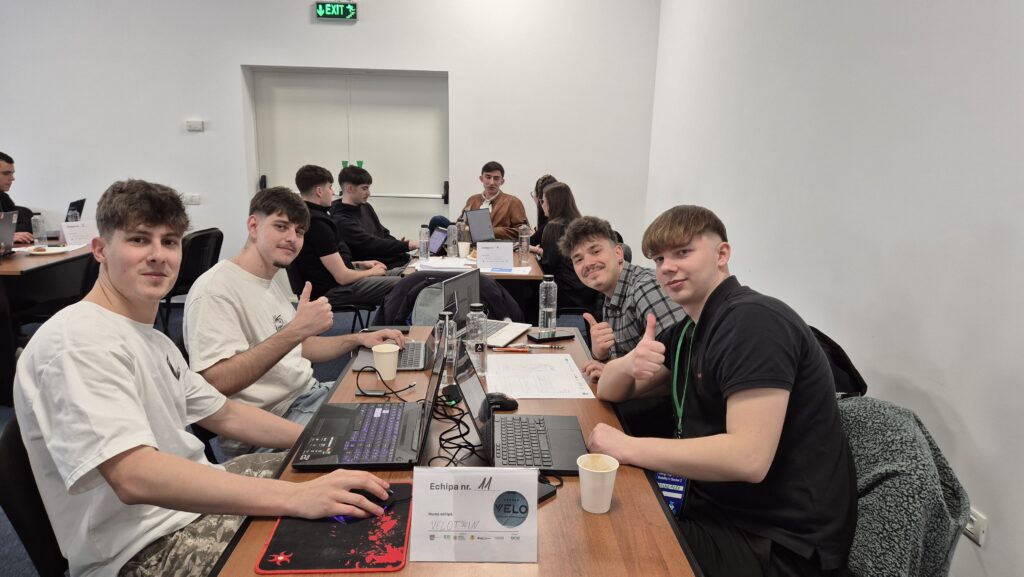
The Velo City platform focuses on participatory urban planning by connecting citizens, local administration, and urban developers. Through an interactive map, users can report issues, discuss solutions, and provide feedback regarding cycling infrastructure.
The collected data can support authorities in analysing and planning infrastructure improvements.
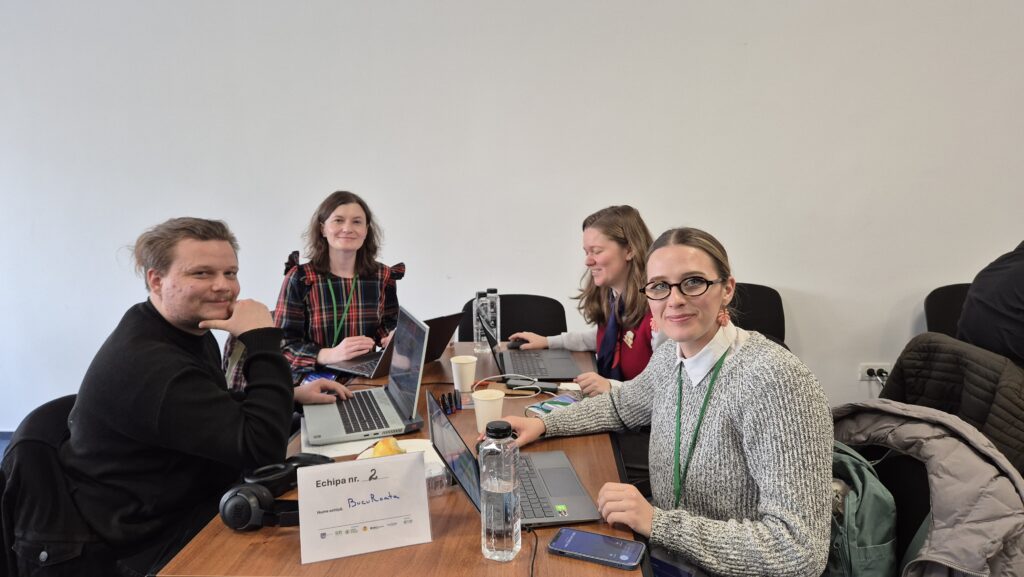
3rd Place – Team 2: BucuRoata
The BucuRoata team developed a solution centred on community engagement, using digital tools to collect citizen feedback and identify priority intervention areas for cycling infrastructure development.
Additional Innovative Ideas
Beyond the winning projects, several teams presented creative concepts addressing different aspects of urban cycling mobility:
- Team 1 – Military Technical Academy: GIS-based analysis to identify optimal locations for bicycle parking and address gaps in the current network.
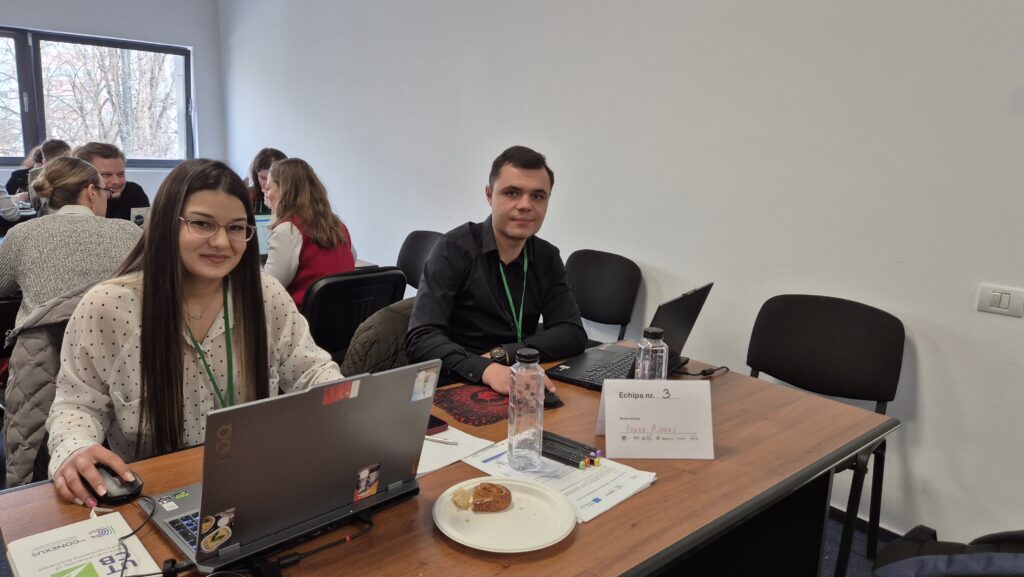
- Team 3 – PowerRiders: “Puzzle Parking & Community Validation”, proposing modular parking structures that free space for cycling lanes while incorporating citizen feedback.
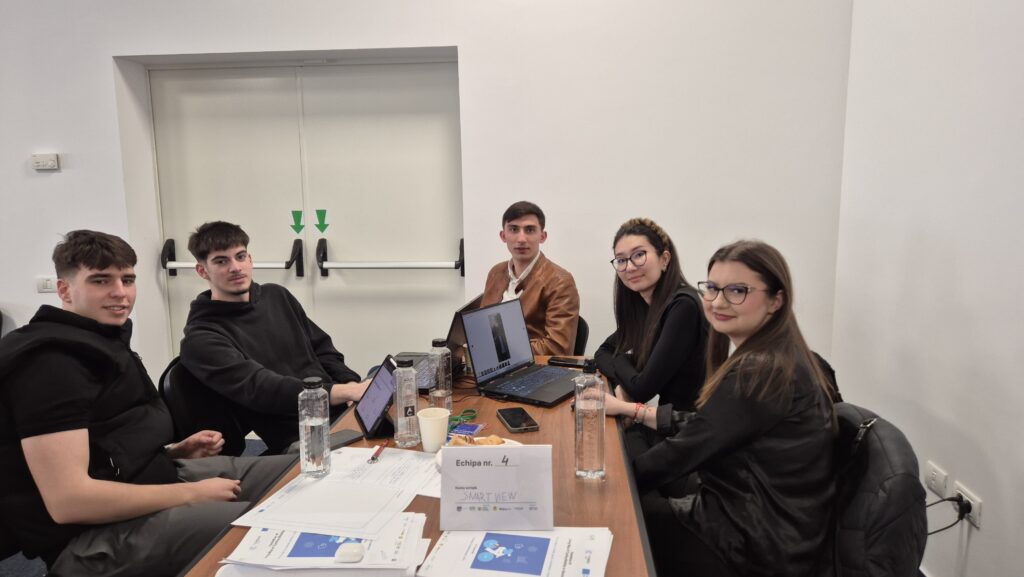
- Team 4 – Smart View: Smart convex mirrors equipped with sensors and solar power to improve cyclist safety at dangerous intersections.
- Team 5 – Velo Shift: A digital platform enabling citizens to report infrastructure issues and propose improvements directly to local authorities.
- Team 9 – EduMobHub: A gamified mobility platform that rewards cycling trips with points and benefits to encourage behavioural change.
- Team 10 – GreenLane Tech: The “BikeWay” application integrating route planning, bike-sharing services, infrastructure reporting, and environmental impact analysis.
Supporting Sustainable Urban Mobility
The hackathon highlighted the strong interest of young innovators in shaping sustainable urban mobility. The ideas developed during the event demonstrated the potential of data-driven decision-making, digital technologies, and citizen participation in improving cycling infrastructure.
The outcomes of the hackathon will contribute to further developing the Living Map concept for cycling mobility, supporting local authorities in prioritising investments and potentially advancing selected ideas into functional prototypes.
The Bucharest hackathon marks the first in a series of EU-CONEXUS ENABLES hackathons organised across partner universities in Europe, bringing together students, researchers, and communities to co-create solutions for the sustainable cities of the future.
All activities are organised under the EU-funded project EU-CONEXUS ENABLES (Project number: 101136822), titled ‘Promoting Excellence Through Innovative Eco-systems‘.

Funded by the European Union. Views and opinions expressed are however those of the author(s) only and do not necessarily reflect those of the European Union or European Research Executive Agency. Neither the European Union nor the granting authority can be held responsible for them.