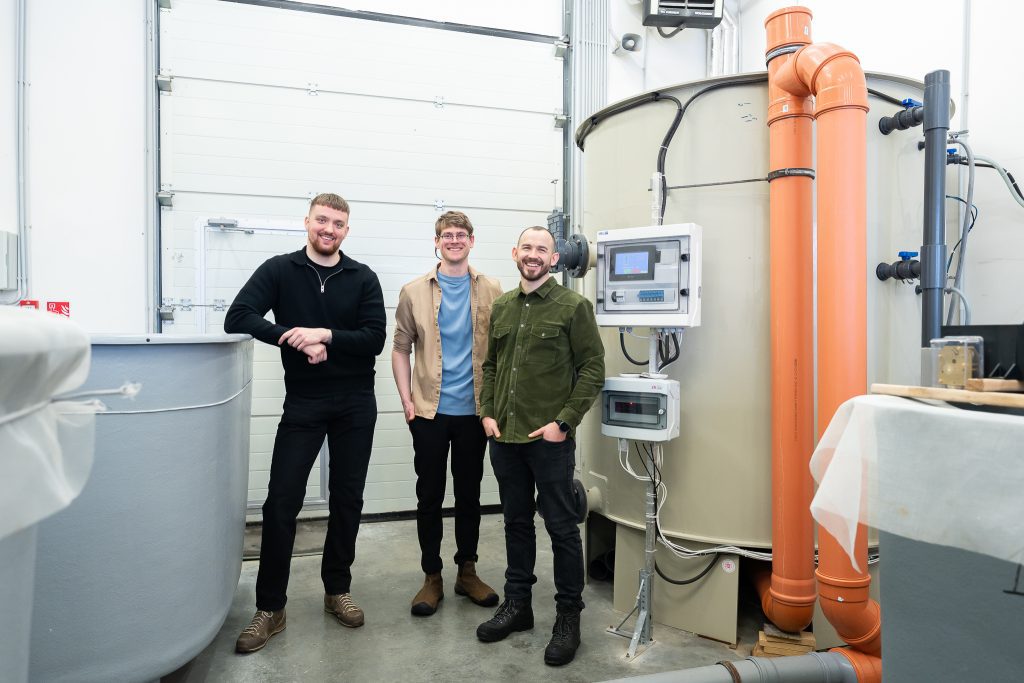
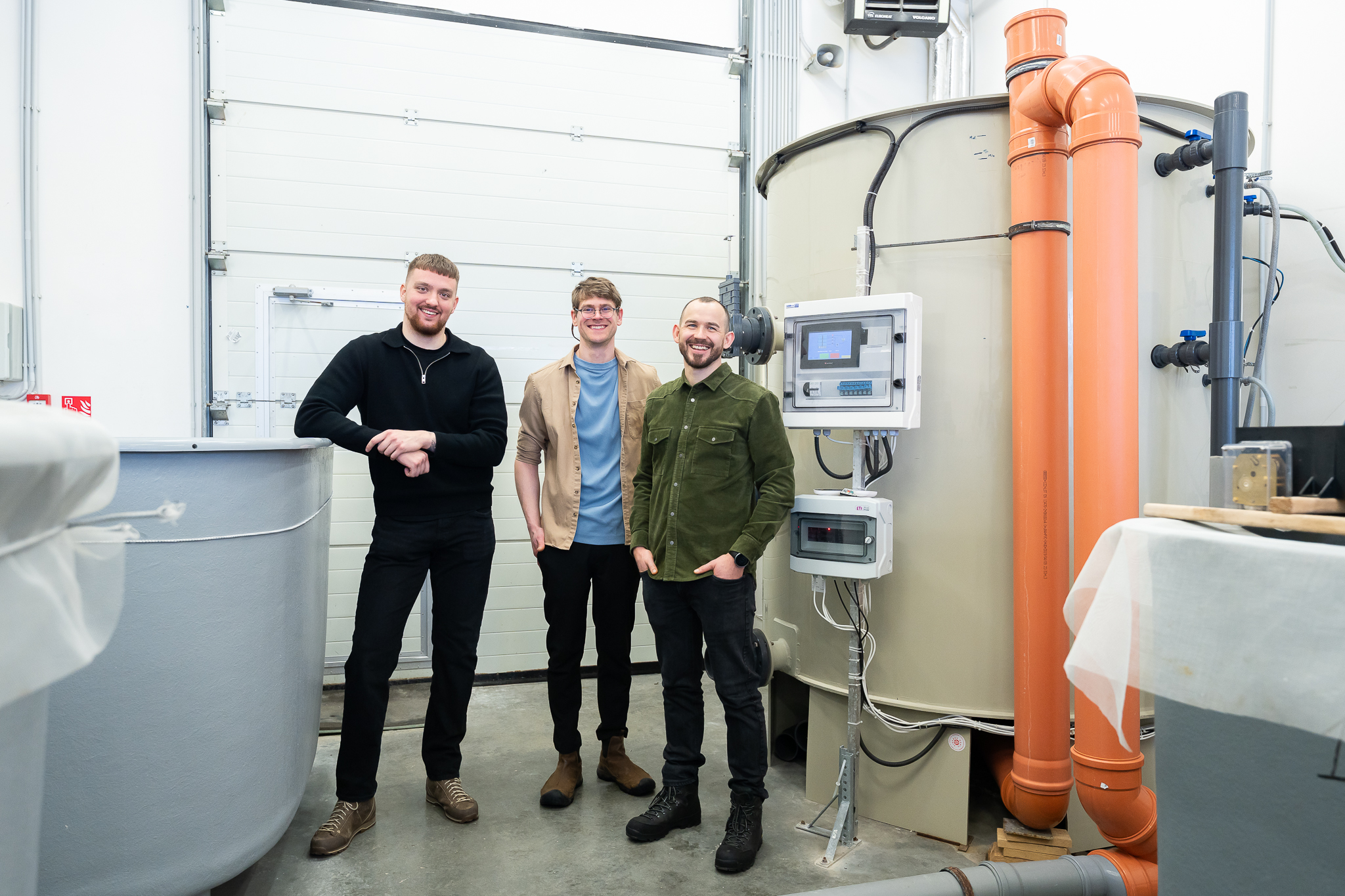
Klaipeda University (KU) has been granted a European patent for a unique invention: a vertical, multi-layer pool designed for more efficient and cost-effective shrimp farming. Developed by university researchers, the Shrimp Tower has been commercialised and is set for market launch through a KU spin-off company, AquaQLT.
The patent was an important step in confirming the novelty and industrial applicability of the technology, in turn strengthening its potential for introduction into European aquaculture systems.
Translating research into a product
From the very beginning, the team behind the Shrimp Tower sought to address the key challenges that currently limit the expansion and success of shrimp farming in Europe: high land use, energy consumption, and infrastructure costs. The concept of the invention emerged from long-term applied research at Klaipeda University.
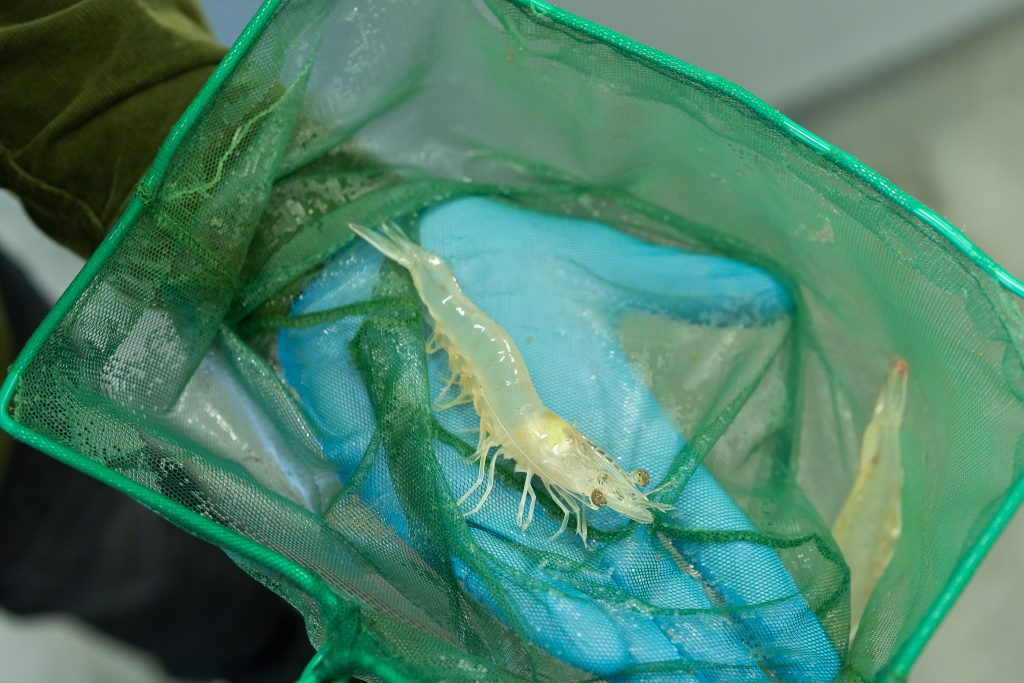
KU researchers first started cultivating Pacific white shrimp (Litopenaeus vannamei), in 2018. Consistent research that extended throughout the years allowed the team to gain first-hand insights into the technological and economic barriers that European producers are facing.
According to Gintautas Narvilas, CEO and co-founder of AquaQLT, the lack of space-efficient solutions was a recurring challenge:
“We noticed a pattern: traditional shrimp farming systems require large areas and significant energy input. By developing a vertical, closed-type solution, we aimed to make shrimp farming more viable under European conditions – including colder climates.”
A vertical approach to aquaculture
Simply put, the Shrimp Tower is a single cylindrical basin that contains multiple internal ‘floors’. Each floor functions as an independent farming layer. This unique layout creates a larger usable farming surface and enables substantially higher production capacity within the same floor space compared to traditional shrimp farming systems.
The closed design of this structure is advantageous in other aspects, too: it reduces water evaporation and heat loss, improves water circulation, and lends itself to automated harvesting processes. According to internal assessments, this technology can reduce land requirements by several times and lower energy demand for water heating – especially in systems designed to produce approximately 25 tonnes of shrimp per year.
The patent is ready, but innovation continues
Though the team behind the Shrimp Tower were heavily focused on the design, their ambitions did not stop there. The market-ready version of the structure features smart monitoring and control technologies, including sensor-based environmental tracking and an injection-based feeding system supported by dedicated software. Feed is delivered together with water, ensuring even distribution, reducing stress on the animals, and supporting stable growth conditions.
The system is fully compatible with standard RAS filtration technologies and is adapted for use both indoors and outdoors. In response to different needs and farm capacities, AquaQLT plans to offer the solution in three sizes.
A nod to KU’s knowledge-to-innovation ecosystem
The development of the Shrimp Tower reflects Klaipeda University’s broader commitment to supporting innovation across the full research lifecycle.
Prof. Dr. Artūras Razbadauskas, Rector of Klaipeda University, emphasises the strategic value of such outcomes:
“The European patent awarded to this technology demonstrates how applied research can generate solutions with real economic and societal impact. Innovations like the Shrimp Tower contribute to food security and reduce dependence on imported products.”
Assoc. Prof. Dr. Laura Šaltytė-Vaisiauskė, Vice-Rector for Research and Innovation, further highlights the role of university spin-offs:
“Spin-off companies are an essential bridge between science and society. AquaQLT shows how interdisciplinary expertise can be transformed into a market-ready technology through institutional support, infrastructure, and collaboration networks.”
Looking ahead, AQUAQLT have their eyes set on markets in Germany, Austria, Switzerland and the Nordic countries, where demand for locally produced, high-quality seafood is on the rise. With that in mind, the European patent marks an important step forward for the founders, strengthening the company’s position in discussions with investors and industry partners.