
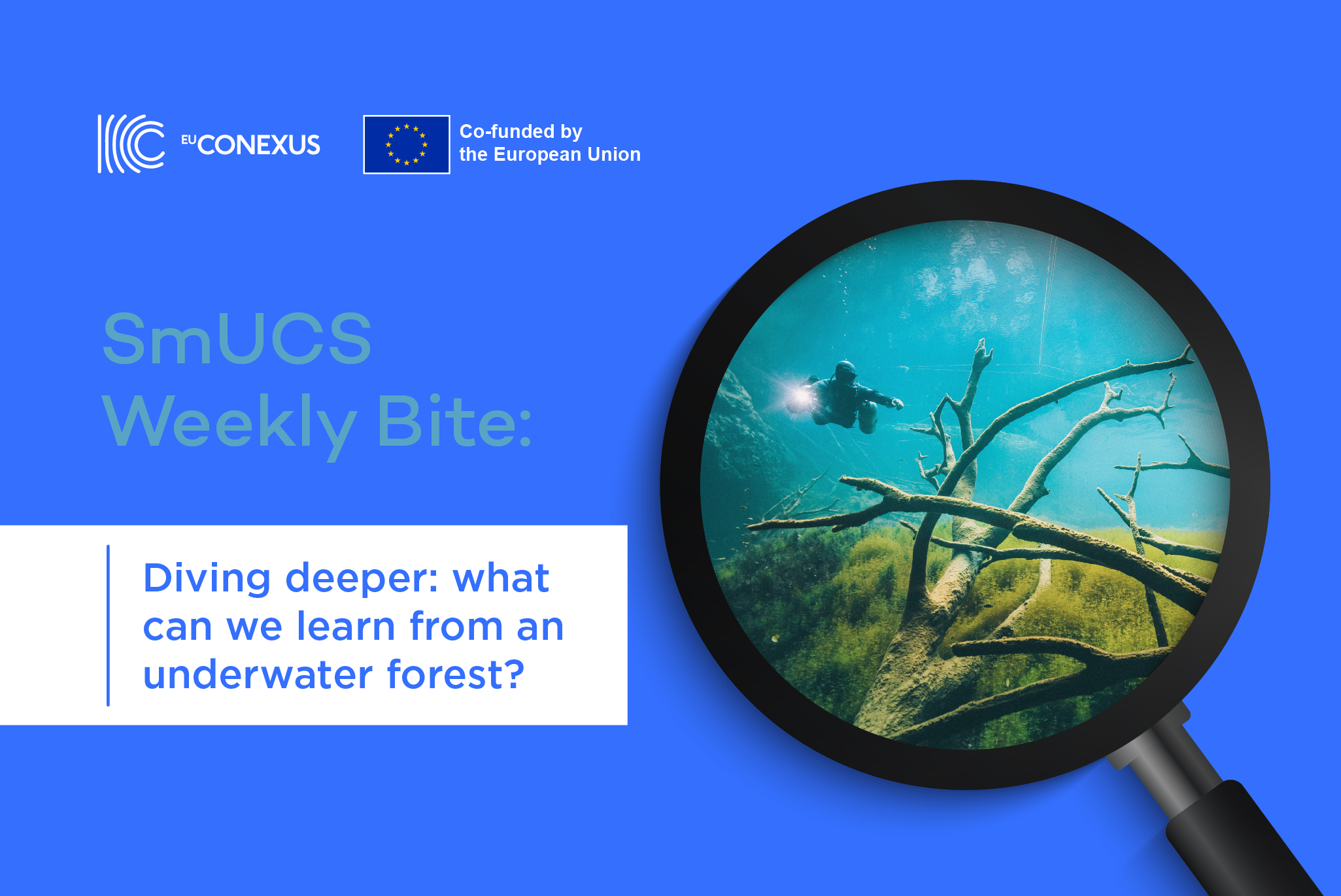
Deep beneath the surface, in the dark waters of the Baltic Sea, lies a forest. Not a forest of
corals, interestingly shaped rocks or underwater plants – a forest of trees.
The hidden landscape shaped by forests, lakes, and human activity thousands of years ago has
been located just off the coast of Lithuania. During recent underwater explorations,
researchers discovered undeniable evidence: well-preserved tree stumps, layers of ancient
peat, and traces of people who once lived in those areas.
Today, the ancient forest is completely submerged. It was discovered and is being explored
with the help of acoustic mapping, advanced scientific analyses, and experienced divers.
According to the research team from the Institute of Baltic Sea Region History and
Archaeology, Klaipeda University, the underwater forest flourished just after the last ice age.
Back then, that territory was a coastal zone.
By using radiocarbon dating of trees and peat, as well as by studying pollen and tree rings,
the research team was able to reconstruct how the Baltic Sea evolved during the early
Holocene period, roughly between 11,000 and 8,000 years ago. This information allowed
scientists to track major shifts in sea level as the Baltic transitioned through different stages,
including the Yoldia Sea, Ancylus Lake, and Litorina Sea. Throughout those changes, water
levels rose and fell over time, gradually turning coastal forests and wetlands into underwater
environments.
By studying these underwater landscapes and forests, researchers also learned about how
people interacted with them back in the day. Vertical wooden poles suggest early fishing
practices, and tools made of stone and antlers suggest that there were Stone Age settlements
in the area. Together, these discoveries confirm that early communities settled in coastal
areas.
While this is an exciting discovery, it also raises questions about the preservation and
recognition of underwater natural heritage. Unlike shipwrecks, these submerged forests and
ancient shorelines are only partially protected. With that said, from a scientific perspective,
they are unique sources of information that help us understand past climates, ecosystems, and
human behaviour.
References:
- Žulkus, V., & Girininkas, A. (2020). The eastern shores of the Baltic Sea in the Early
Holocene according to natural and cultural relict data. Geo Geography and
Environment, 7(1). https://doi.org/10.1002/geo2.87 - Žulkus, V. (2022). Flooded landscapes in the Lithuanian waters of the Baltic Sea. Read the article >