Alexandre began his PhD in Public Management in October 2022.
As he explains it:
“I’m conducting this research under the joint supervision of La Rochelle Université and Universität Rostock as part of the EU-CONEXUS Alliance.”
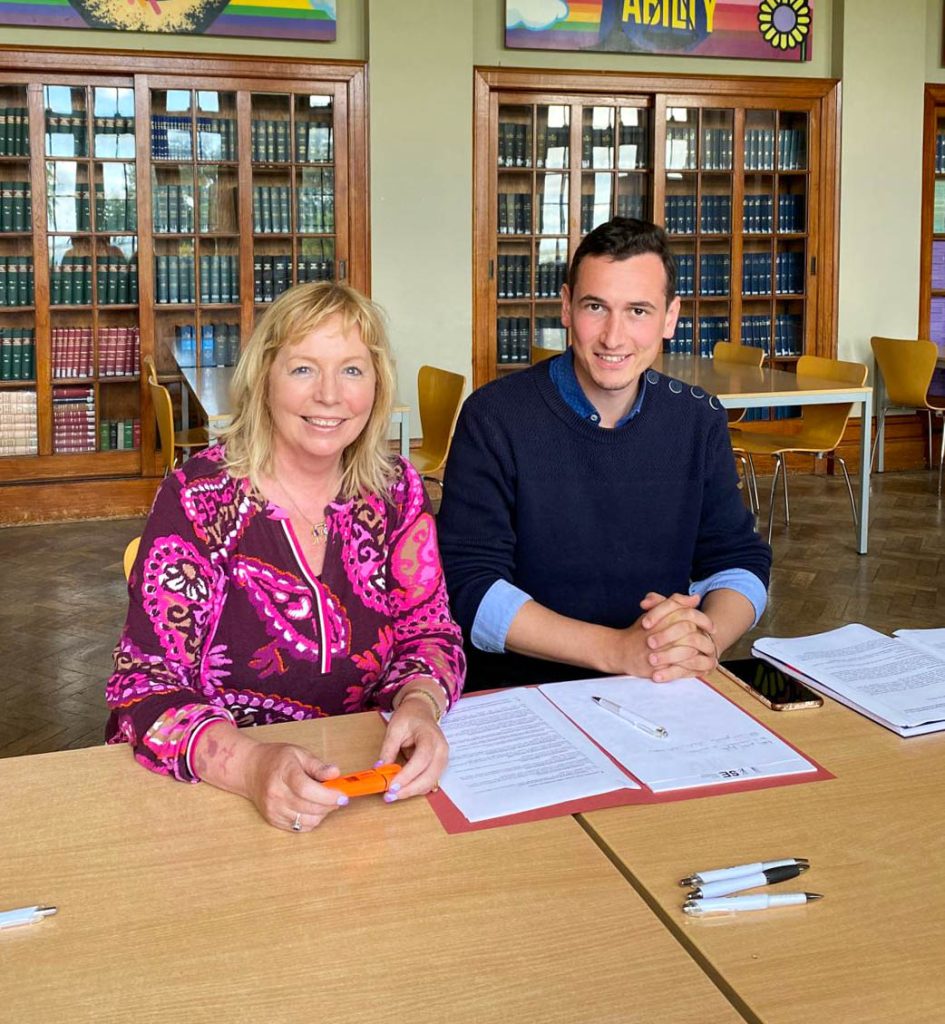
This agreement gave him three supervisors – Isabelle Sueur and Guillaume Delalieux in France and Peter Lorson in Germany – and the opportunity to ultimately obtain two PhD degrees, one from each institution.
According to his professional profile, Alexandre is also active as a lecturer and early-career researcher, combining academic responsibilities with his double PhD. Alexandre himself describes his research topic as follows: “My thesis focuses on the complex problem of municipal waste management, and I am working from a comparative perspective on three coastal cities: La Rochelle, Rostock, and Waterford.”
His work falls directly within the thematic scope of EU-CONEXUS: Smart Urban Coastal Sustainability (SmUCS). Alexandre’s interest in waste management resulted from a year-and-a-half assignment in India. “I was shocked by the scale of the waste-related issues, so I decided to go back to France to study this topic,” he notes. La Rochelle Université provided the framework and local funding that allowed him to focus on research.
International mobility and the cotutelle experience
The cotutelle structure encouraged extensive international mobility. Alexandre spent: 7 months in Rostock, 1 month in Waterford, and is set to return to Rostock for another research stay.
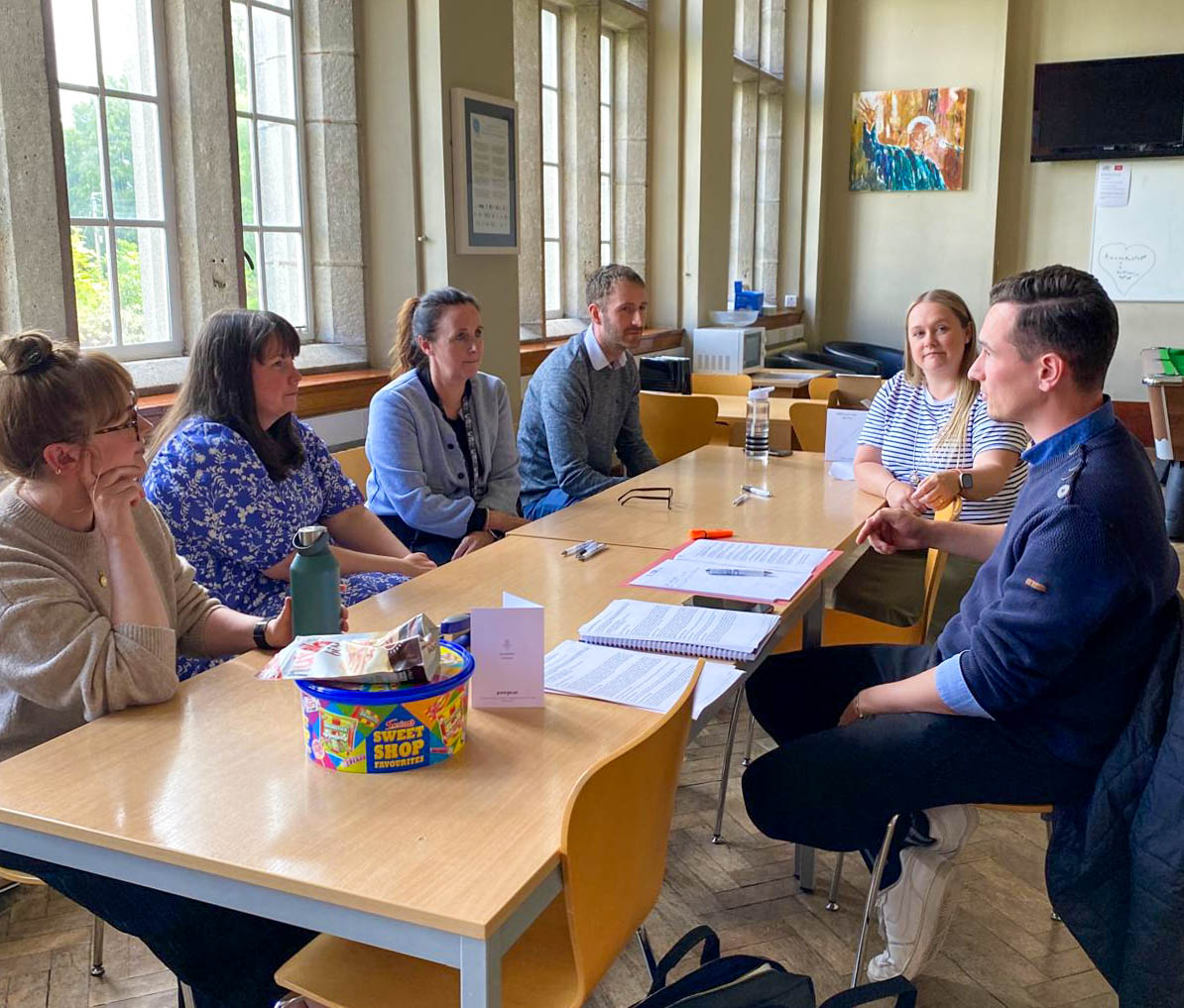
“These mobilities have been absolutely essential to my research for gaining an in-depth understanding of the municipal waste management system in these countries,” Alexandre says.
Beyond the academic benefits, the mobility aspect has also allowed him to build a strong international network, learn German, and discover German and Irish research cultures.
While highly enriching, the cotutelle process also comes with challenges. Based on his own journey, Alexandre advises future PhD candidates to rely on existing partnerships between universities:
“A cotutelle is a fantastic opportunity, but it also comes with specific challenges. I would recommend finding an existing partnership, where discussions about the agreement, thesis defence, and tuition fees have already been had,” he says.
Alexandre also shares a small but meaningful example of the spirit of EU-CONEXUS. During his time in Rostock, he met Francisco, a Chilean PhD student working on anti-corruption policies:
“I encouraged him to apply to the Conference on Public Management and Policy in La Rochelle. He was selected and met one of my supervisors, who works on corruption, and I feel this sums up well what a cotutelle is all about: connecting people.”
Expertise and EU-CONEXUS Engagement
Before shifting his focus to municipal solid waste management, Alexandre gathered experience in energy management and IT project management within the aeronautics and automotive sectors in France and abroad. Today, his work extends beyond academia: he is a Zero Waste Cities accredited mentor with Mission Zero Academy, has served on the administration council of Zéro Déchet La Rochelle since April 2024, and contributes to the organisation of a European scientific event marking the 50th anniversary of the EU Waste Framework Directive (75/442/EEC).
Within EU-CONEXUS, Alexandre has been involved in several research activities connected to public administration and coastal sustainability. He presented his work on the advantages and limitations of international comparative public administration research during the Aquatic and Coastal Ecosystems Conference, in a session dedicated to social and human sciences. His research was also included in the programme of Forschungscamp 2023 at Universität Rostock, where he contributed a poster within the Faculty of Economic and Social Sciences. Furthermore, as part of his doctoral pathway, he took part in the EU-CONEXUS PhD Summer School and completed a research stay at South-East Technological University in Ireland, where he examined waste management approaches in the Waterford–Wexford region.
Looking ahead, Alexandre is expected to continue collaborating with the alliance by contributing to the development and/or delivery of a future EU-CONEXUS micro-credentials course.
His cotutelle journey demonstrates how EU-CONEXUS enhances doctoral education through shared supervision, international mobility, and a collaborative research culture.