To begin, could you introduce yourself and your academic background at UTCB?
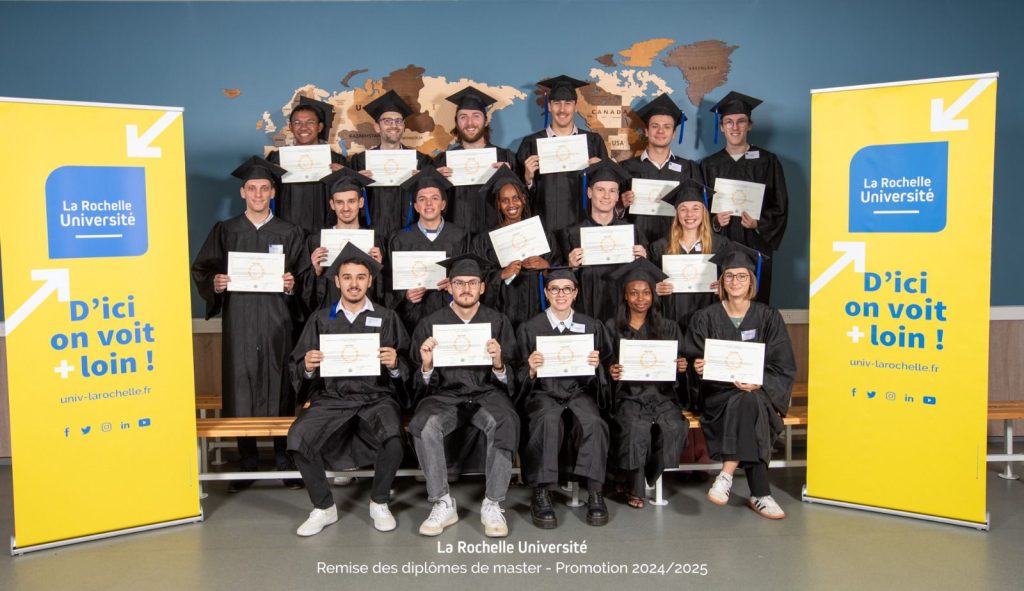
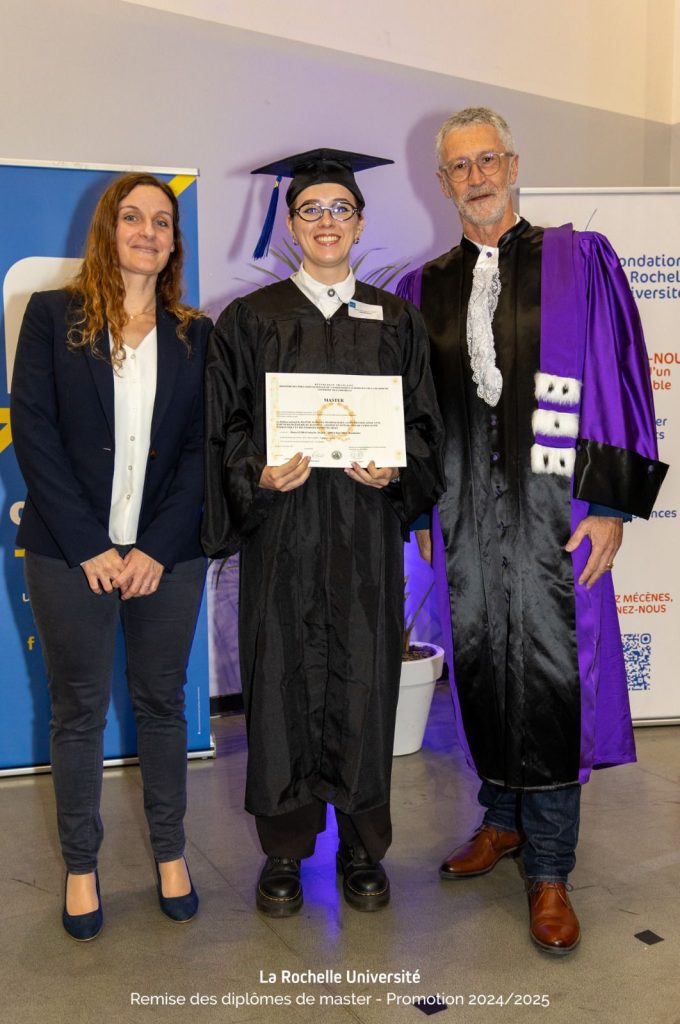
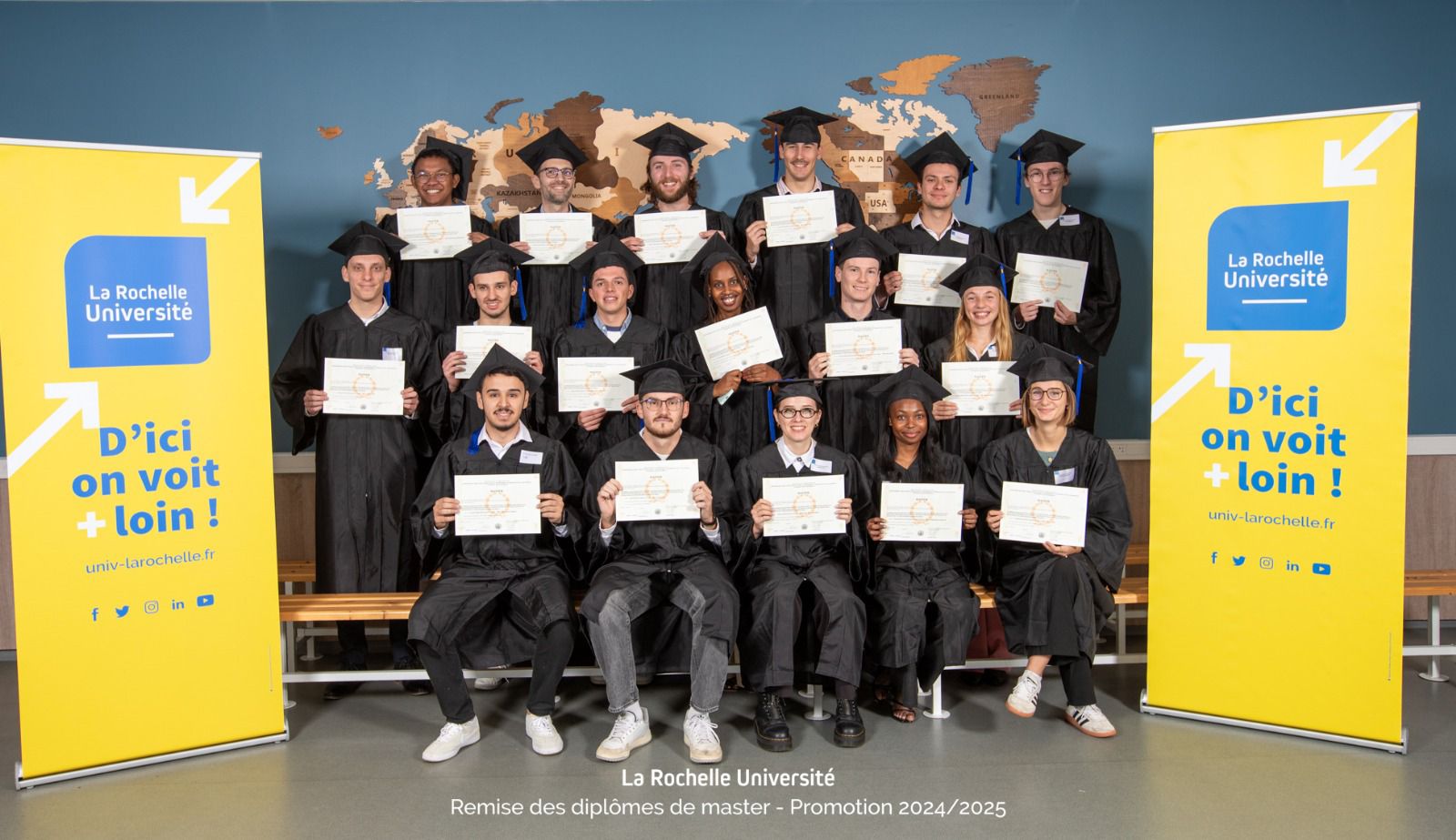
My name is Diana. I am 25 years old and a 2025 graduate of the EEITB master’s programme – Efficacité énergétique des Installations Techniques du Bâtiment – offered by the Faculty of Building Services Engineering at UTCB.
How did you first learn about the UTCB – La Rochelle Université double degree programme, and what motivated you to pursue it?
I became aware of the programme during my bachelor studies in Cluj, when Professor Ilinca Năstase introduced the idea of a double degree pathway. The prospect immediately stood out to me: the opportunity to earn two diplomas within a single academic trajectory felt both intellectually stimulating and professionally strategic. It was the kind of chance that doesn’t come around often – one that broadens horizons in a tangible way. And, admittedly, the idea of spending part of my academic journey in a coastal city added an undeniably appealing dimension to the decision.
How would you describe your academic experience in France? What stood out to you in terms of the teaching style?
The academic system in France differs significantly from what I am used to in Romania, starting with grading, the way averages are calculated, and even the structure of the timetable. One of the most striking aspects is the academic hierarchy: in France, the title of ingénieur is awarded upon completion of the master’s degree, which gives this cycle a much higher weight. In contrast, in Romania the same title is obtained after the four-year bachelor’s programme. Naturally, this means that the workload at master’s level in France is considerably higher. Courses take place throughout the day, whereas in Romania they are usually scheduled in the evenings, as many students are already employed.
At La Rochelle Université, the curriculum follows a modular structure: you complete a subject and immediately sit the exam. Teamwork and oral presentations are strongly emphasised, and the number of credits varies substantially from one course to another. Combined with the distinct teaching styles of each professor, this creates a very dynamic and fast-paced learning environment. Coming from a system built around 14-week semesters and a stable weekly schedule, I found this approach challenging and, at times, exhausting. Still, I can see how for many students it can offer an effective way to stay engaged and intellectually active throughout the entire programme.
Which project or activity from your time in La Rochelle had the greatest impact on you?
There were many memorable moments, and choosing just one is nearly impossible. Two experiences, however, stand out clearly.
The first was our visit to INTERCLIMA in Paris – a major trade fair dedicated to environmentally responsible actors in the fields of comfort and energy efficiency. It was one of the first activities during my mobility, and the university covered both the access and transportation costs, encouraging us to broaden our understanding of energy-efficient building technologies while also strengthening our connection with our colleagues and professors. We travelled together by TGV to Paris, spent the day exploring the exhibition, and had the chance to see firsthand how energy efficiency is approached in France. The day ended with a shared lunch and a short walk through the city, including stops at the Louvre and the Eiffel Tower.
The second experience that deeply impressed me was Voiles de Nuit, an event organised after a two-year postponement to celebrate the 50th anniversary of the Grand Pavois International Boat Show. It was a spectacular performance of music, lights, fireworks, and laser projections on La Rochelle’s iconic harbour towers. The evening opened with a parade on water featuring some of the most remarkable boats showcased at the fair, all accompanied by live music. To me, it felt like a signature event for the city – it was vibrant, elegant, and deeply rooted in its maritime identity. It was truly a pleasure to see the community come together and celebrate such an important moment.
How was the process of integrating into international student life, including the administrative aspects such as credit recognition, study plans, and different academic calendars between the two universities? What do you wish you had known beforehand?
Having previously taken part in other Erasmus+ mobilities, adapting to life as an international student felt relatively natural for me. Still, it was my first time in France, so cultural shock was inevitable. I enjoy observing and comparing lifestyles across countries: noticing the small routines, the habits, and the everyday rhythm that shapes people’s lives. Some things may seem unusual at first, but they often turn into lessons or practices that stay with you. My personal examples include cycling in any kind of weather and the traditional pre-holiday raclette, where you suddenly realise you can eat far more potatoes and melted cheese than you ever thought possible in a single day.
From an administrative perspective, managing the equivalences, study plans, and contrasting academic calendars required patience and careful organisation. The modular structure in France and the semester-based system in Romania don’t naturally align, so staying in constant communication with both universities was essential. This process becomes manageable once you understand how each institution functions, but it can take newcomers by surprise. Looking back, I would have liked to know earlier just how different the timelines and requirements are. It would have helped me to anticipate certain moments better.
Did you benefit from Erasmus+ or other grants to support your mobility? What advice would you offer to students who wish to apply?
Yes, I received an Erasmus+ grant, complemented by additional financial support from UTCB through the External Mobility Scholarship, amounting to roughly 900 EUR per month. This proved to be sufficient, mainly thanks to the CROUS student residence, which is subsidised by the French state. With the CAF housing allowance, my monthly accommodation cost was around 200 EUR. My main piece of advice for future students is to speak with colleagues who have already experienced such mobilities. First-hand insights are invaluable: they often reveal practical details that official guidelines may overlook. It’s also crucial to prepare well in advance, as early planning makes adaptation smoother and reduces the stress associated with relocating to a new country. The beginning may feel overwhelming, but the experience that follows is one you will remember fondly, regardless of the challenges along the way.
What was the biggest challenge during your mobility, and how did you overcome it?
The greatest challenge by far was adapting to an entirely new country. You step outside the comfort of home, everything feels unfamiliar, and there’s a constant sense that you’re missing something or that things aren’t unfolding the way you expect them to. The pressure of the mobility itself, the uncertainty of not knowing exactly what needs to be done, and the need to continuously adjust can be overwhelming. It’s not easy – but it is profoundly transformative. Within a relatively short period of time, you absorb an extraordinary amount of cultural, social, and academic experience, all while navigating an environment that is completely new.
For me, every mobility I undertook came with its share of stress. Even though La Rochelle was my third one, I still faced moments of doubt, worry, and adaptation. What helped was staying open, reminding myself that everything would eventually fall into place, and accepting that no crisis was as serious as it felt in the moment. It may sound simple, but it’s essential not to let yourself be consumed by the pressure. And perhaps most importantly, it helps to have someone you can call – someone who listens when you need to vent about how difficult everything is and who later hears you say that it turned out to be one of the most rewarding experiences of your life.
You are currently a PhD student at UTCB. What is your research topic, and what motivated you to continue on this path?
My doctoral research focuses on experimental and numerical studies of indoor environmental quality using a multi-instrumented thermal manikin alongside Digital Twin models. I hope I’ve explained the topic clearly enough for readers to grasp at least a part of it. I chose to pursue this path under the guidance of Professor Ilinca Năstase, who provided me with the opportunities I am deeply grateful for, and I would like to thank her again for this. I also decided to continue my PhD through a cotutelle programme with IMT Nord Europe in France, an idea that immediately excited me. After so many enriching (and challenging) mobility experiences, I look forward to seizing more opportunities like this one in the future.
How do you apply the experience and knowledge from your double degree programme to your doctoral work?
Since my cotutelle will also be connected to France, the double degree programme at La Rochelle plays an important role. First and foremost, it significantly improved my French language skills in a way that would have been difficult to achieve through any course in Romania within such a short time period. The presence of this programme on my CV also played a decisive role in securing the cotutelle. Academically, interacting with numerous renowned professors and specialists allowed me to acquire valuable experience and new competences while also establishing connections with other laboratories and professionals who strengthened both my passion for the field and my decision to continue with doctoral studies.
From your perspective, how does a double degree benefit a student?
The most tangible and immediate advantage is, without doubt, earning two officially recognised degrees at the end of the programme. Unlike a standard Erasmus+ mobility, a double degree provides a concrete academic asset – two degrees (bachelor’s or master’s) equivalent to completing two full university programmes. This distinction is highly valuable, both for pursuing further academic studies and for entering the private sector. Few students opt for this more demanding route, which makes it a strong differentiator on a CV. I am surprised these programmes are not sought after more, given the exceptional ratio of effort and reward. The benefits go far beyond merely collecting diplomas: students build relationships with peers and professors from two distinct academic environments, develop a bicultural professional network, and gain access to the labour markets in both countries – an added benefit that essentially multiplies career opportunities immediately upon graduation.
You were also involved in EU-CONEXUS activities: which ones did you participate in, and what did you gain from them?
My participation in EU-CONEXUS activities has been active and diverse: workshops, competitions, and, starting from the fall of 2024, the role of EU-CONEXUS student ambassador. In this capacity, I attended valuable seminars that helped me develop both current field-specific skills and essential soft skills for the academic environment. EU-CONEXUS also offers short-term mobilities to partner universities, which I unfortunately could not take part in due to my busy schedule. This is an opportunity I hope to seize in the near future, now that I have greater flexibility within my programme.
If you were to recommend the programme to a second- or third-year student, what would you say?
It is an opportunity you should not miss if you have the chance. Don’t be intimidated by the unknown – what truly matters is the motivation to start this adventure. The university provides all the resources and guidance needed to ensure a successful experience for you. The benefits are numerous and guaranteed: substantial academic gains, new skills, international networking, and, above all, precious memories that will shape your perspective on the world for years to come.
Was there a professor, laboratory, or key moment that changed the way you view your field?
I cannot point to a single moment or individual; rather, it is the university community as a whole that has shaped my perspective. At UTCB, I discovered a vibrant academic environment filled with motivated and passionate people, and their enthusiasm is truly contagious. I realised that what I needed most was to be surrounded by optimistic individuals driven to achieve meaningful results.
I genuinely believe that people matter more than awards or distinctions. I sensed this from the moment I first heard about UTCB over two years ago. As I got to know the university better, I also discovered the impressive accomplishments of this community, particularly in my chosen field of energy efficiency and indoor environmental quality, but also across other, related disciplines.
What does it mean for you to be an unofficial ambassador of the programme? How do you explain the value of a double degree to other students?
For me, this role is a meaningful recognition of my academic journey so far. It confirms that dedication and perseverance yield concrete results and, moreover, create a momentum of new opportunities. It is living proof that sustained effort multiplies outcomes: one achievement leads to the next, each experience building on the previous one. When I talk to other students about the double degree, I always say that its value goes beyond individual academic achievement. These programmes represent something deeper: the ability of universities to collaborate and combine resources to offer students exceptional learning experiences. They also demonstrate the power of international academic partnerships and the ways education can build bridges between institutions – and even between countries. Essentially, a double degree is not just about two certificates; it is about building an academic and professional network that centres on the student.
What other activities are you currently involved in at UTCB?
I am at the beginning of my doctoral journey, which started in the fall of 2025. Alongside my PhD studies, I work as a research assistant at the university, participating in several European projects with an outstanding team led by Professor Cristiana Croitoru. She instilled in me a passion for European projects and inspired me to engage in proposal writing and fund acquisition. I am fascinated by the diversity of funding opportunities available across so many fields and believe it would be a loss not to explore them. I aim to make the most of everything the university offers, as long as my schedule allows for such extensive involvement.
What comes next for you after the PhD? Do you see yourself in academia, research, a company, or an international project?
I am almost certain that my future lies with academia – I say ‘almost’ not out of uncertainty, but out of a desire to remain open to unexpected opportunities that life may bring. However, my vision is clear: I want to continue at UTCB, focusing primarily on research, which has become my true passion and an essential part of my professional identity. I have also tested myself within the private sector to validate this point of view, but the experience confirmed that it is not the right path for me. I do not regret such exploration; on the contrary, it provided clarity and confidence in my choice. The university life offers exactly what I seek: the autonomy to explore my ideas and the freedom to turn them into concrete projects within a stimulating environment that encourages continuous development and the diversification of skills on multiple levels.