Green Infrastructure
Dates & timetable:
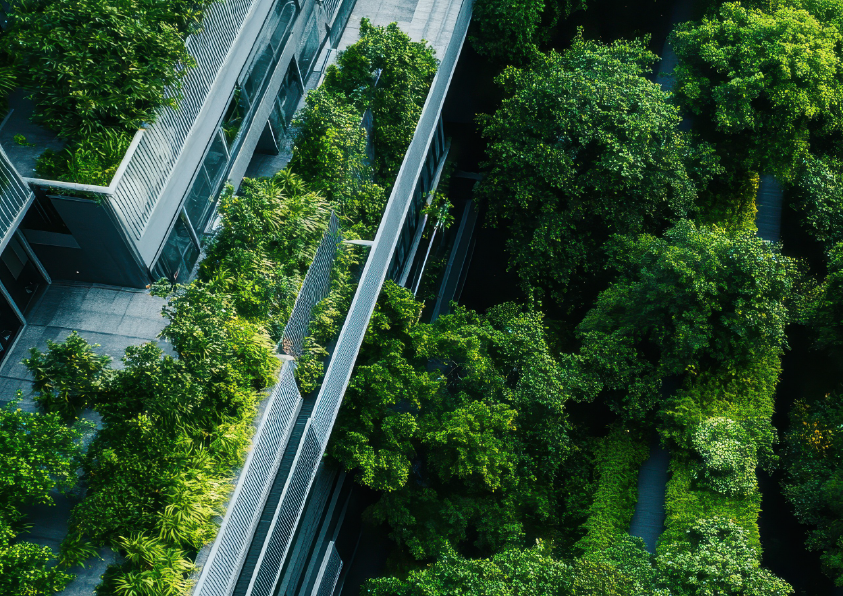
This course covers green infrastructure. Participants will explore its intersections with urban planning (including sustainable mobility), water management and climate resilience. GI is presented as a multifunctional network of natural and semi-natural elements, such as urban forests, green corridors, wetlands, rain gardens, and vegetated buffers, that deliver ecosystem services critical to resilient and liveable cities.
To include:
• Number of synchronous and asynchronous contact hours : 40 synchronous hours, and 125 self-study hours.
• Rationale Gaps: Current surveys and studies indicate a significant skills gap in sustainable urban planning and green infrastructure associated transportation, and water management. This course is designed to address these gaps by equipping participants with the necessary skills and knowledge to understand, develop solutions, implement and manage sustainable projects.
The European Green Deal and other global sustainability frameworks emphasize the transition to green and sustainable economies. This course aligns with these policy goals by promoting practices that reduce environmental impact and enhance urban resilience.
Unique selling points: The course covers a wide range of topics, offering a holistic approach to green infrastructure. Emphasis on practical, hands-on learning ensures that participants can immediately apply what they learn to real-world projects, making the course relevant and impactful. Participants will have the opportunity to connect with peers, local leaders, and policy makers, fostering professional relationships that can support their career growth and collaborative projects.
| Date | Time |
| Applications opens – 01.02.2026 Applications close – 25.02.2026 Course begins – In the week of 2nd – 6th March |
Description:
Content:
Topic 1: Foundations of Green Infrastructure – UTCB
Definitions, scope, and principles of green infrastructure (GI); GI as multifunctional urban infrastructure; Typologies: vegetated surfaces, wetlands, corridors, urban soils, street-level interventions Relationship with grey and hybrid infrastructures
Topic 2: Methods and Tools in GI Planning and Design
GIS-based mapping and spatial analysis for GI; Hydrological modeling tools; Indicators for GI performance (environmental, social, spatial)
Topic 3: GI for Urban Water Management
Urban hydrology and the water cycle. Nature-based solutions for stormwater: bioswales, wetlands, retention basins, rain gardens. Groundwater recharge and aquifer protection. Risk-based approaches for urban flooding and drought adaptation
Topic 4: GI for Sustainable Mobility and Urban Connectivity
Green corridors, ecological and active mobility linkages. Soft mobility infrastructure: integrating GI with walking and cycling networks. Vegetation and microclimate benefits along transport corridors. Co-benefits: air quality, safety, accessibility
Topic 5: Social and Spatial Justice in GI Deployment
Public space equity and access to green infrastructure. Green gentrification and socio-spatial impacts. Inclusive planning and community-driven GI. Urban health, wellbeing, and nature exposure
Topic 6: Climate Resilience through GI
Heat island mitigation: tree canopy, surface albedo, evapotranspiration. Climate-sensitive urban design and adaptation strategies. Carbon sequestration and biodiversity. Resilient infrastructure networks (water, mobility, energy interdependencies)
Topic 7: Governance, Finance, and Institutional Frameworks
Urban governance and GI integration in planning policy. EU policy context: Green Deal, Biodiversity Strategy, Urban Agenda. Maintenance models. Innovative financing (green bonds, PPPs, etc.)
Topic 8: Designing GI for a Real Urban Context
Case-based collaborative project: neighborhood or corridor-scale GI plan. Interdisciplinary teamwork: applying tools and proposing interventions. Stakeholder roles and policy alignment. Peer review, group presentation and feedback
Learning outcomes:
By the end of the MC:
- Students will be able to apply interdisciplinary engineering and planning methods and approaches to understand and design multifunctional green infrastructure systems that address complex urban sustainability and resilience challenges.
- Students will be able to critically evaluate the environmental, social, and spatial impacts of green infrastructure interventions within urban contexts, particularly in relation to water management, ecological connectivity, public space equity, and sustainable mobility.
- Students will be able to design and implement action-oriented strategies that use green infrastructure to tackle pressing challenges such as urban flooding, climate vulnerability, heat island effects, and the disconnection of active mobility networks.
- Students will be capable to demonstrate leadership, adaptability and digital fluency in the planning, governance, and performance evaluation of green infrastructure, using tools as GIS to support data informed decision making.
Volume (ECTS):
5 ECTS
Language:
English
Transversal Skills:
- Analytical and Critical Thinking by collaborating to analyze complex problems and develop effective solutions.
- Leadership and Teamwork by practicing leadership within the group, delegating tasks, and working effectively as part of a team
- Innovation and Creativity by brainstorming and implementing innovative solutions collaboratively
Competencies:
- Valuing Sustainability
- Promoting nature
- Critical thinking
- Problem framing
Study format
Online
Study methods:
Students will be capable to define adaptation strategies to mitigate climate change impacts
Type of assessment: Group work, Self-assessment, Presentation
Formative assessment is planned.
How is the assessment linked to the learning outcome(s):
The assessments are strategically linked to the learning outcomes to ensure that students not only acquire theoretical knowledge but also develop practical skills and critical thinking abilities. The case base collaborative framework fosters collaboration and practical application, self-assessment encourages reflection and personal growth, presentations enhance communication, and formative assessments provide continuous feedback and improvement. This assessment approach ensures that students are well-prepared to discuss, implement, analyze, and define sustainable solutions in their professional practice.
Declaration of work cover page
Entry requirements:
Bachelor degree diploma
Level of English: B2
Assessment:
Students will be capable to define adaptation strategies to mitigate climate change impacts
Type of assessment: Group work, Self-assessment, Presentation
Formative assessment is planned.
How is the assessment linked to the learning outcome(s):
The assessments are strategically linked to the learning outcomes to ensure that students not only acquire theoretical knowledge but also develop practical skills and critical thinking abilities. The case base collaborative framework fosters collaboration and practical application, self-assessment encourages reflection and personal growth, presentations enhance communication, and formative assessments provide continuous feedback and improvement. This assessment approach ensures that students are well-prepared to discuss, implement, analyze, and define sustainable solutions in their professional practice.
Declaration of work cover page
Host university:
Technical University of Civil Engineering Bucharest, Romania
South East Technological University, Ireland
La Rochelle Université, France